

___________________
Source: Telegram
To inquire about a translation for this video message for a fee email: [email protected]
___________________
Source: Telegram
To inquire about a translation for this video message for a fee email: [email protected]
ستقولون:الناس وين؛والشيخ وين!؟
________________
To inquire about a translation for this release for a fee email: [email protected]

________________
To inquire about a translation for this video message for a fee email: [email protected]
—
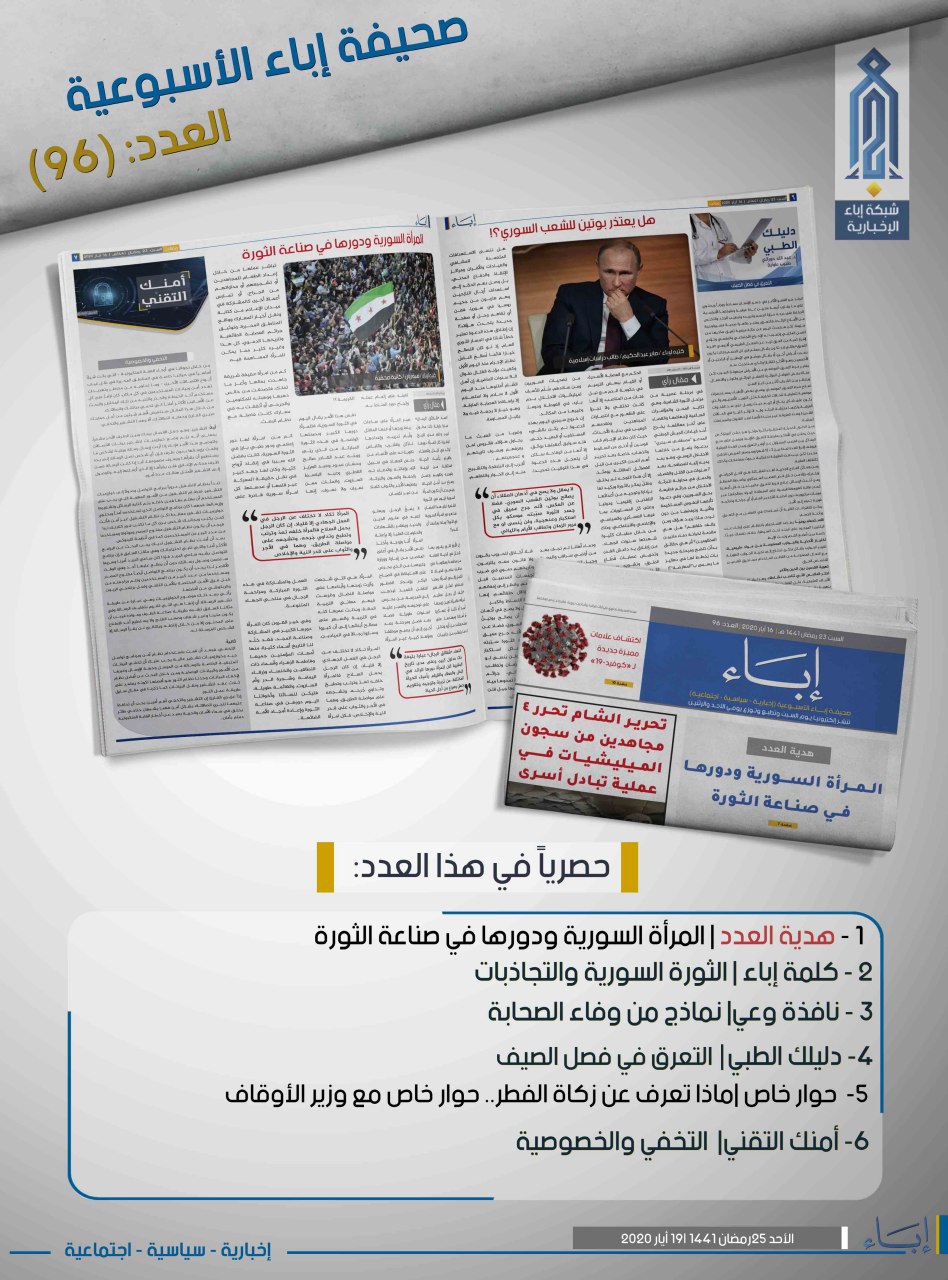
Click the following link for a safe PDF copy: Hay’at Taḥrīr al-Shām — Ibā’ Newsletter #96
________________
To inquire about a translation for this newsletter issue for a fee email: [email protected]
_______________
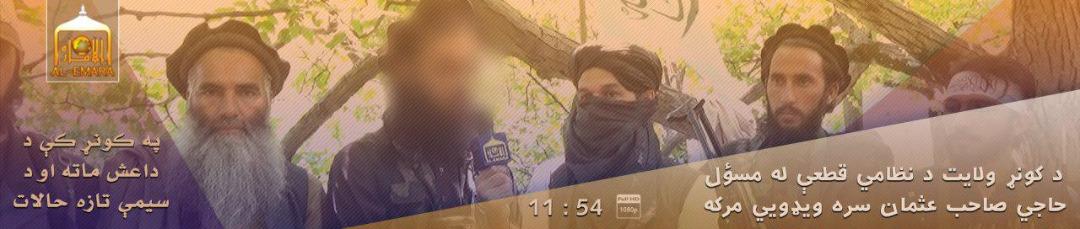
To inquire about a translation for this video message for a fee email: [email protected]
______________
To inquire about a translation for this video message for a fee email: [email protected]
__________________
Source: Telegram
To inquire about a translation for this release for a fee email: [email protected]

While many that research jihadism have focused on how the Islamic State (IS) has responded to the coronavirus pandemic, IS no longer actually controls territory in Iraq or Syria. Therefore, at best all they can do is provide guidance. In contrast, the jihadi group Hayat Tahrir al-Sham (HTS), which backs the local Salvation Government (SG) in parts of northern Idlib and western Aleppo, has to actually deal with the consequences of the pandemic since there are more than 4 million people living under its control, with more than two million of them being IDPs (internally displaced people). It also provides a unique window into the alternative type of governing style HTS has compared to IS’s totalitarian vision. Even if the SG has attempted to do something to prevent coronavirus from overtaking the population in its area of control, problems related to a devastated health system and inability to truly implement measures that would limit the spread of the disease makes the prospects extremely dire when the coronavirus hits the vulnerable civilian population.
Click here to read the rest.
What Can Work (and What Has Not Worked) in Women-Centric P/CVE Initiatives: Assessing the Evidence Base for Preventing and Countering Violent Extremism – Emily Winterbotham, RUSI: https://bit.ly/360Sblr
Domestic Jihadist Threat to Australia and Canada 2000-2020: An Overview – Shandon Harris-Hogan, Lorne L. Dawson, and Amarnath Amarasingam, TSAS: https://bit.ly/2WClY0J
Tuesday May 12:
The Lure of (Violent) Extremism: Gender Constructs in Online Recruitment and Messaging in Indonesia – Melissa Frances Johnston, Muhammad Iqbal, and Jacqui True, Studies in Conflict & Terrorism: https://bit.ly/2y5p0RD
Terrorism and the Mass Media – Jessica White, RUSI: https://bit.ly/2zE8cl1
Rise O Muwahhid, Wherever You May Be: An Analysis of the Democratization of the Terrorist Threat in the West – Reinier Bergema and Olivia Kearney, ICCT: https://bit.ly/2WTHfSo
Wednesday May 13;
When Measuring ISIS’s “Resurgence”, Use the Right Standard – Sam Heller, ICG: https://bit.ly/2T50Ttu
Women Too: Explaining Gender Ideologies of Ethnopolitical Organizations – Victor Asal, Nazli Avdan, and Nourah Shuaibi, Studies in Conflict & Terrorism: https://bit.ly/3dOQZnG
Iran and Hezbollah’s Pre-Operational Modus Operandi in the West – Ioan Pop and Mitchell D. Silber, Studies in Conflict & Terrorism: https://bit.ly/3dR0D9g
Thursday May 14:
Green Without Borders: The Operational Benefits of Hezbollah’s Environmental NGO – Matthew Levitt and Samantha Stern, Washington Institute for Near East Policy: https://bit.ly/2yP71PP
Shifts in the visual media campaigns of AQAP and ISIS after high death and high publicity attacks – Carol Winkler, Kayla McMinimy, Kareem El-Damanhoury, and Monerah Almahmoud, Behavioral Sciences of Terrorism and Political Aggression: https://bit.ly/2y4ykVM
Silencing the Guns in Syria’s Idlib – ICG: https://bit.ly/3bTeDy3
Friday May 15:
The Jihadi-Backed Salvation Government and Covid-19 in Northwest Syria – Aaron Y. Zelin, ISPI: https://bit.ly/3e5cock
Doing Good while Killing: Why Some Insurgent Groups Provide Community Services – Victor Asal, Shawn Flanigan, and Ora Szekely, Terrorism and Political Violence: bit.ly/3dSNfBU