__________
To inquire about a translation for these video messages for a fee email: [email protected]
__________
To inquire about a translation for these video messages for a fee email: [email protected]
_________
To inquire about a translation for these video messages for a fee email: [email protected]
NOTE: For prior parts in the Clear Banner series you can view an archive of it all here. Also for earlier updates on Belgian foreign fighters see: September 2013, January 2014 I and II, and May 2014.
—
Belgian Fighters In Syria and Iraq – November 2014
By Pieter Van Ostaeyen
Some demographics:
Islam is the largest minority religion in Belgium, it is estimated that about 6% (about 630.000 people) of Belgium’s total population are Muslims. In the 1960’s, when Belgium still was recovering from the total devastation of World War II, the country invited thousands of Moroccan and Turkish immigrants to work in the heavy industry which at that time dominated the Belgian economy. Most of these unschooled people had relatively well-paid jobs in the steel industry or coal mines. The guest-worker program was abolished in 1974, yet a lot of these people stayed in Belgium and brought in their families taking use of the family reunification laws. Today the Muslim population keeps on growing due to marriage migrations.
In 1974 Islam was officially recognized by the Belgian government as a subsidized religion; from 1996 onwards the Belgian Muslim community has been represented by the Muslim Executive of Belgium.1 Although this first generation of Muslims seems to have integrated quite well in Belgium, this surely doesn’t stand for their children and grandchildren. Cities like Antwerp, Mechelen, Vilvoorde, and Brussels now have important minorities of descendants of these guest-worker immigrants. As such one would say this isn’t problematic at all, taking into respect on how their parents and grandparents managed to build a career and family.
However, in the 1980’s and 1990’s Belgium started facing increasing problems and mishaps with its Muslim immigrant community. Cities like Mechelen in the 1990’s were known as hubs of petty theft and drug dealing (especially by Moroccan Berbers dealing hashish). More and more of these youngsters were cruising the city with expensive cars like BMW’s and Mercedes’s. It was commonly known these cars were paid with drug-money. At that time, the city of Mechelen was referred to as ‘Chicago at the river Dijle’2, due to its extreme crime rates. Other Flemish cities were facing the same problem. In Antwerp the district of Borgerhout was known as Borgerokko because of its high amount of inhabitants from Maghrebi origin. Brussels, Belgium’s capital, had entire no-go zones. It is in this climate of fear and mutual mistrust that extreme right wing parties like Vlaams Blok (now Vlaams Belang) thrived. On the federal elections of Sunday November 24th, 1991, out of the blue Vlaams Blok gained around 6.5 % of the votes. The tone of voice was set for the years to come; using slogans like ‘adapt or get lost’, Vlaams Blok profited highly from the general mistrust amongst the Belgian public towards the Muslim community.
In the course of the next few years Vlaams Blok started building up its anti-Islamic theme, criticizing Muslims on head scarves, the slaughter of sheep on ‘Eid festivities and the fact they didn’t manage to integrate in our society. They easily disregarded the fact it was mainly because of political parties and narratives as their own that the Muslim society in Belgium had little or no chance to assimilate or let alone integrate. In the course of the next few years Vlaams Blok was forbidden and reappeared as Vlaams Belang. As such the name was dropped but the rhetoric remained the same; intolerance and latent racism in Flanders grew steadily.
It should be noted that well before Belgium was confronted with its huge amount of fighters engaged in the war in Syria (and later Iraq), the country already was a main supplier of Jihadist Fighters. On September 10th, 2001, the suicide attack on Ahmed Shah Masoud, leader of the Northern Alliance in Afghanistan was conducted by a Belgian Muslim. And even before 9/11 Belgians played a quite important role in international Jihad. Several Belgians were engaged in GICM (Groupe Islamiste Combattante Marrocaine) and GIA. Shaykh Bassam al-Ayashi, the oldest Belgian fighter in Syria, who once was suspected to be a main al-Qaeda recruiter now is leading his own little branch of Suqur as-Sham in Northern Syria.
As one of the main reasons for all, these Belgians involved all refer to the Belgian policy on its inaptitude to integrate the Muslims in our democratic society. These guys don’t see us as being democratic; they rather see how Muslims are being oppressed on what they consider to be their basic rights. The fact that Belgium forbad the face-veil or Niqab, headscarves are forbidden in schools and in public service, next year private Halal-slaughter will no longer be allowed, and so on. It is a message even confirmed by Sharia4Belgium’s spokesman Fouad Belkacem. In a statement he recently published from prison, he states: If I look back upon these days I think about the arrogance and the deep-rooted islamophobia of the Belgian State […] The head-scarf ban in 2009 hit us like an atom bomb […] For almost 50 years we saw humiliated Muslims beg for basic rights […].3
It is in reaction to these general sentiments that Sharia4Belgium was founded on March 3 2010. The group was inspired by other European Salafi groups that already existed such as Islam4UK, at that time led by the radical Islamist preacher Anjem Choudary. In its founding notes Islam4UK stated: [the group was] established by sincere Muslims as a platform to propagate the supreme Islamic ideology within the United Kingdom as a divine alternative to man-made law, and to convince the British public about the superiority of Islam […] thereby changing public opinion in favor of Islam in order to transfer the authority and power […] to the Muslims in order to implement the Shari’a (in Britain).4 A very similar discourse was spreading among radical Muslims in Belgium. As such, Sharia4Belgium copied a lot of the rhetoric of Anjem Choudary and other inspiring leaders of Islam4UK. Sharia4Belgium denounced democracy and stated it wanted to introduce the Shari’a in Belgium.
Fouad Belkacem explains in his statement who is leaving for Jihad in Syria:
A. The Migrants for the case of Allah. These believers seek to please Allah wherever possible. They believe that the highest value after worshipping the unity of Allah is the blessed Jihad. Jihad doesn’t mean Holy War, this term stems from Christianity and its Crusades. May Allah give this brothers what they seek.
B. The Migrants against suppression. They are the ones who left because of the injustice they daily lived in Belgium. A lot of practicing Muslims every day feel the injustice from the government and society.
C. A new live, a new beginning. A lot left for Syria to start a new life. The fact that a lot of youngsters prefer to live under bombs than in “hospitable, warm Flanders” as such is another proof against the government. Everything seems better than Belgium.
D. Sense of justice. The last group is that of the pious Muslims who could no longer bear the injustice done to their brothers. They want to contribute, how futile it may be.5
This general resentment against Belgiums policy against its Muslim community is also confirmed by the Belgian researcher Montasser AlDe’emeh. In the Belgian weekly Knack of September 23, 2014, Montasser published part of his interviews with a Belgian Islamic State fighter:
In Belgium daily they make new laws against Muslims. A Niqab ban, a headscarf ban and soon maybe a ban on beards and some Mosques? Why can’t our sisters wear a headscarf? […]Politicians, teachers at school, people at work, they

This week, Abu Bakr al-Baghdadi, the leader of the Islamic State of Iraq and al-Sham, released a rare public message in which he declared the creation of several new “provinces” in various Arab countries. It was the first time that he and his organization have acknowledged groups that have pledged baya (religiously binding oath of allegiance) to the so-called “Islamic State” since the announcement of its “Caliphate” six months ago. The audio message offers insight into the group’s expansion model and its plans for exacerbating religious tensions between Sunnis and Shiites beyond Iraq, Syria, and Lebanon. Whether Western governments want to admit it or not, the reality is that the Islamic State has expanded in a non-contiguous manner outside its base and now has authority over satellite groups and small amounts of territory outside Iraq and the Levant.
Click here to read the rest.
The title of this release is in reference to Qur’anic verses 9:32, 40:14, and 61:8.
—
Audio:
Abū Bakr al-Ḥussaynī al-Qurayshī al-Baghdādī: “Although The Disbelievers Dislike It”
English Translation:
Abū Bakr al-Ḥussaynī al-Qurayshī al-Baghdādī — Although The Disbelievers Dislike It (En)
NOTE: For prior parts in the Hizballah Cavalcade series you can view an archive of it all here.
—
Hizballah al-Abrar: The Latest Hizballah Franchise in Iraq
By Phillip Smyth
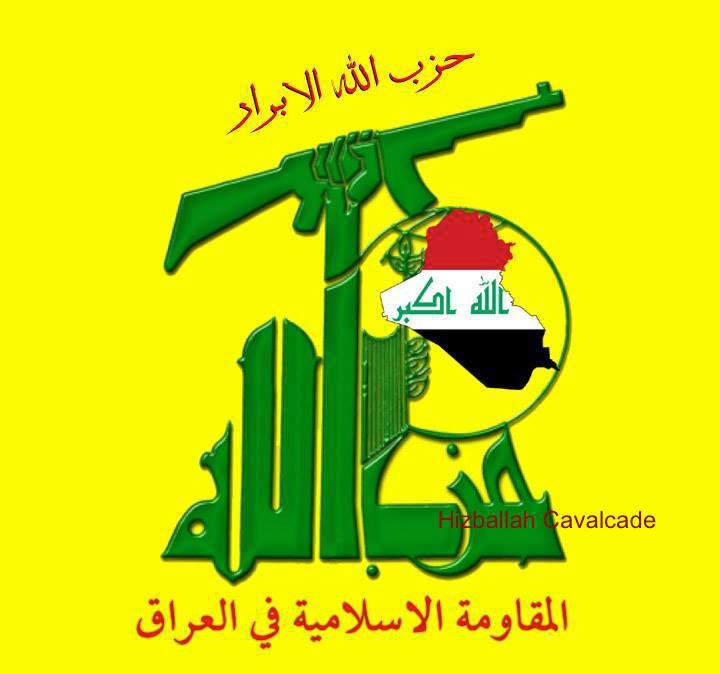
Figure 1: Hizballah al-Abrar
Hizballah al-Abrar (HAA or the Party of God of the Righteous) follows in the footsteps of a long line of new Shia militia organizations which have been announced in Iraq since June 2014. These groups often model their symbolism, organizational structures, and ideological profile on Lebanese Hizballah. Additionally, these groups commonly have strong links and at times have shared commanders with other established Shia militia proxies of Iran.
HAA is no exception, utilizing the official logo of Lebanese Hizballah with the addition of a stylized map of Iraq in the globe section of the symbol. The group, mirroring other Iranian proxy Shia groups in Iraq, Lebanon, and Syria, also refers to itself as “al-Muqawama al-Islamiyya fi al-Iraq” (The Islamic Resistance in Iraq). HAA has done little to hide its connections to Asa’ib Ahl al-Haq (AAH). If anything, HAA actually promotes the links. Furthermore, its connections to other organizations promoting Iran’s Khomeinist ideology have been featured in other photos.
HAA’s secretary general, Sheikh Fadhel al-Khaz’ali, has been prominently featured in the group’s propaganda releases and has been used to show the group’s links to Iran’s Iraqi proxy groups. In one photo, Khaz’ali is shown receiving an award from the Imam Khomeini Relief Foundation. In others, Khaz’ali is shown standing under the AAH banner.
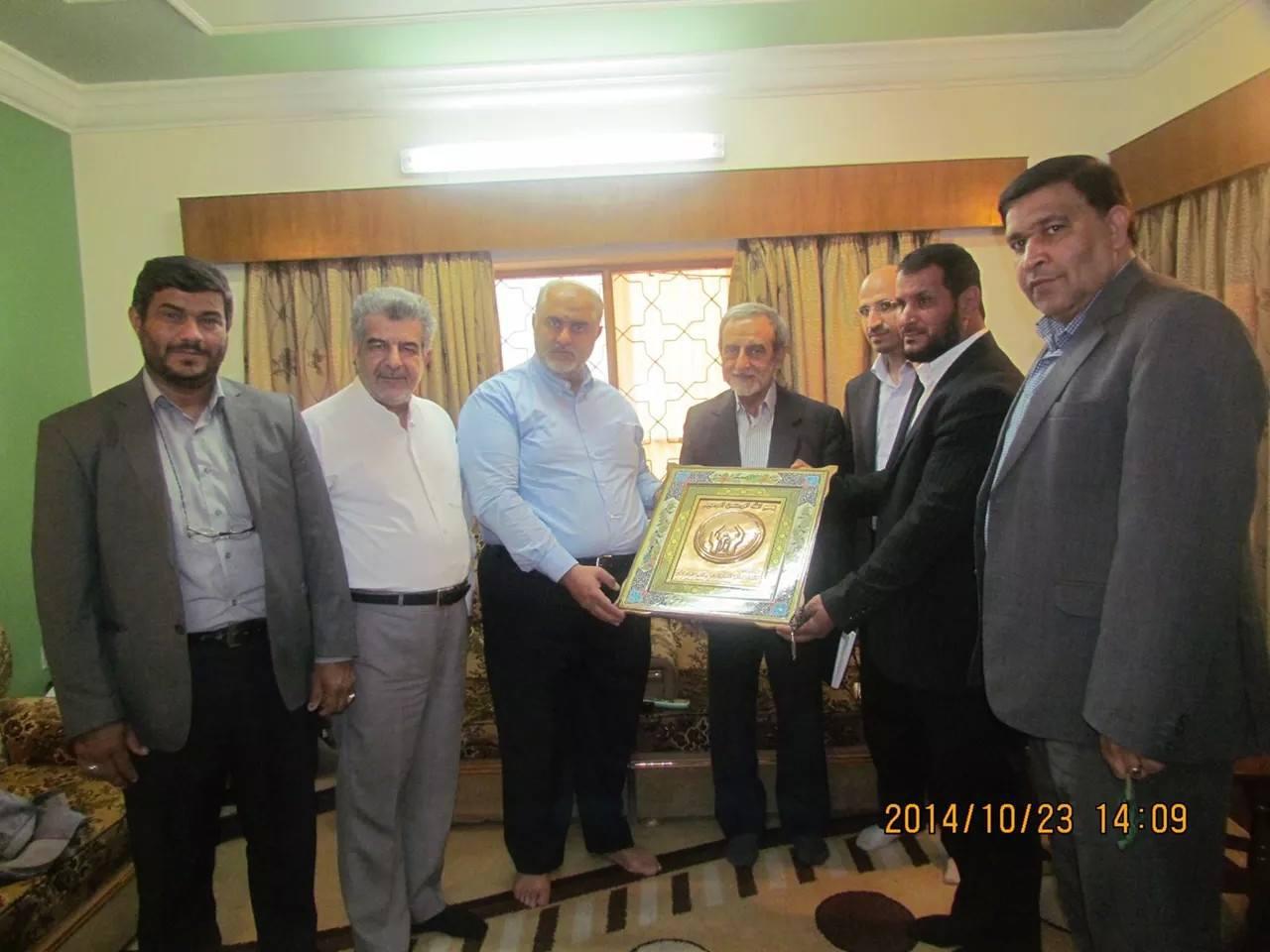
Figure 2: This photo claims to show Sheikh Fadhel al-Khaz’ali recieving an award from the Imam Khomeini Relief Foundation.
Following a social media model which had been replicated by other newer Shia militias in Syria and Iraq, HAA initially published easily created images showing the group’s new symbol. Later, photos claiming to show fighters from the group, a more official looking fighting force, complete with patches, flags, and official statements began to appear after the group’s initial appearance on Facebook in August.
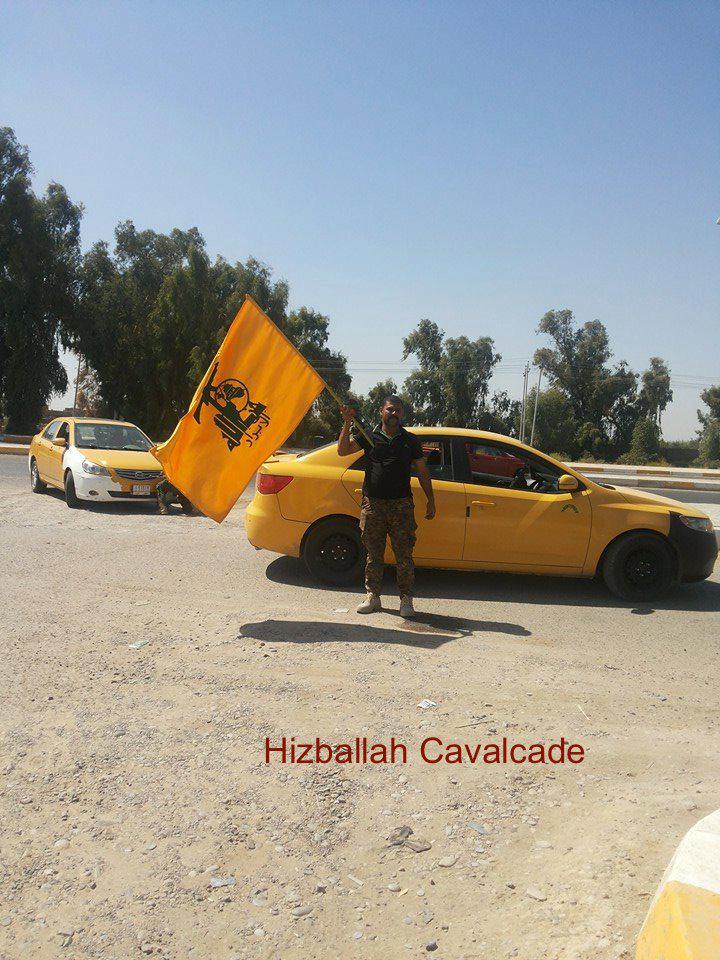
Figure 3: A HAA fighter holding the group’s flag. This picture claimed to show HAA fighters heading to the Battle of Amerli.
In terms of combat deployments, the group has claimed it sent fighters to Amerli, Diyala, Baghdad, and the key battlefront of Jurf al-Sakhr. In a video released on October 28, 2014, HAA combatants waved the group’s flag along with that of Karbala-based Shia militia, Firqat al-‘Abbas al-Qataliya – al-Dafa’ ‘an Muqadisat al-Iraq (The Abbas Fighting Group – Defenders of the Iraqi Holy Sites) in what appeared to be an impromptu celebration commemorating recent victories in Jurf al-Sakhr.
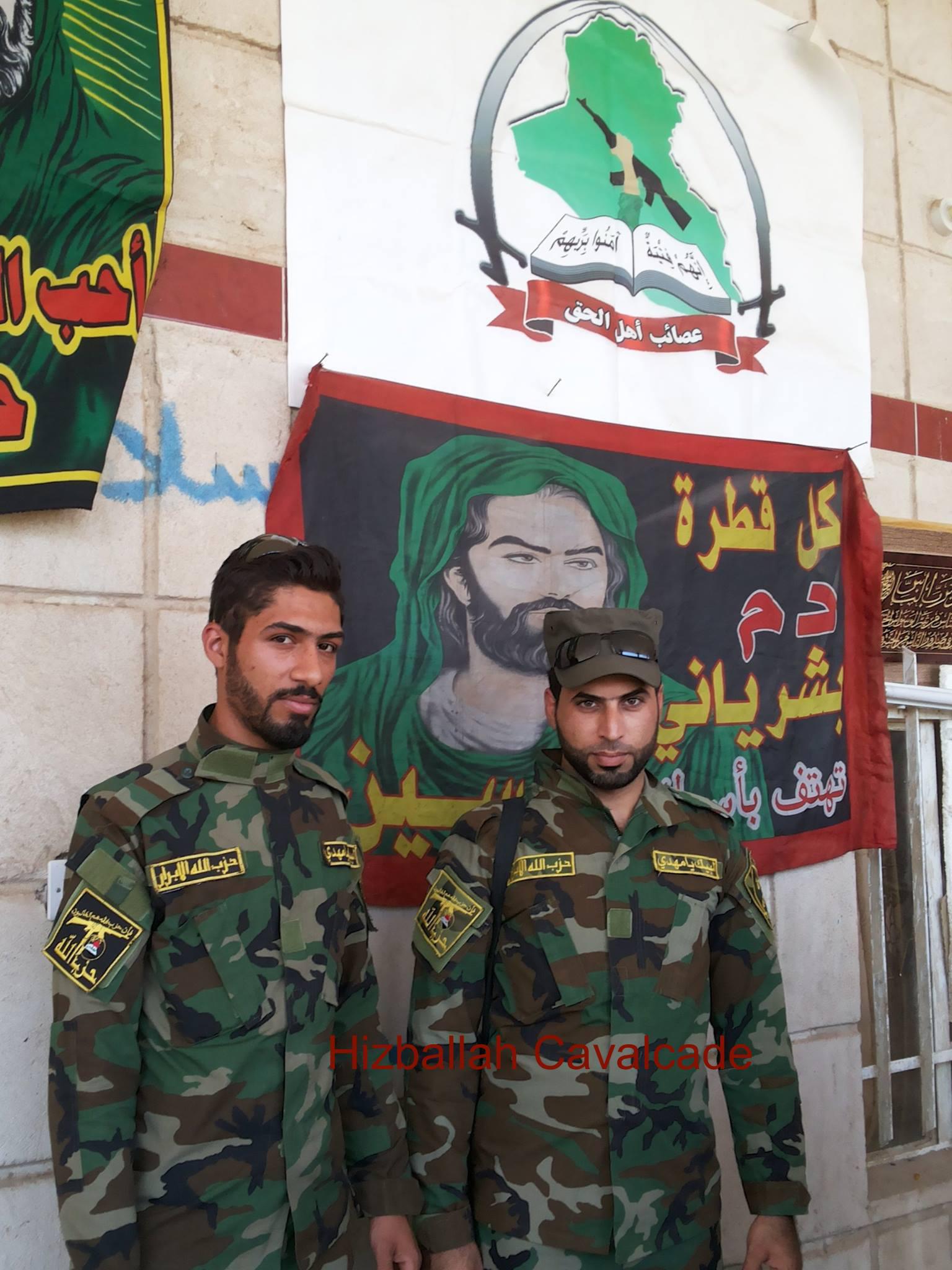
Figure 4: Two HAA fighters, Yasir al-Khazarji and Amir Sa’adi pose together under AAH and Shia religious banners. Note the HAA-specific arm patches.
Despite the fact that HAA has claimed to be positioned across diverse sections of Iraq, it has not stated the size of its force. Furthermore, the group’s quickly paced attempt to appear more professional online may demonstrate that the group will be further developed within Iraq’s Shia militia and political sphere. In fact, Sheikh al-Khaz’ali was pictured in an undated photograph with former Iraqi Prime Minister Nouri al-Maliki and other leaders from Iraq’s internal security forces and army.
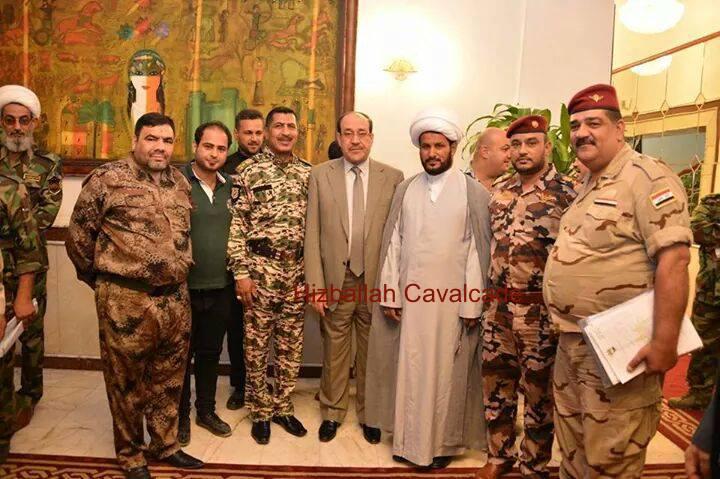
Figure 5(Right): Sheikh Khaz’ali is shown with a stylized Hizballah and Iraqi national flag.
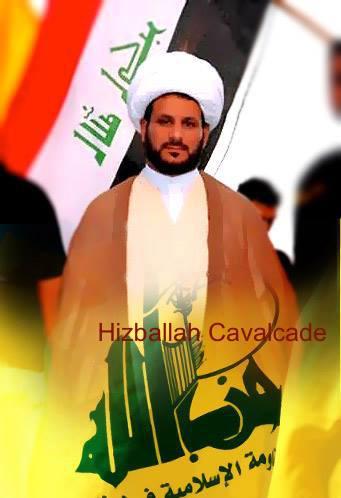
Figure 6 (Left): Sheikh Fadhel al-Khaz’ali poses with former Iraqi Prime Minister Nouri al-Maliki and others.
Thus far, the group has released a number of official statements. Below, a translated version of one statement dealing with “rumors” about ISIS penetrations of Baghdad, gives insight into the group’s worldview, including their anti-U.S. positions and opinions on fighting ISIS.

Figure 7: HAA fighters gather for a photograph.
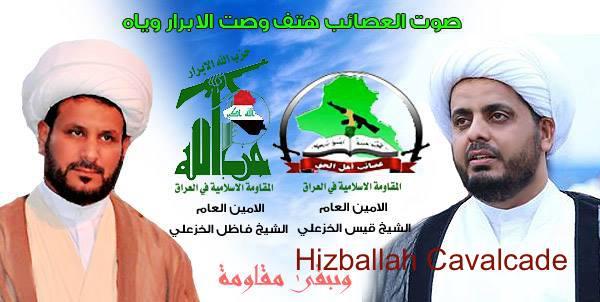
Figure 8: AAH and HAA leaders are pictured together.
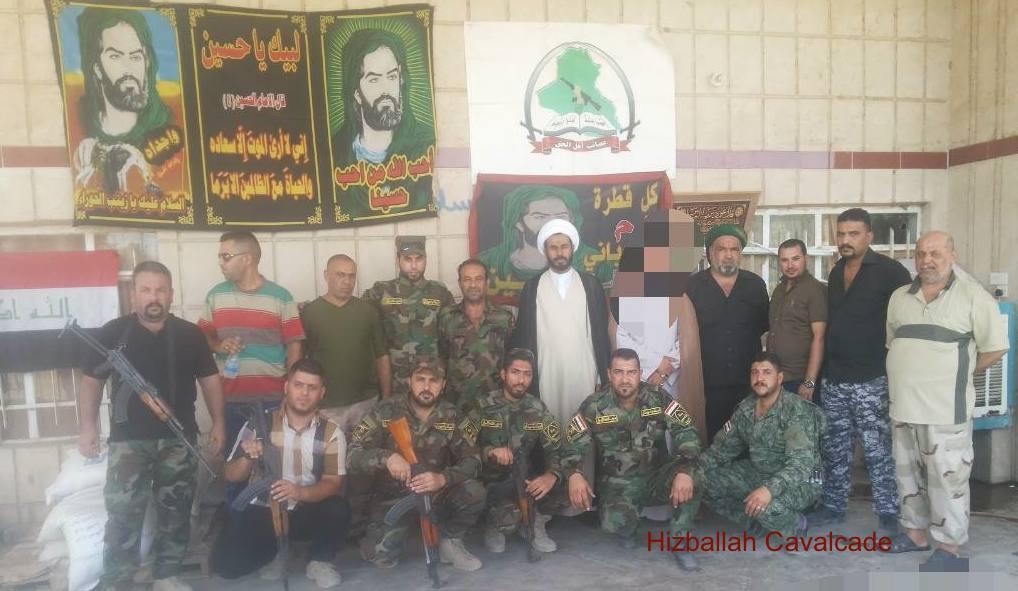
Figure 9: HAA central leadership and combatants pose under Shia religious and an AAH banner.
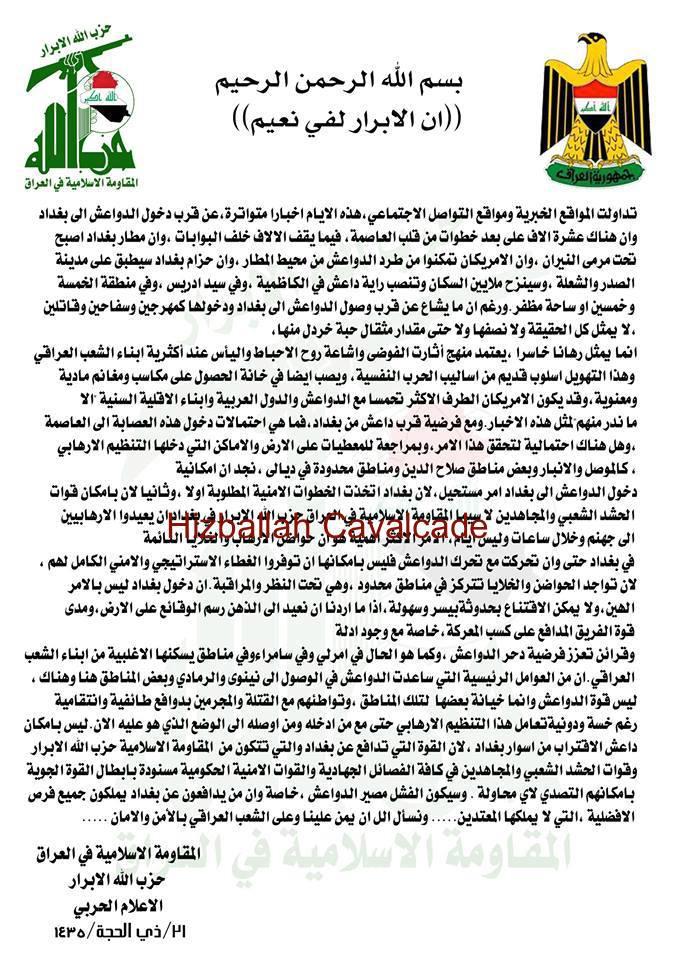
Figure 10: HAA announcement released on social media on October 18, 2014.
Translation of HAA’s October 18, 2014 Announcement*:
There are rumors on social media websites that ISIS is close to entering Baghdad and that there are tens of thousands [of ISIS fighters] steps away from the heart of the capital, while thousands of others are standing behind the gates. Rumors about Baghdad Airport being under fire, that the Americans were able to kick ISIS groups out from the outskirts of the airport, rumors that the belt of Baghdad will close up on the Sadr City and Al-Shu’ala, rumors that millions of residents will become refugees, and that the flag of ISIS will be set up in Khazimiya, in Sayyid Idris [an important Shia shrine south of Najaf] and in the area of Khamsa [a Baghdad neighborhood], Khamsin, or in Muzzafar Square [a central square in Sadr City]. Despite all of these rumors, the clowns, murderers, and killers from ISIS are not close to entering Baghdad. None of them [the rumors] represents a grain of truth.
These [rumors] represent a lost bet that aims to spread chaos, frustration, and misery among the majority of the Iraqi people. This fear mongering is an old method of psychological warfare, it also serves to allow certain material and symbolic games. Regarding the theory of ISIS closing up on Baghdad, the Americans might be the party that is the most excited along with ISIS, Arab countries, and members of the Sunni minority. What are the possibilities this gang will enter the capital and is there a possibility to achieve this?
By reviewing ground data in places where the terrorist organization has entered, such as Mosul, Anbar, some regions of Salah Ad-Din [province], and limited regions of Diyala, we find that it is impossible for ISIS to enter Baghdad, because Baghdad has taken the necessary security steps. Second, because the forces of the popular [militias] and jihadists groups, especially the Islamic Resistance in Iraq Hizballah al-Abrar in Baghdad, can send the terrorists back to hell within hours not days. The most important thing is that those who foster terror and sleeper cells in Baghdad, even if they move along with ISIS’s movement, will not be able to offer full strategic and security coverage for them, because those who foster these cells are based in limited areas which are under surveillance and observation.
Entering Baghdad is not easy and there is no way to be convinced that it will happen quickly and easily. Especially if we want to keep in mind all of the facts on the ground and take into consideration the strength of the defending group, especially since there is proof that crushing ISIS is a likelihood. As is the case in Amerli, Samarra, and areas inhabited by most of the Iraqi people, the main factors which helped ISIS to reach Nineveh [Province] and Ramadi and some regions here and there, is not the strength of ISIS but because of [their sneaky behavior] betrayal. They are betraying these regions by conspiring with murderers and criminals under sectarian and vengeful pretexts. ISIS cannot come close to the walls of Baghdad because the forces which are defending Baghdad and consisting of Hizballah al-Abrar, the forces of the popular movements, and the holy warriors in all jihadist cells, along with governmental and security forces, supported by the heroes of Iraqi Air Force, can confront any attempt to take Baghdad. The fate of ISIS will be failure, especially because the defenders of Baghdad have more privileges than the attackers…we ask God to protect us and the Iraqi people.
* Some sections have been edited so there is better flow in English. Additionally, ISIS is referred to as “Da’ish” in the original statement.
NOTE: As with all guest posts, the opinions expressed below are those of the guest author and they do not necessarily represent the views of this blogs administrator and does not at all represent his employer at the Washington Institute for Near East Policy.
Jihadology.net aims to not only provide primary sources for researchers and occasional analysis of them, but also to allow other young and upcoming students as well as established academics or policy wonks to contribute original analysis on issues related to jihadism. If you would like to contribute a piece, please email your idea/post to azelin [at] jihadology [dot] net.
Click here to see an archive of all guest posts.
—
By Sam Heller
In late October, ex-Jabhat al-Nusrah shari’ah official Sultan bin Eissa al-Atwi made what had been private recriminations over Nusrah’s loss of its eastern Syria stronghold very public. Over Twitter and TwitMail, Al-Atwi released a hyper-critical open letter to the global jihadist community, and the letter in turn sparked a series of acrimonious rebuttals. The episode may have been the most public, detailed airing of grievances from members (or ex-members) of a single al-Qaeda branch since the splits in Somalia’s al-Shabab in 2013. Many of the points were personal and hyper-specific, often revolving around the leadership of Nusrah’s former top shar’i (religious-legal official)Abu Mariya al-Qahtani. To the extent that Abu Mariya has been identified with a specific intellectual and political strain within Nusrah, however, the personal here is also political. Even the most ad hominem elements of these texts, which I’ve translated below, reflect real divisions within Nusrah over its strategy and identity as it works to retain relevance opposite the Islamic State (IS). They also help us partially reconstruct the slow-motion fall of eastern Syria to IS.
For much of the first half of 2014, Jabhat al-Nusrah in al-Sharqiyah – eastern Syria, and primarily oil-rich Deir al-Zour – had waged a losing battle against IS (then the Islamic State in Iraq and al-Sham, ISIS). In May, Nusrah had taken the exceptional step of uniting with other Deir rebels (including “Free Syrian Army” elements) to form the Mujahideen Shura Council and defend the province against IS, yet IS continued to make headway. By the summer, IS had effectively encircled Deir and was picking off outlying towns. Still, it was only after IS staged its dramatic June surge in Iraq, including the capture of Mosul, that Deir resistance to IS really imploded. IS quickly funneled the advanced weaponry it had captured from a collapsing Iraqi army back to Deir al-Zour, using it to totally crush rebel and jihadist resistance. By July, IS had taken all of Deir al-Zour and linked its Syrian holdings in Aleppo and al-Raqqa with Iraq’s al-Anbar.
More than any other part of Syria, it was the East where Jabhat al-Nusrah had been the undisputed dominant force. When IS took the province, Nusrah lost its desert stronghold, as well as the province’s lucrative oil fields. Those members left alive were forced to flee across the al-Badiyah desert to western Syria.
Among them was Saudi national Sultan bin Eissa al-Atwi (AKA Abu al-Leith al-Tabbuki). Al-Atwi had been one of Jabhat al-Nusrah’s top officials in the East. He had reportedly risen from a shari’ah official and judge to become al-Nusrah’s emir (commander) for the al-Shamiyah (western) bank of the Euphrates River. He was also one of Jabhat al-Nusrah’s most prominent representatives on social media, sometimes to al-Nusrah’s chagrin – al-Atwi was occasionally accused of inflaming the escalating conflict with IS with his public belligerence.
Two other Nusrah shar’is in the East who enjoyed similar prominence were Kuwaiti Ali al-Arjani (AKA Abu Hassan al-Kuwaiti) and Iraqi Maysar al-Jubbouri (AKA Abu Mariya al-Qahtani, al-Gharib al-Muhajer). The latter was, at the time, Nusrah’s top shar’i and reportedly one of its top officials and strategists. He seems to have since stepped down (or been pushed aside) in favor of the Jordanian Dr. Sami al-Oreidi, but he reportedly continues to steer events in the southern province Dara’a (more on which later).
In July, it was announced that al-Atwi had been removed from his leadership position and expelled from Nusrah. Abu Hassan seemed to (obliquely) deny this at the time, but all parties now seem to have confirmed that al-Atwi either quit or was run out of Nusrah in June / July of this year. Al-Atwi himself didn’t confirm that he had left Nusrah until October, about the time he began to take a more critical tone with Nusrah and advocate more forcefully for a truce with IS. This came amid a new wave of prominent jihadists inside and outside Nusrah defecting publicly to IS.
Still, it was al-Atwi’s 23 October open letter, promoted with the hashtag “#لله_ثم_للجهاد” (#For_God_Then_the_Jihad), that really set off this ugly public back-and-forth. Al-Atwi accused the commanders of Eastern Nusrah of, among other things: disregarding the leadership of Nusrah leader Abu Muhammad al-Jolani; acting as a tool of the al-Shuheil clan; squandering oil wealth; indulging corrupt and useless FSA partners; posing on Twitter instead of leading their troops; and obsessing over IS, both dragging all of Deir into a losing war and unjustly purging their own ranks of those tarred as “Dawa’ish” (IS members or supporters). Al-Atwi spools out a narrative in which he was one of the lone voices of right and reason. He maintains that he fought IS until the end, but he acknowledges that he pushed for some sort of truce and encouraged Deir locals to take deals if offered. Since fleeing to Dara’a, he claims to have been targeted by vindictive members of Eastern Nusrah after repeatedly complaining about Abu Mariya to al-Oreidi.
The key rebuttals to al-Atwi are translated below, including angry tweets from Abu Mariya and al-Atwi’s erstwhile friend Abu Hassan. The most interesting comes from Abu Omar al-Ageidi, an East Nusrah media representative who writes a really lacerating takedown of al-Atwi. Al-Ageidi’s narrative centers on a craven al-Atwi who was out of his depth as a military commander and who repeatedly betrayed his comrades by undermining morale in the fight against IS.
The truth is likely somewhere in between the point and counterpoint. You hardly need al-Ageidi to mock al-Atwi’s three (!) self-aggrandizing poems to realize that al-Atwi’s account is not perfectly objective. Al-Atwi claims, for example, that Eastern Nusrah’s leadership never played an active role in military planning or command, “they only used to take pictures of themselves ‘planning.’” In May, of course, Nusrah had released photos of commanders “planning” featuring Abu Mariya and, surprise, al-Atwi. It seems reasonable to assume that al-Atwi is motivated by animus towards Eastern Nusrah’s commanders and Abu Mariya in particular, whom he portrays as a sort of desert Ahab in his obsessive campaign against IS.
And yet many of al-Atwi’s points, both in broad terms and on the particulars, seem to have some basis – at least enough to take them seriously when looking at Nusrah and the East. The oil trade in Deir al-Zour was, by all accounts, a mess of tribal influence and corruption. Jabhat al-Nusrah had indeed been identified with the al-Shuheil. And al-Atwi is probably right that, by mid-summer, the fight against IS in the East was a lost cause. IS was riding high from its successive, dramatic gains, and the East’s rebels had seen all their supply lines cut. When al-Atwi talks about the Nusrah commanders in Albukamal who pledged allegiance to IS and paved the way for IS to take the border town, he says sympathetically that they made “the appropriate decision… the lesser of two evils” – and he’s arguably correct. By that point, taking a really unyielding stand against IS probably would have been suicide.
Some of al-Atwi’s critiques of Abu Mariya also seem worth reading closely. Abu Mariya has an influence and appeal in Syria that goes beyond Nusrah. He also,
NOTE: As with all guest posts, the opinions expressed below are those of the guest author and they do not necessarily represent the views of this blogs administrator and does not at all represent his employer at the Washington Institute for Near East Policy.
Jihadology.net aims to not only provide primary sources for researchers and occasional analysis of them, but also to allow other young and upcoming students as well as established academics or policy wonks to contribute original analysis on issues related to jihadism. If you would like to contribute a piece, please email your idea/post to azelin [at] jihadology [dot] net.
Click here to see an archive of all guest posts.
—
By Sam Heller
Below we see Jeish al-Muhajireen wal-Ansar (JMA) shar’i “Abu Azzam al-Najdi’s” frank rationale for leaving JMA to join the Islamic State (IS / ISIS). Jeish al-Muhajireen wal-Ansar is a mostly foreign fighter battalion that has been active in Aleppo. It is best known for its Caucasian (e.g., Chechen) contingent, but it also counts Arabs among its ranks — it recently absorbed the heavily Saudi al-Katibah al-Khadra (the Green Battalion), and Abu Azzam’s nom du guerre indicates that he hails from the Najd (east Saudi Arabia). Abu Azzam had been JMA’s shar’i and, at least in Arabic media, its main fundraising point of contact. Saudi fundraiser and ideologue Abdullah al-Muheisini had recommended as late as April that any would-be foreign fighters should reach out specifically to Abu Azzam.
Abu Azzam defected to ISIS alongside a substantial chunk of al-Katibah al-Khadra, including its commander Omar Seif and at least one of its shar’is. (Seif had apparently just been detained by the Syrian Revolutionaries Front on suspicions, now vindicated, that he was linked to ISIS. Other jihadists intervened to broker his release.)
As can be seen below, there are a number of strains to Abu Azzam’s thinking, or at least what he’s willing to disclose of it. Some of it reads like picking a winner: on the one hand, an endorsement of ISIS’s success in building a functional Islamic state; on the other, disillusionment with the dysfunction of rebel-controlled areas and a clear distrust of non-jihadist rebels. The current U.S./Coalition campaign on ISIS apparently figures into his logic, too, pushing him to advocate jihadist solidarity with ISIS to better resist “the nations of disbelief.”
ISIS and pro-ISIS accounts have been crowing about successive jihadist defections to ISIS, doing everything they can to advertise ISIS’s continuing momentum. When it comes to drawing away foreign fighters, I suspect they’re right – Abu Azzam is not the first to defect to ISIS, and I doubt he’ll be the last.
Translation follows:
I’ve been asked a lot about my reason for leaving [Jeish al-Muhajireen wal-Ansar] and pledging allegiance to the Islamic State.
I would say, frankly, that no one has a successful plan to implement God’s law except the Islamic State. It has established Islamic courts and implemented the hudoud (Islamic criminal punishments) in its territory. Meanwhile, if we go and look at the other side, we find not only sincere battalions but also – on the same land – criminal battalions and apostate battalions supported by the military councils that call openly for the establishment of a democratic state. Then we fight on the fronts while they work behind us to carry out their projects and plots… Yes, there are those who work [at that], but they’ll never succeed – although only God knows – because of their division and fragmentation. Even the courts that have been established have seen what they’ve seen because of nepotism and what have you…
You might say that the [Islamic] State has made mistakes. I say that they themselves admit these mistakes, and they work to rectify them and hold accountable the responsible party. They’ve established Islamic courts and implemented the hudoud, so you see nothing here but the rule of Islamic law. Stores close at prayer time, women are modest in the markets, nobody sells cigarettes or anything else.
I say this is not the time for division with the Islamic state. The nations of disbelief have gathered against us, so we must come to [the Islamic State’s] aid. This is not the time for the division of “groups.” Rather, it is the time for solidarity and union.
Below are Abu Azzam’s original tweets:
١- الحمد لله رب العالمين والصلاة والسلام على أفضل الخلق نبينا محمد وعلى آله وصحبه أجمعين.. سألت كثيرا سبب خروجي ومبايعتي للدولة الإسلامية..
— ابو عزام النجدي (@aboazaam122) October 21, 2014
NOTE: For prior parts in the Clear Banner series you can view an archive of it all here.
—
Update on the Finnish Foreign Fighter Contingent
By Juha Saarinen
In early September, the Finnish Interior Ministry released its newest situation overview on violent extremism in Finland. The report included the most recent official estimates of the number of Finnish volunteers in Syria and Iraq. The contingent currently consists of:
Elsewhere, it has also been revealed that…
The estimation is based on individuals who have been identified by the FSIS. However, the overall number is likely higher, as not all individuals who have travelled from Finland to Syria and Iraq have come to the authorities’ attention. According to Helsingin Sanomat (HS), a Finnish newspaper, there may be as many as 55 individuals in the conflict zone, and some – particularly those of the jihadist persuasion – have taken their families with them. According to the Foreign Ministry, there are several Finnish children in IS-controlled areas. Additionally, at least one Finnish female jihadist has given birth in Syria, while another one is currently pregnant.
It is not clear how many of the 44-55+ individuals qualify as foreign fighters – i.e. individuals without pre-existing links to the conflict zone who are seeking to take part in an armed insurgency. The estimation includes an unknown number of humanitarian aid workers, possibly mercenaries, and members of the Syrian or Iraqi diaspora based in Finland, who may have travelled back to take part in the civil war or alleviate its impact in some capacity. However, the FSIS estimates that majority of these individuals are seeking to participate in armed conflict.
Equally, it is not clear how many volunteers or foreign fighters have either joined or support the Islamic State (or why), but according MTV3 News the FSIS believes those who have joined IS are “extremely radical”. It is likely that the majority of Finnish foreign fighters have joined IS – particularly among those who have travelled to Syria after summer 2013. Other groups that Finnish foreign fighters have joined are Jabhat al-Nusra and Kataib al-Muhajireen (before they became Jaish al-Muhajireen wal-Ansar).
Some Finland-originated individuals who do not qualify as foreign fighters, e.g. women who either have accompanied their husbands or travelled to the conflict zone in an individual capacity, clearly support the IS. Out of the four women I have identified (out of eight), all identify strongly with the IS, although their connection to and any possible role within IS remain unclear.
The FSIS has recently estimated that there are around 20 individuals who have returned, although they offered no information regarding their role or affiliation in the conflict zone. The recent FSIS revelation came in the aftermath of Finnish authorities arresting and detaining four returnees (one in absentia) in early October under Chapter 34a (Terrorist offences) of the Finnish Criminal Code. They had allegedly joined and fought with the Islamic State.
Initially the four individuals were suspected by the Finnish National Bureau of Investigation for murder with terrorist intent in addition to other terrorism-related crimes. According to NBI chief investigator Mika Airaksinen, these charges were not connected to a specific homicide but rather connected to participating in the armed operations of a terrorist organization. However, the three individuals are currently detained only on suspicion of preparation of an offence to be committed with terrorist intent and provision of training for the commission of a terrorist offence, recruitment for the commission of a terrorist offence, and preparation of an offence to be committed with terrorist intent, respectively. The fourth individual, who was detained in absentia, is still suspected of committing murder with terrorist intent.
In terms of casualties, at least three Finnish casualties have been reported. These are “Marwan” (died June 2013), “Abu Anas al-Finlandi” (died February 2014) and “Muhammad” (died June 2014). However, according to HS, there may be as many as many as five or six Finnish fatalities.
This leaves around 20-30 Finnish individuals in the conflict zone, majority of whom are likely foreign fighters affiliated with the Islamic State. It is highly likely that these individuals mainly reside and operate in Syria, although two Islamic State-affiliated Finnish jihadist foreign fighters claim to have travelled to Iraq. This information, however, cannot be independently verified at this point.