Hizballah Cavalcade: IRGC's First Martyr vs. ISIS in Iraq?

NOTE: For prior parts in the Hizballah Cavalcade series you can view an archive of it all here.

IRGC’s First Martyr vs. ISIS in Iraq?

By Phillip Smyth
Is This Iran IRGC martyr5
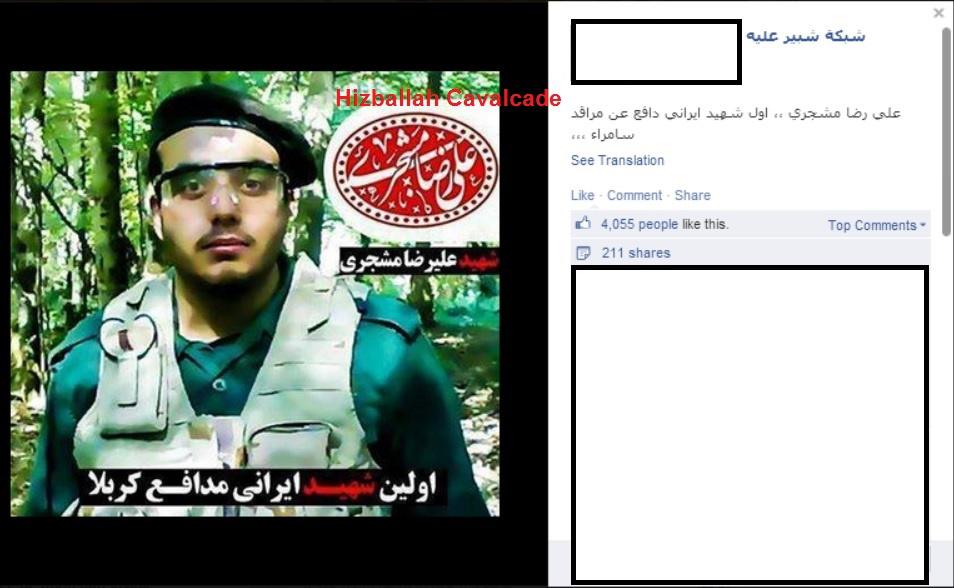
Figure 1: Post claiming the IRGC member was killed fighting in Samarra.
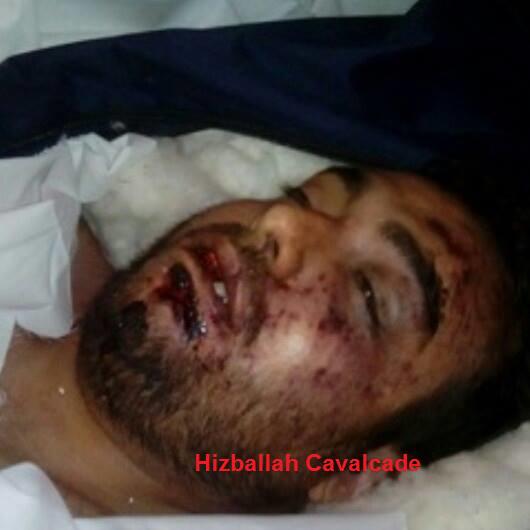
According to Iranian media outlets Ali Reza Moshajari, a member of Iran’s Islamic Revolutionary Guard Corps (IRGC), was reportedly killed in an accident on June 14, 2014.1 In another article written by the IRGC-linked Tasnim News, Moshajari was killed in “Western Iran” while on “a mission.” In all of the articles he is described as a “martyr” or “hero martyr.” However, his death was not such an open and shut case. In fact, Moshajari’s death may be further evidence of direct IRGC presence in Iraq.
Is This Iran IRGC martyr2
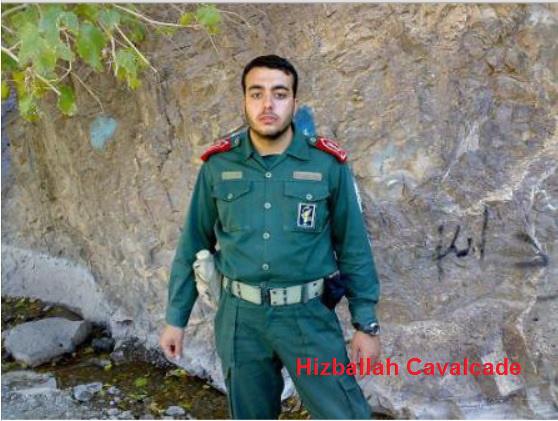
Figure 2: Moshajari in his IRGC uniform.
Before official announcements were made by groups such as Kata’ib Hizballah or Lebanese Hizballah stating they were both involved in fighting in Syria, both organizations would give vague explanations for the funerals of their members. The former would claim members had died due to illness or for other non-combat related reasons. Lebanese Hizballah would often only state that their fallen fighter had been “killed doing his jihadist duty.” Nevertheless, on social media run by many of these elements, it would be stated that the fallen fighters had in fact been killed in Syria. This may be the same type of structured announcement.
In some ways, this mirrors the announcements for the fallen IRGC member who was not only listed as a martyr for battle on a mission of some sort, but had competing accounts for how and where he died.
On Iran’s Islamic Revolutionary Guard Corps-linked (often these pages are run directly by the IRGC for internal and narrative purposes) social media networks–which run the gambit from Twitter and Facebook to Google Plus and YouTube—have cast Moshajari as an IRGC fighter who had been “martyred” in the IRGC deployment to Iraq.
It is possible that Moshajari was actually killed in an accident while deploying with IRGC units to sections of Iraq bordering Iran. CNN reported that 500 IRGC had been deployed to Diyala, an Iraqi province on the border with Iran.2 In Diyala Province, Kata’ib Hizballah and other Iraqi Shia Islamist groups backed by Iran have also reported being engaged in combat against units belonging to the Islamic State of Iraq and al-Sham (ISIS).
Is This Iran IRGC martyr4
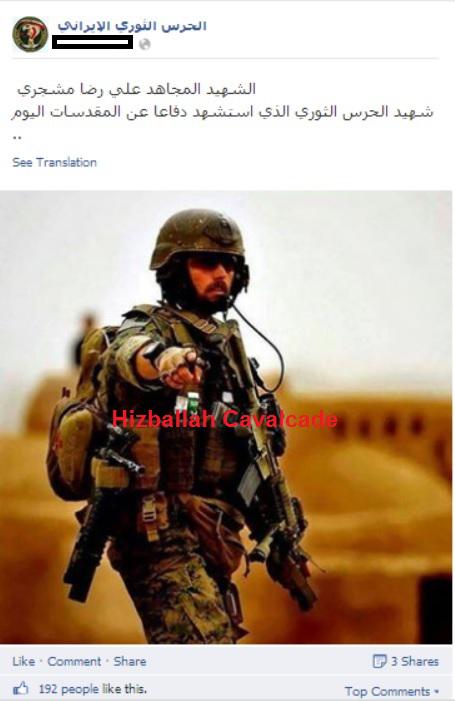
Figure 3: An IRGC Facebook page claiming Moshajari was the first IRGC martyr in Iraq while defending the shrines.
However, other Facebook-based sites with links to Iran’s regional Shia Islamist proxies and the IRGC also claimed that he had been involved in the “defense of Samarra.” Samarra has been a city of heavily publicized deployments by Iran’s Shi’a Islamist proxies within Iraq, mainly due to the fact that the holy Askari Shrine is located in the city.
Is This Iran IRGC martyr
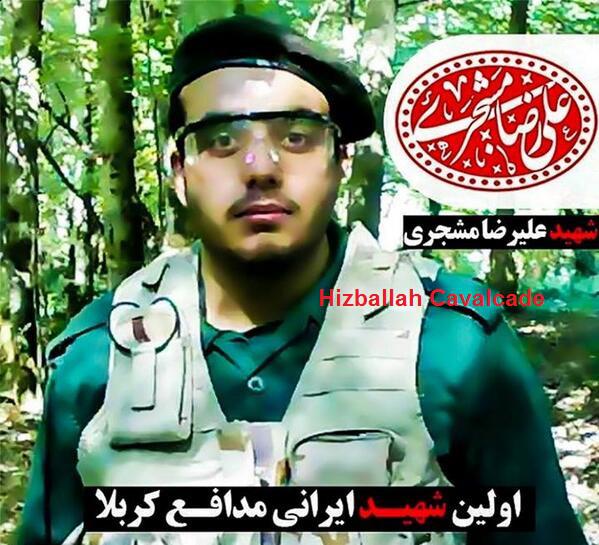
Figure 4: Killed IRGC member’s martyrdom poster. The poster was circulated primarily on Facebook and Twitter. It claims he was an “Iranian defender of Karbala.”
Is This Iran IRGC martyr3
Figure 5: A photo of Moshajari’s face prior to his funeral.
_________
NOTES:

1 See: https://www.nividar.com/news/539c150e9c89e9747ba66d86, https://www.newsup.ir/578691/%D9%BE%D8%A7%D8%B3%D8%AF%D8%A7%D8%B1%DB%8C-%D8%AF%DB%8C%DA%AF%D8%B1-%D8%A8%D9%87-%D8%B4%D9%87%D8%A7%D8%AF%D8%AA-%D8%B1%D8%B3%DB%8C%D8%AF%D8%AA%D8%B5%D8%A7%D9%88%DB%8C%D8%B1/, www.tasnimnews.com/Home/Single/401002, www.khabarfarsi.com/n/9523567. 2 See: https://edition.cnn.com/2014/06/13/world/meast/iraq-violence/index.html.  

New statement from Jabhat al-Nuṣrah: "The Battle 'Now We Invade Them' For Control Of the Strategic Village of Umm Sharshūḥ In Rural Ḥomṣ"

VH641
Click the following link for a safe PDF copy: Jabhat al-Nuṣrah — “The Battle ‘Now We Invade Them’ For Control Of the Strategic Village of Umm Sharshūḥ In Rural Ḥomṣ”
__________

To inquire about a translation for this statement for a fee email: [email protected]

The Clear Banner: "Update on the French Volunteers in Syria"

NOTE: For prior parts in the Clear Banner series you can view an archive of it all here.

Update on the French Volunteers in Syria
By Stéphane Mantoux
The phenomenon of French jihad in Syria began to get media exposure in 2013, two years after the beginning of the revolution, the civil war, and the intervention of foreign fighters alongside insurgents. For France, the magnitude of the phenomenon is unprecedented, far exceeding the Iraqi or Afghan experience. Departures are accelerating since the summer of 2013 and did not appear to have been hampered by the conflict between the Islamic State in Iraq and Sham (ISIS) and Jabhat al-Nusra (JN). Persons involved in jihad have some commonalities, including radicalization via the Internet and social networks, but typical profile does not really exist for French jihadists: they are actually quite varied. With few exceptions, departures are not carried out by organized networks or veterans of radical Islam in France: they are often individual, spontaneous and so for the most unpredictable. The issue of the return of the French jihadists concerned authorities, and a first attempted attack on French soil has probably been thwarted in February 2014, being the fact this time of members of the baptized “Cannes-Torcy” cell. Faced with this painful problem, calls from families and concerns inside the population, the French government proposed, April 23, 2014, a plan to fight against departures in Syria that has not convinced many experts, answering probably to a need for communication on the subject. This is an update of my first article that will discusses the evolution of recruitment in France from February until early June 2014 : the building of a “family jihad“, the acceleration of recruitment with the formation of a French brigade in JN and probably within ISIS, and attempts by the French government to send signals more or less suitable for jihadists.

Family Jihad: women, children, but also girls in Syria

A new trend is linked to jihad in Syria phenomenon: the departure of girls. Anissa, 22, was converted under the influence of a friend of his school in Bordeaux. She married a young Muslim presented by an imam met on Skype and left a farewell letter to his mother. Dozens of French are affected by this phenomenon: Ly, 19, a student from Senegal, left with her baby of 15 months. She is accompanied by a schoolgirl, 17, of Epinay, who stole the credit card from her father to finance the trip1. At the same time, at the end of February 2014, a 14 year-old girl from Grenoble was arrested at the airport Lyon-Saint-Exupéry as she was about to fly to Istanbul. Placed in a home, she fled before being caught again the next day. This is the third minor at least trying to reach Syria in January 2014 after a 15 year old girl who managed to make it to Syria2. Nora, 16, has gone on January 23; her brother says she was manipulated by others and, in mid-March, she regrets her departure in Syria3. Her brother went once to bring her back in February4; he went to the Turkish border, he succeeded in a second attempt in April 2014 to go to Syria and to see his sister two times5. At the end of March, Barbara Marie Rigolaud, a French 35-year-old from Nanterre, was arrested by the PYD (Kurdish party that controls areas in north-northeast Syria) near Aleppo. She had joined JN after having belonged to ISIS. She arrived in Syria in May 2013 with her husband and four children6. Also in March 2014 the mother of Assia, the girl of 23 months led by his father since October 2013 in Syria, launched numerous calls for help. Sahra, a 17-year-old from Lézignan-Corbières (Aude, southwestern France), would have run away and joined Syria since March 11. She would be shipped to Marignane in a flight to Turkey. On March 14, she confirmed to her brother that she is in the Aleppo region. Sahra, who practiced Islam for at least one year, had apparently prepared her départure7. Along the same lines, a young schoolgirl, 16, with the dual French and Algerian nationalities, living in Troyes, is reported in Syria by his parents on April 8, 2014, radicalized only in few months. She would have received as Sahra a sum of money in cash by an intermediary to pay her travel8. She was stopped in Germany before she could reach Syria.

Ongoing recruitment in early 2014

France Info interviews in February 2014, two French who have gone to fight in Syria, Abu Chaak, 24, and Abu Dahuk, 26. They say they are from the Paris region, fighting in the Aleppo region and belong to ISIS. Dahuk is among the first French arrived in Syria at the beginning of 2013 ; he plans not to return to France to carry out attacks but to die as a “martyr” on Syrian soil9. In March, Seif al-Qalam, a young man of 27 who also comes from the Paris region, who fought for ISIS before joining JN (he arrived on site in July 2013 with his wife and children), claiming that the latter group includes a brigade composed entirely of French (a hundred men?) which he is part. That would be the French who have imposed this solution for reasons of linguistic understanding. These men want to fight in Syria and did take the fight to France if it had operations against them10. Mid-February, Bilel, a man with a degree in economics and volunteer firefighter in Grenoble, was killed in fighting in Homs. He had gone to Syria in July 2013 with his brother and several others French volunteers for jihad ; he was clearly radicalized after a breakup. There, he joined JN and takes the « nom de guerre » of Abu Al-Siddiq Tounsi11. 22 March 2014 a French national, Sylvain Decker, was arrested by Moroccan police in Rabat. He was part of a network of recruitment for jihad, particularly in Syria, who worked in both Spain and Morocco12. A draft of a terrorist attack due to a veteran Syrian Jihad is probably foiled in south-eastern France. The DCRI had discovered on 17 February 2014 900 grams of explosives in a building near Cannes, drop point for a member of the Cannes-Torcy cell arrested a few days earlier. The young man, Ibrahim B., had gone to Syria in September 2012, with two others, thus escaping the dragnet of the DCRI for the cell. Abdelkader T., one of the companions of Ibrahim, was arrested in Italy January 16, 2014. Ibrahim B. would have returned the same time in France, having fought as others in JN. On 11 February, he was arrested in the building where the explosives were discovered later13. At the end of April 2014 a young man in his twenties, claiming to be a former French soldier in a regiment of infantry paratroopers, is seen in a video posted on Youtube14. On April 30, the Interior Minister Bernard Cazeneuve indicates that 285 French are currently in Syria, and is concerned about an increase of 75% of the total in a few months. One hundred jihadists have returned to France and 5 were killed15. The next day, a 37 year old Algerian, regular resident in France, was expelled on suspicion of recruiting in France for jihad in Syria. He was arrested by Turkey on board a bus taking a group of French to Syria. He was close to two other men living in Savoie, like him, known to have participated in routing volunteers to Afghanistan and sentenced in February 201116.

The plan of the French government: a communication operation?

April 23, 2014, the French government unveiled a plan to fight against the departure of young people in Syria, including an attempt to ensure early detection of potential candidates for jihad. Finally, the plan provides a hotline of crisis for parents welcomed by professionals, and consider the reintroduction of the authorization to leave the country for minors (measure eventually discarded). Human intelligence and cyber security will be leveraged to identify individuals likely to radicalize17. However, for Wassim Nasr, a journalist specializing in jihadists, these measures come ten years too late. He does not believe in the effectiveness of the alert platform for parents. He also calls to treat the phenomenon as a criminal problem; and indeed, the profiles are varied, too many to be reduced to this assumption, especially since as he points out, all candidates initially do not necessarily have to return to France to carry out attacks. The problem is political, and linked to the position of the French State in Syrian conflict18. David Thomson, RFI journalist and author of a book on French jihadists published in March 201419, confirms that the profiles are very different. If the initial motivations are just as varied, jihad in Syria is unprecedented in modern history, for France, because of the access to the battlefield and the easy use of social networks. He explains how the first contingent of twenty French arrived from late 2011 and 2012, carried an air call via social networks and led to the mass influx that we see in particular in the past year. It also confirms that there is a brigade of French in JN. The link of the jihadists to social networks and different ways from those of previous jihad are the difficulty of preventing the phenomenon and even following it when the jihadists are returning on French soil. The only red line not to cross, according to him, is the threat of attacks on the national territory. At that time, the government intervenes, but prefers to otherwise monitor these social networks, or forums, because they are also intelligence sources. Besides the net of jihadists, who go through many social networks, is almost impossible to control. The only positive effect he sees in the government’s plan is the creation of a plan for parents, but a

Shaykh Abū Basīr al-Ṭarṭūsī releases a new book: “The Book of the Revolution and Revolutionaries: Words Written for the Arab Revolutions, Especially the Syrian Revolution, Part #17″

NOTE: For prior parts see: #1-15 and part 16 is included in the below release.


Click the following link for a safe PDF copy: Shaykh Abū Basīr al-Ṭarṭūsī — “The Book of the Revolution and Revolutionaries- Words Written for the Arab Revolutions, Especially the Syrian Revolution, Part #17″
___________

To inquire about a translation for this book for a fee email: [email protected]

GUEST POST: Ansar al-Sharia in Tunisia’s Social Media Activity in 2014

NOTE: As with all guest posts, the opinions expressed below are those of the guest author and they do not necessarily represent the views of this blogs administrator and does not at all represent his employer at the Washington Institute for Near East Policy.
Jihadology.net aims to not only provide primary sources for researchers and occasional analysis of them, but also to allow other young and upcoming students as well as established academics or policy wonks to contribute original analysis on issues related to jihadism. If you would like to contribute a piece, please email your idea/post to azelin [at] jihadology [dot] net.
Click here to see an archive of all guest posts.

Ansar al-Sharia in Tunisia’s Social Media Activity in 2014
By Daveed Gartenstein-Ross and Oren Adaki
Ansar al-Sharia in Tunisia (AST), the country’s foremost salafi jihadist group, has experienced a significant change in fortunes over the past year. A year ago it was able to operate legally in Tunisia, and concentrated primarily on undertaking dawa (evangelism) to win young Tunisians to its cause. However, a rise in violent incidents carried out by salafists caused tensions between AST and the state to spike. Relations between AST and Tunisia reached a point of no return in late July 2013, when in a five-day period secularist politician Mohammed Brahmi was murdered and salafists killed eight members of the security forces, five of whom had slit throats. The government cracked down on the group after those incidents, designating it a terrorist organization, banning its activities, and arresting its members.
AST has been an innovator among jihadist groups in its use of social media. Thus, as it attempts to recover from the blows inflicted upon it by the Tunisian state, its social media activities may provide some important clues. This analysis begins by examining AST’s social media activity related to events in Tunisia before turning to AST’s perspective on issues further afield, such as the Syria jihad. MEMRI has also produced a recent report on AST’s Facebook page that is worth noting.
Rejection of the Terrorism Designation
AST vehemently opposes its designation as a terrorist group by the Tunisian government. Its main line of argument is that the group has humanitarian projects and enjoys the widespread support of other Muslims. A tweet that AST sent from its official account on January 1, 2014 purported to show “what you don’t see in the media about Ansar al-Sharia in Tunisia.” It linked to a video of AST’s community service projects, in which the group distributed medical supplies and repaired public infrastructure. The video emphasized in particular very young children (seemingly elementary or middle school age) tackling these service projects while wearing bulky orange vests identifying them as doing this work under AST’s banner.
In a similar vein, on March 10 AST asked in a tweet: “Does Ansar al-Sharia truly frighten the Muslims of this nation?” The tweet included a link to a different video on AST’s community service efforts, including testimonies from sick people whom AST helped. One blurry-eyed old man offering his testimony states that he has diabetes; the camera pans down to reveal that the toes on his left foot have been amputated.
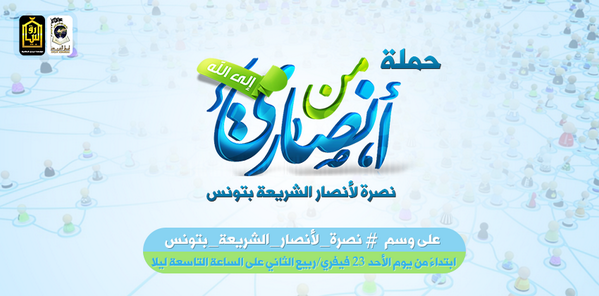
Further making a bid to show the support they enjoy, on February 21 AST tweeted an invitation to participate in their campaign asking “who are my helpers in the cause of Allah,” with participants using the Arabic-language hashtag #Support_for_Ansar_al-Sharia_in_Tunisia.
 
 
AST social media article
A graphic promoting the “Who are my helpers in the cause of Allah” public relations campaign, tweeted February 21, 2014.
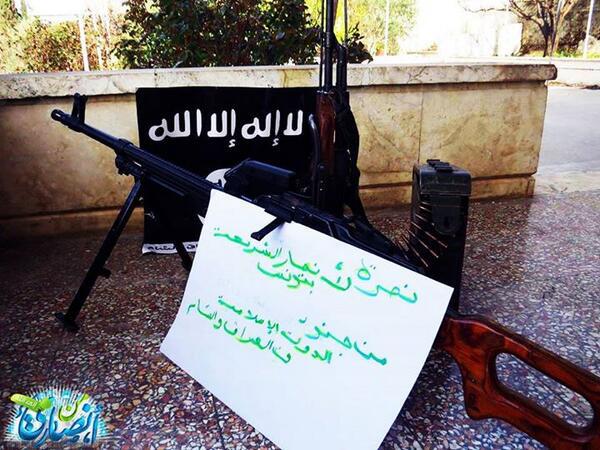
AST received support from a variety of circles, which the group posted to its Twitter feed. On February 25, it tweeted a photograph of a handwritten sign leaning against an automatic weapon, with a flag of the Islamic State of Iraq and al-Sham (ISIS) in the background. The sign reads: “Support for Ansar al-Sharia in Tunisia from the soldiers of the Islamic State of Iraq and al-Sham.”
AST social media article
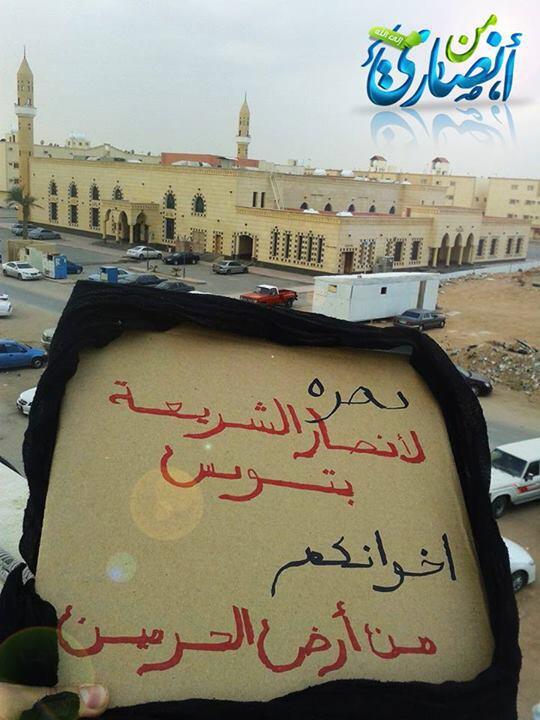
Another representative photograph posted as part of the campaign, on February 26, featured a handwritten sign held up in front of a Saudi mosque that read: “Support for Ansar al-Sharia in Tunisia,” attributing this support to “your brothers from the Land of the Two Holy Mosques.” (For more coverage of AST’s “who are my helpers in the cause of Allah” campaign, see MEMRI’s report, referenced above.)
AST social media article2
Anti-Government Propaganda
Another aspect of responding to the crackdown has been disseminating anti-government propaganda. Some of this propaganda has been supplied by outside scholars, including Abu Qatada al-Filistini, who has longstanding and deep connections to AST emir Abu Iyad al-Tunisi. Abu Iyad spent time in the United Kingdom, where Abu Qatada was also based, during his exile from Tunisia. Some jihadist forums have portrayed Abu Iyad as Abu Qatada’s “disciple,” and one AST member described Abu Qatada as “probably the most influential” jihadist theorist who has the group’s ear.
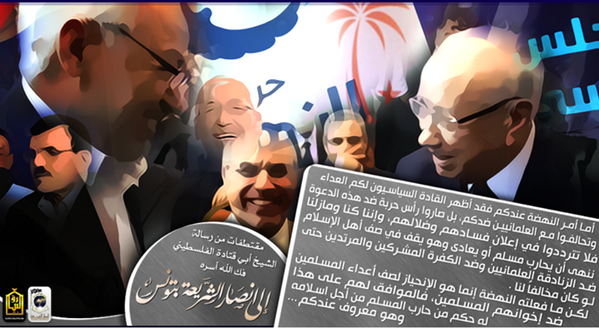
On January 21, AST posted a message from Abu Qatada, titled “An Important and Urgent Message to Ansar al-Sharia in Tunisia,” to all its social media platforms, including Twitter. Part of Abu Qatada’s message is devoted to attacking Ennahda, the Islamist political party that opted to work through electoral politics. Abu Qatada said that although Ennahda and AST seemingly share a common goal of “establishing Islam,” Ennahda moved in the “direction of the secularists,” and in the course of negotiations over the new Tunisian constitution accepted that sharia would not be the country’s source of law. According to Abu Qatada, Ennahda—which was in power when the crackdown on AST began—went even further astray “in their pursuing you [AST members] and attributing to you false actions that were used as an excuse to chase you and imprison you, and even to kill you.” Abu Qatada said that because Ennahda has allied itself with the secularists, it therefore shares in their judgment and fate.
AST social media article2
This graphic was tweeted on January 21, 2014,and includes excerpts about Ennahda from Abu Qatada’s message.
Thereafter, AST continued to press the theme that the Tunisian government had aligned itself with infidelity. On May 10, a tweet and accompanying graphic called on Muslims to fight the “leaders of infidelity,” and argued that Islam’s “powerful ability to protect itself” was the characteristic that would ultimately produce a victory.
AST social media article3
On May 20, AST posted a graphic titled “So that the nation will learn…” The accompanying text explained that “we do not label the tyrants infidels, nor do we repudiate them nor antagonize them and their friends due to their imprisoning, torturing, and persecuting us.” Rather, it explained that they label their opponents infidels “due to their imprisonment of monotheism and their detaining the sharia.” This statement reflects AST’s prioritization of its interpretation of sharia: it is unambiguously the most important value for which the group stands, and its suppression is more important to members, according to this statement, than even being subjected to imprisonment or torture.
These statements reflected AST’s understanding of both the general situation that it confronted as well as the clash of values between the group and the government. But some of its statements instead deal with specific incidents, such as “A Word of Truth and an Outcry in the Valley,” which was posted on April 15, addressing a recent raid in Rouhia in which security forces’ raid of a mosque resulted in the arrest of 40 salafists, reportedly including returnees from Syria. AST’s statement is one of solidarity with the arrested salafists, claiming that the group “follows what is occurring to you moment by moment, and we share in your pain and anguish.” Describing the Rouhia raid as one of the “crimes of the tyrannical Tunisian regime,” the statement describes a pattern of “harassment, intimidation, displacement,” as well as “the violation of the sanctity of homes and of women.” The statement calls on the people of Rouhia

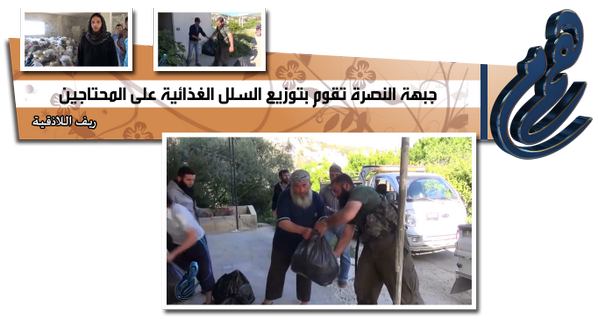
New video message from Himam News Agency: “Report 83: Jabhat al-Nuṣrah Distributes Food Baskets To the Needy – Rural al-Ladhāqīyyah (Latakia)"

UPDATE 7/27/14 8:18 PM: Here is an English translation of the below Arabic video message:

____________


NOTE: For previous parts in this video series see: #82#81#80#79#78#77#76#75#74#73#72#71#70#69#68#67#66#65#64#63#62#61#60#59#58#57#56#55#54#53#52#51#50#49#48#47#46#45#44#43#42#41#40#39#38#37#36#35#34#33#32#31#30#29#28#27#26#25#24#23#22#21#20#19#18#17#16#15#14#13#12#11#10#9#8#7#6#5#4#3#2, and #1.

BpY_ahYCQAEB34I

__________