Eleven new statements from Jabhat al-Nuṣrah

VH641
Click the following links for safe PDF copies:
Jabhat al-Nuṣrah — Storming the Checkpoint in the Village of Drém in the Eastern Countryside of Aleppo
Jabhat al-Nuṣrah — Responding to a Convoy for the Nuṣayrī Army Coming From al-Tanmīyyah Checkpoint Towards Khanāṣir and Inflicting Heavy Losses On Them in the Eastern Countryside of Aleppo
Jabhat al-Nuṣrah — Storming and Liberating the Village of ‘Ubaydah in the Countryside of Eastern Aleppo With Little Resistance
Jabhat al-Nuṣrah — Report on Some Documented Bombing Operations in the Countryside of Eastern Aleppo (Late April – Early June 2013)
Jabhat al-Nuṣrah — Report on Some Operations Targeting Cars with IEDs in the Countryside of Eastern Aleppo (Late April – Early June 2013)
Jabhat al-Nuṣrah — Storming the Checkpoint in the Village of Jabayn in the Eastern Countryside of Aleppo
Jabhat al-Nuṣrah — Arrest of Informant for the Nuṣayrī Army in the Village of al-Ḥājib in Rural Aleppo
Jabhat al-Nuṣrah — Attempting to Storm the Checkpoint of al-Tanmīyyah al-Tāba’ for the Village of al-Ḥammām in the Countryside of Eastern Aleppo
Jabhat al-Nuṣrah — Responding to the Nuṣayrī Army Attempting to Storm the Village of al-Qabtīn in the Countryside of Eastern Aleppo
Jabhat al-Nuṣrah — Report on Some Operations Bombing of Vehicles in the Countryside of Eastern Aleppo (Mid-June-Early July)
Jabhat al-Nuṣrah — Responding to the Nuṣayrī Army Attempting to Progress From the Village of Burj al-Za’rūr in the Countryside of Eastern Aleppo
_________

To inquire about a translation for these statements for a fee email: [email protected]

Hizballah Cavalcade: The Songs of Liwa’a Abu Fadl al-Abbas: Militant Iraqi Shia Music & Syria

NOTE: For prior parts in the Hizballah Cavalcade series you can view an archive of it all here.

The Songs of Liwa’a Abu Fadl al-Abbas: Militant Iraqi Shia Music & Syria
By Phillip Smyth ([email protected])
Click here for a PDF version of this post

Remember the war against Franco?

That’s the kind where each of us belongs.

Though he may have won all the battles,

We had all the good songs.

–        Tom Lehrer, “The Folk Song Army”, 1965.

*Note: The author has counted at least thirty different songs available online which have been produced to praise LAFA. Most of these songs were not included due to their lack of popularity in LAFA social media circles.
When journalist Nicholas Blanford first announced Iraqi Shia were fighting alongside the forces of Syrian president Bashar al-Assad, his main source for this assessment was a music video.[1] From a period extending from fall 2012-summer 2013, Shia Islamist organizations operating in Syria have released more music videos and have been actively using them in a complex messaging strategy.
The utilization of musical propaganda has been a key propaganda strategy used by radical Shia Islamist organizations.[2] Lebanese Hizballah has employed a number of bands to sing songs promoting the group’s narrative since the 1980s. In 2008, the Iraqi government found the songs made for Muqtada al-Sadr so threatening, they banned them.[3]
Due to Shia Islamist involvement in the Syrian Civil War, Iraqi Shia who favor Muqtada al-Sadr and pro-Iranian Shia parties, have produced a wide variety of songs praising Liwa’a Abu Fadl al-Abbas (LAFA). These songs are often overtly sectarian and offer blatant threats against the Syrian rebels.
The Iraqi-produced music videos, created to honor Iranian-backed Shia fighters attached to LAFA, also occupy a strange ideological gray-area. The singers often praise and or have praised Muqtada al-Sadr and the Liwa’a al-Yum al-Mawud (the Promised Day Brigade). However, Sadr has not publicly supported Shia militiamen fighting in Syria.[4] Some of the same musicians who sing for LAFA, have also backed organizations which have fought Sadr, namely Asa’ib Ahl al-Haq (AAH).[5]
Other Iraqi influences are quite extensive in newly made music about LAFA, including the musical rhythm styles. Demonstrating that these songs are aimed at an Iraqi audience, they are often sung in the Iraqi dialect of Arabic. All of the singers and songwriters who have made these songs have also had extensive background experience singing for Shia Islamist organizations, performing religious songs, and have gained the majority of their fans from their online presence.


Untitled264
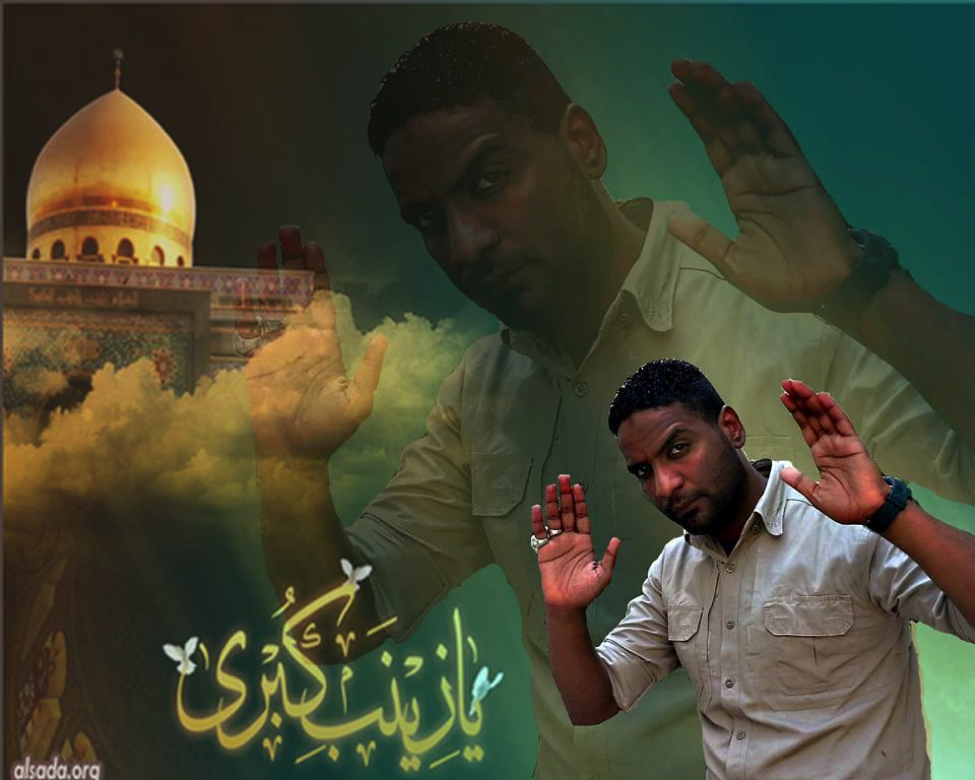
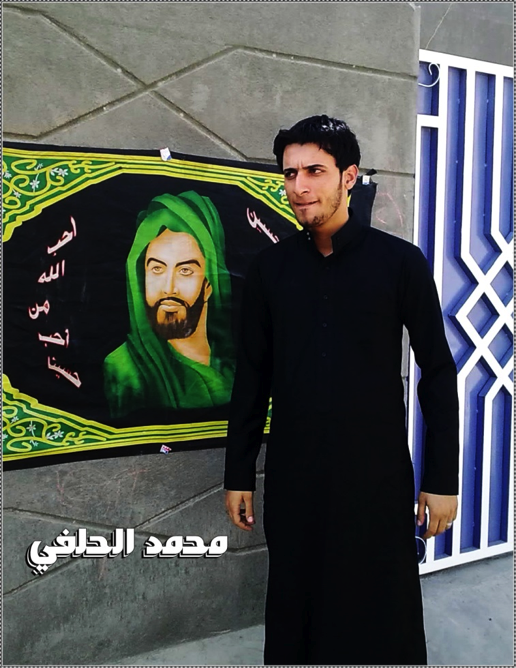
Figure 1: ‘Ali al-Muwali poses for a picture which includes the Saydah Zaynab shrine.
Untitled265
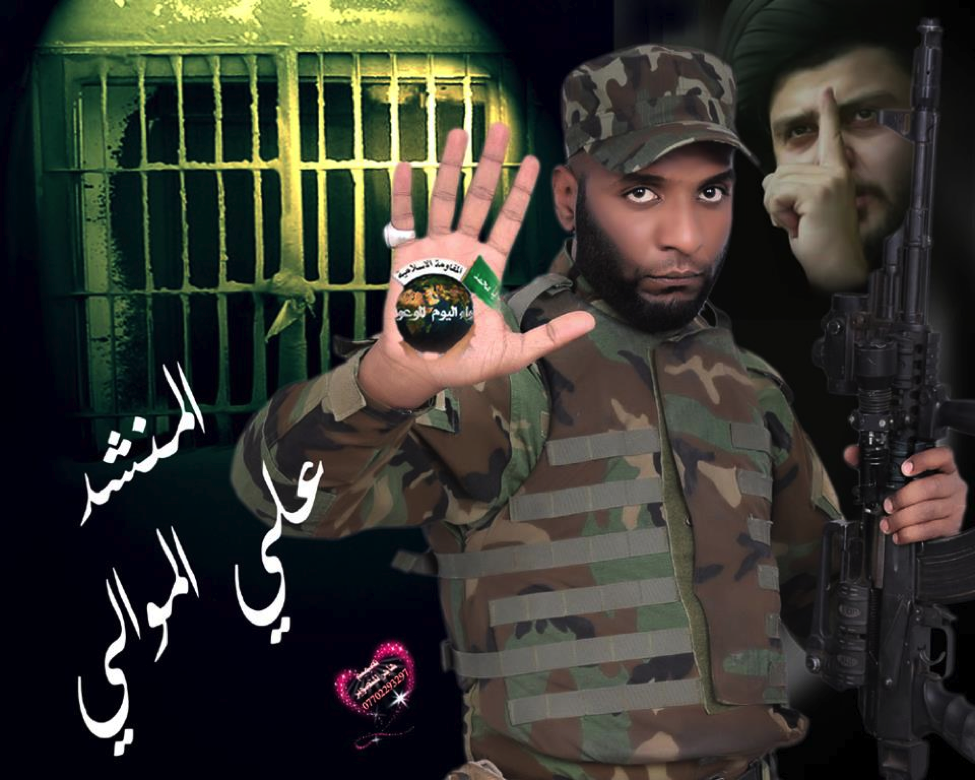
Figure 2: Muwali has not hidden his links to Liwa’a al-Yum al-Mawud. In his left hand, the group’s logo is visible.
Untitled266
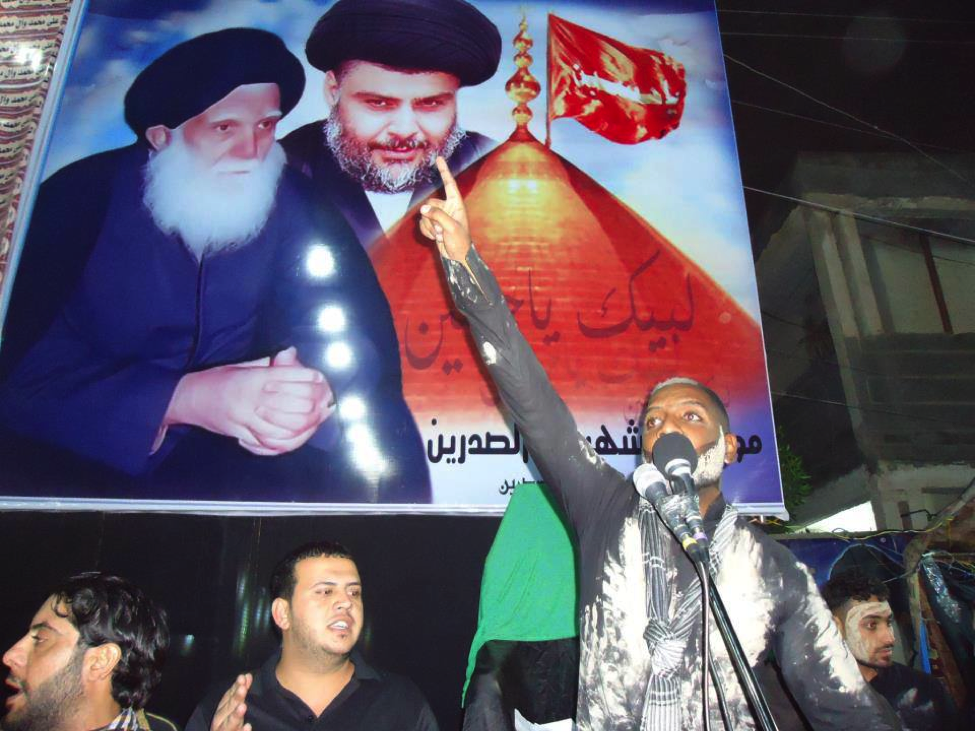
Figure 3: Muwali singing to Sadr supporters.
Released on September 5, 2012, the music video which first burst onto the scene carrying the message of Liwa’a Abu Fadl al-Abbas was “Ya Zaynab” by ‘Ali al-Muwali. While the initial music video did not receive as much attention in pro-LAFA social media circles, a more popular edit of the song with a new music video quickly became well-known. Appearing on YouTube at the end of December, the new video and song soon became the anthem for LAFA.  It is clear from the song’s lyrics, music video, and time of release that its creation was timed to coincide with further announcements about the group’s existence.
While the initial music video was less popular than the re-edited LAFA video, the song clearly promoted a militant message. Prior to singing about LAFA, singer of “Ya Zaynab”, ‘Ali al-Muwali had made a number of songs dedicated to praising attacks against U.S. and Coalition troops in Iraq. These songs appeared to be created for Liwa’a al-Yum al-Mawud. Muwali’s personal Facebook page includes two “Likes” for Liwa’a al-Yum al-Mawud Facebook pages.

Another early song and music video utilized by Liwa’a Abu Fadl al-Abbas first appeared online in early February 2013. The song emerged on YouTube and in forums under a variety of titles. However, the primary title it was given was, “Liwa’a Abu Fadl in Syria Third Release”. It’s probable the singers and songwriters came from the same groups found in other videos on this post.
As with LAFA’s edited music video for “Ya Zaynab”, this song’s video showed footage of LAFA fighters engaged in combat and samples from a film about the Battle of Karbala. The song also featured threats against the Free Syrian Army and overt messages appealing to Shia-identity. “Liwa’a Abu Fadl in Syria Third Release” was later used as background music in a video showing members of Kata’ib Sayyid al-Shuhada inspecting dead Syrian rebels (see the first video on the post).
Untitled267
Figure 4: Pro-LAFA Iraqi singer, Muhammed Abu ‘Azrael al-Karbalai.

Between April-May, 2013 a number of songs were released by Iraqis praising the Abu Fadl al-Abbas Brigades. “Dedicated to the Abu Fadl al-Abbas Shia Brigade”, was released in mid-May by Pro-Muqtada al-Sadr singer Muhammed Abu ‘Azrael al-Karbalai on Iraqi Shia forums.[6] It warned the rebel Free Syrian Army, telling them “Do not cross the line…We will silence you” and also praised the Syrian army, “O Syrian army, focus and show them what you can do” The song also expressed fears of what would happen if the forces of Bashar al-Assad did not win, saying, “Oh, [Syrian] army, God knows what will happen if you fail!”

Untitled268
Figure 5: Muhammed Helfi stands in front of a picture of Husayn, one of the most important figures in Shia Islam.
Another LAFA song, performed by Muhammed al-Helfi was called, “Zealous to Defend Saydah Zaynab”. Helfi, an Iraqi Shia and pro-Sadr singer (he has also performed with pro-Sadrist singer Laith al-Ruba’ie) adopted Shia identity messaging and delved into conspiracy narratives to explain the war in Syria. In the song, al-Helfi rehashes claims of a “Saudi and Jewish” conspiracy against the Shia. The narrative presented matches those produced by LAFA and other Iranian-backed organizations. “We are all for Zaynab”, Helfi sings, “we know the difference between precious and cheap…We get rid of the cheap…We Shia know our worth.”

Untitled269
Figure 6: Abbas al-Khazali.
Another Iraqi-produced song was dedicated specifically to Liwa’a Abu Fadl al-Abbas on April 6. The song threatens Syrian rebels and praises Liwa’a Abu Fadl al-Abbas. In fact, LAFA’s Sung by Abbas al-Khazali, the music video shows Shia fighters dressed in similar combat gear as LAFA and armed with M16A2 rifles. There is also a shot of these Shia fighter-cum-singers capturing and abusing what can be presumably Sunni Islamist or Free Syrian Army fighters. The theme of capturing and abusing “Enemies of Shi’ism” has been a prevalent theme in songs released by Iraqi singers since April.

On April 19th, a pro-LAFA song was posted to YouTube. Much of the footage used showed LAFA operations, but when the music video begins, the main messaging thrust is one of Shia power over Sunni enemies. Men (assumedly Shia fighters) storm a building and forcibly detain these enemies. Later in the song, the singer calls Saudi Salafist Sheikh Adnan Al Aroor, “Black” (i.e. holding a black ideology).
Untitled270
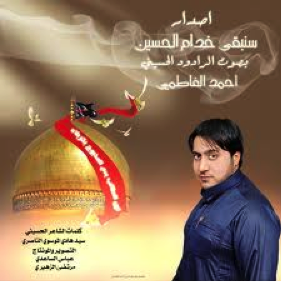
Figure 7: An Ahmed Fatimi CD cover.

Ahmed Fatimi, another Iraqi singer, also sang a song in praise of the “Defenders of Zaynab”. The music video utilizes photographs of LAFA members and commanders first put online between the fall of 2012-spring 2013.


Untitled271
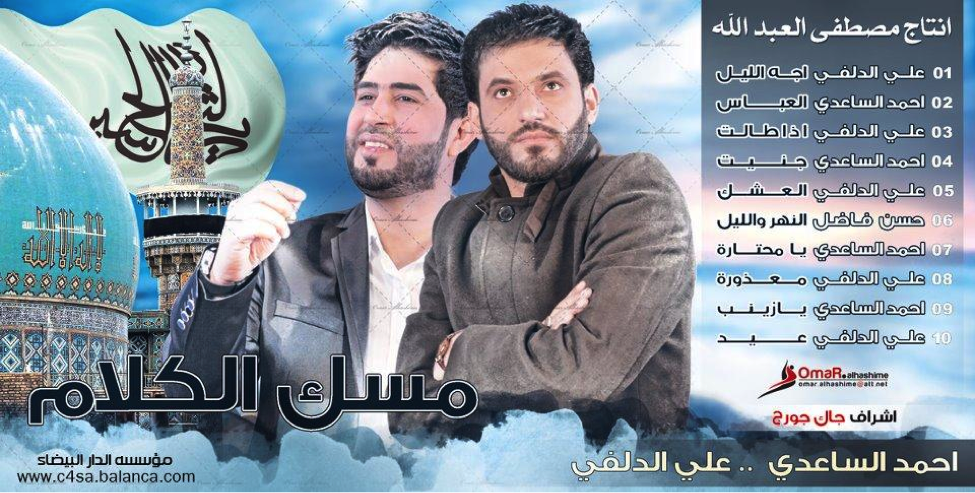
Figure 8: Ali al-Delfi and Ahmed al-Sa’adi pose on the cover of one of their 2012 CDs.
One of the first LAFA songs to be released in 2013 (March 5) was made by Ali al-Delfi and Ahmed al-Sa’adi. The song immediately became popular on forums and Facebook pages devoted to LAFA and other Iranian-backed Shia groups in Iraq. Demonstrating the song’s reach, in of the few pieces of video footage taken of LAFA fighters in Syria, the song was played on one of the fighter’s phones while LAFA was setting-up a sniper position.

On May 5, 2013, Ali al-Delfi and Ahmed al-Sa’adi released a song entitled, “Operetta for the Righteous”. The song was dedicated to the Iranian-backed Iraqi group, Asa’ib Ahl al-Haq (AAH).  Pointing to closer links between some Iraqi singers and the organizations they sing about  the fact that new

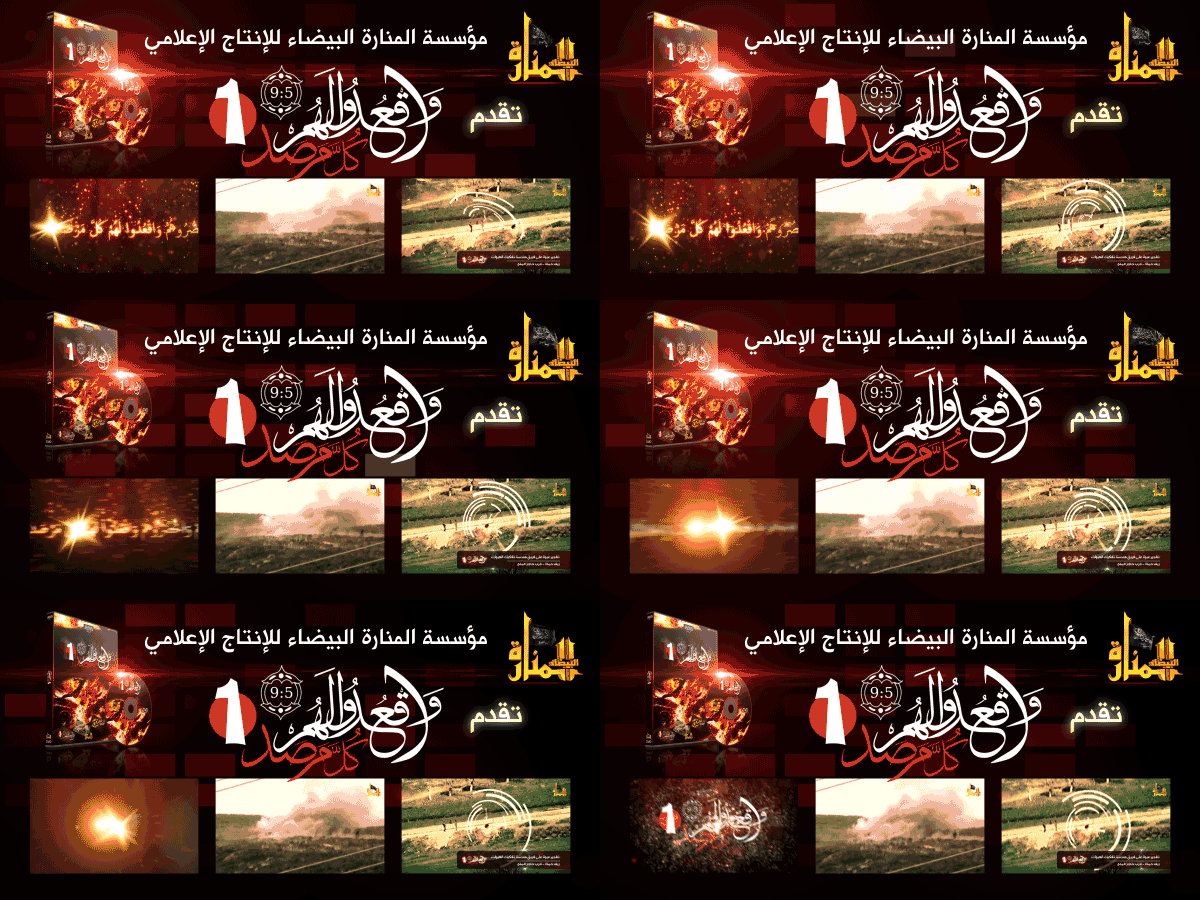
al-Manārah al-Bayḍā' Foundation for Media Production presents a new video message from Jabhat al-Nuṣrah: "And Sit In Wait For Them At Every Place Of Ambush #1"

Musings of an Iraqi Brasenostril on Jihad: The ISIS Cavalcade: Round-Up of Some Claimed Martyrs for the Islamic State of Iraq and ash-Sham

NOTE: An archive of the Musings of an Iraqi Brasenostril on Jihad column can now be found here.

By Aymenn Jawad Al-Tamimi
Since Sheikh Abu Bakr al-Baghdadi announced the Islamic State of Iraq and ash-Sham (ISIS) in April as a merger between Jabhat al-Nusra (JAN) and Islamic State of Iraq, one question that has arisen is the composition of fighters under the banner of ISIS. Some media reports- most notably the Reuters analyses by Mariam Karouny– have drawn a dichotomy of foreign mujahideen behind ISIS and native Syrians in JAN.
It is of course true that JAN is largely composed of native Syrian fighters (a point often missed in commentary, as my friend Charles Lister noted on Twitter recently). But how far is the notion of ISIS as a foreign force true?
It is my contention that the most useful way for an observer to look into this question is through examining the list of claimed martyrs for ISIS. Though it is only through self-reporting by jihadis so one shouldn’t conclude too much from it either since they could not want to report certain deaths. The title of this study- ‘ISIS Cavalcade’- is a tribute to Phillip Smyth’s ‘Hizballah Cavalcade’, which has in part given lists of fighters for Hizballah, the Iranian Revolutionary Guards, and Iraqi proxies of Iran killed in Syria, with helpful links to sources and insightful commentary.
The ISIS Cavalcade will take the following format: name, nationality, and further comments with sources and a photo where possible. Disputes as regards affiliation will be noted.
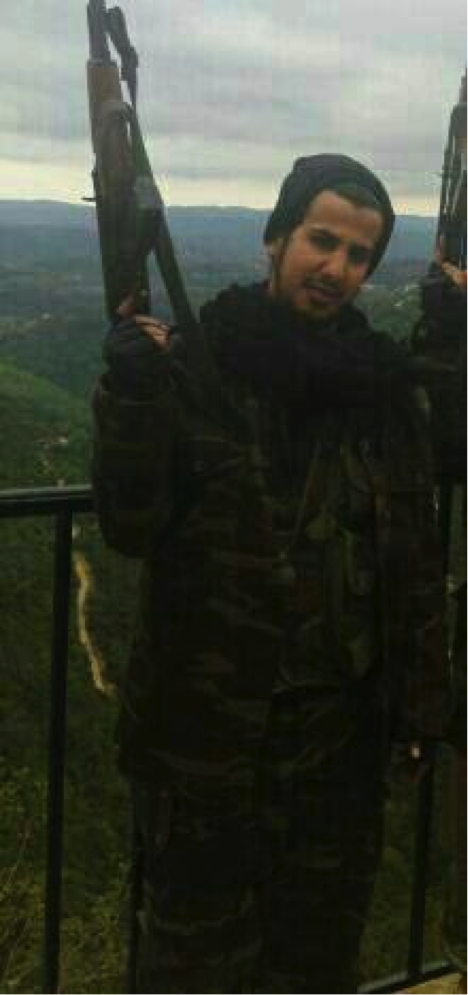
1. Name: Waleed Midawi al-Asiri (nom de guerre: Abu Dajana al-Azadi)
Nationality: Saudi (Bilad al-Haramain)
Comments: According to a report by the pro-ISIS channel ash-Sham, al-Asiri was responsible for the first martyrdom operation in the name of ISIS in the Latakia region, attacking a checkpoint and housing belonging to ‘Nuṣayri officers and their families.’ The claimed death toll of the operation- carried out by means of a car bomb laden with 4 tons of explosives- amounts to ‘at least 90 Nuṣayris.’
To an extent, ash-Sham’s account is corroborated by this Youtube video in which al-Asiri is said to appear- featuring him in a room with a banner on the wall entitled ‘Room of operations of the Mujahideen: Latakia.’ As a further point, I would note that the Latakia area has been an active area of operations for foreign fighters affiliated with the battalion Katiba al-Muhajireen (KAM).
If al-Asiri was also under the banner of ISIS, that would provide evidence for my contention that the relationship between KAM and ISIS is rather like that between Kata’ib Hizballah and Hizballah in Iraq– namely, that the two entities are not separate, but mirror fronts for one another.
Conversely, here is a purported JAN statement- dated 25 May, one day before ash-Sham’s report- claiming al-Asiri as a JAN fighter. The authenticity of this statement is strongly disputed by a forum user, while the original poster on said forum purports to defend it as emanating from JAN’s official channel al-Manārah al-Bayḍā. However, the fact is that the channel was officially offline during this period when Asiri’s martyrdom was announced and has only resumed recently. My overall judgment is therefore that Asiri likely belonged to KAM/ISIS.
Untitled
Figure 1: A photo of Waleed Midawi al-Asiri (source: ash-Sham)
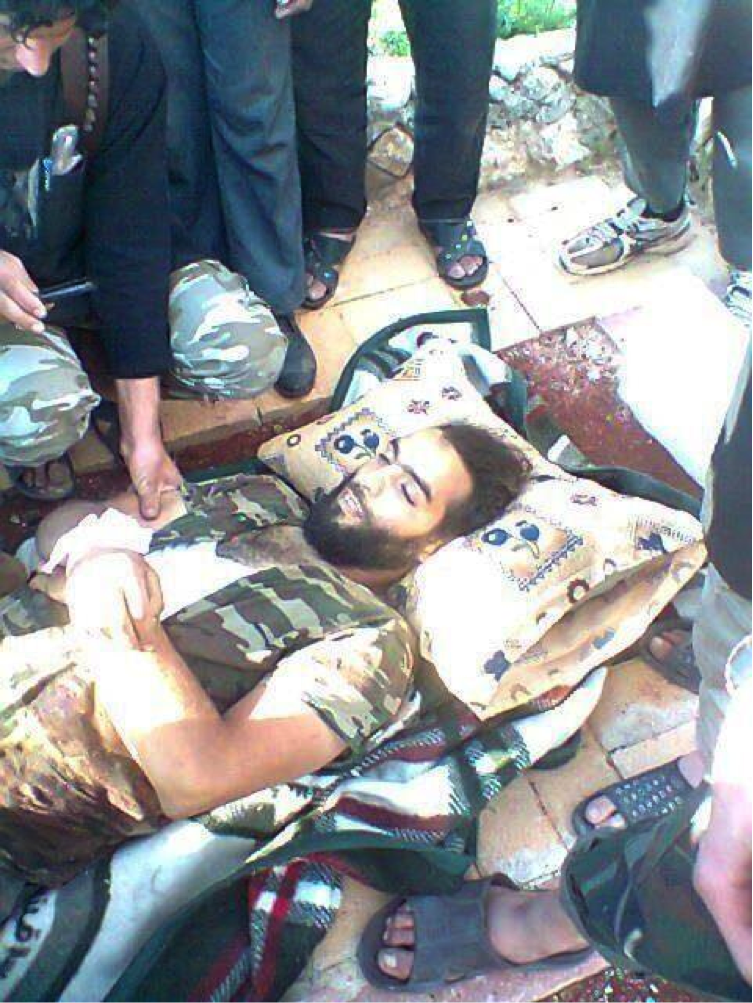
2. Name: Abu Yaqub al-Tunisi
Nationality: Tunisian
Comments: The jihadi forum Ansar al-Mujahideen featured a post on 14 May containing a short biography of Abu Yaqub al-Tunisi. He is said to have ‘abandoned the contemptible world in the land of the West and returned to Tunisia. From there he migrated to the land of ash-Sham.’ He was killed in a fight with regime forces in the Aleppo area.
The original biography can be traced to the pro-Al-Qa’ida page Qaḍaaya al-Ummah, though no affiliation with ISIS is explicitly mentioned there. That claim goes back to ash-Sham, as well as several pro-ISIS Twitter users. In contrast, the outlet Tanit Press cites Tunisian Salafist sources to say that Abu Yaqub al-Tunisi belonged to Jabhat al-Nusra, as do a few other Twitter users.  There is thus a possibility that al-Tunisi was originally JAN but declared affiliation with ISIS after the latter was announced by Sheikh Baghdadi.
Untitled2
Figure 2: Photo of Abu Yaqub al-Tunisi (source: Twitter and Facebook).
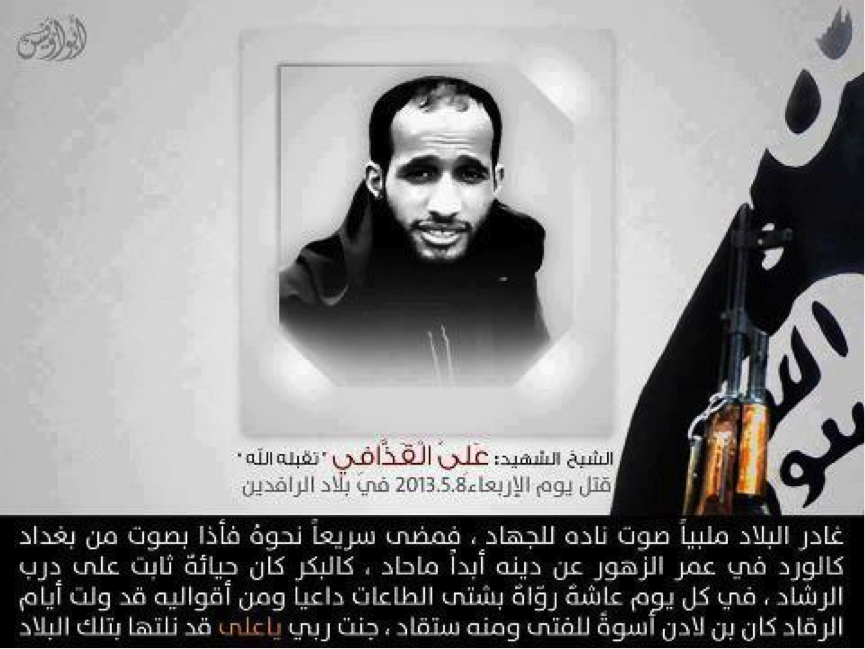
3. Name: Ali al-Qadhdhāfi (Nom de guerre: Abu Junaid)
    Nationality: Libyan
Comments: On 19 May, the Youtube user Abu Thabit al-Ansari uploaded a video of Alī al-Qadhdhāfi, featuring footage of him pictured with the ISIS banner, clearly indicating his affiliation with ISIS, which is further corroborated by the fact that on 11 May via Twitter, his death was reported to have taken place in Iraq rather than Syria. This particular martyrdom is important to note, for it still indicates the role of foreign fighters- and Libyans in particular- in the al-Qa’ida insurgency in Iraq.[i]
Untitled3
Figure 3: A photo of Ali al-Qadhdhāfi (source: here).
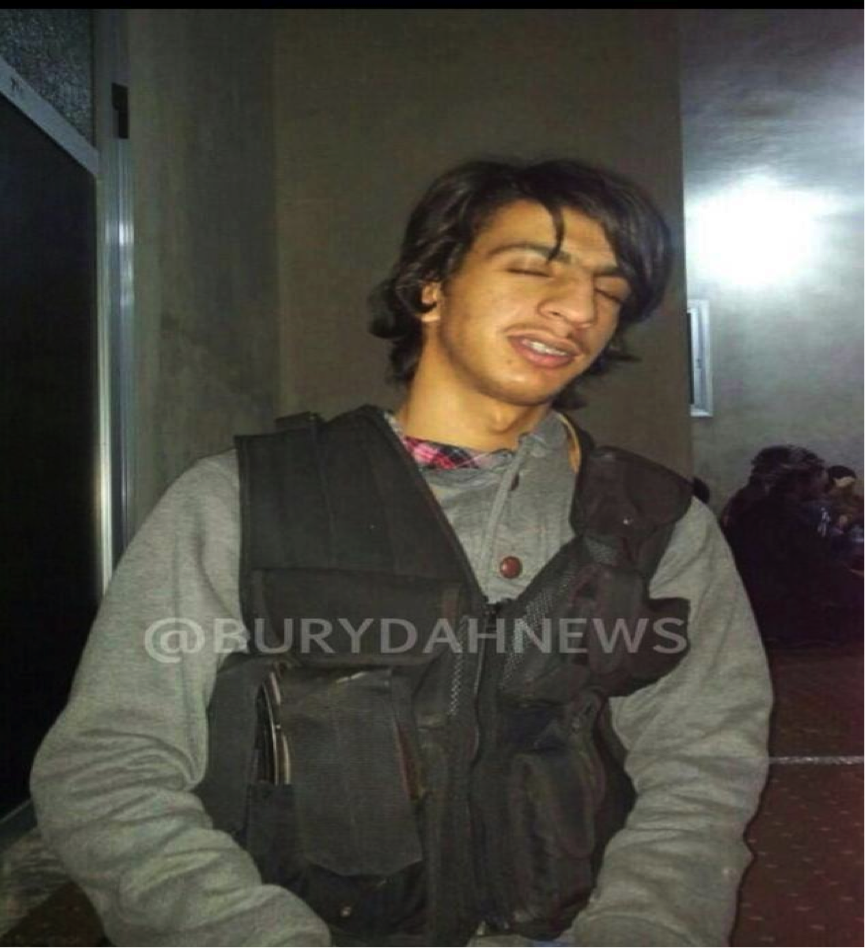
4. Name: Hamoud Mohammed al-Bdaiwi (nom de guerre: Abu al-Yazin)
Nationality: Saudi (Bilad al-Haramain)
Comments: The Facebook page ‘Kamishli’ (pro-regime) reported on 23 June that al-Bdaiwi was one of those behind attacks in the Damascus area on that day: specifically, in the neighborhood of Bāb al-Muṣallā, which- as authors George Atiyeh and Ibrahim Oweiss note- ‘constitutes the main part of Lower Mīdān.’
On the other hand, the Facebook page ‘Al-Ghurabā fī ath-thawra as-Sūrīya’ claims that he was killed in Aleppo. I remain agnostic as to the precise location of his death, but neither city is implausible, for ISIS has a presence in both Aleppo and Damascus.[ii]
The source for the photo of him given below goes back to the outlet Burydah News, which appears to have been the first outlet to report his death. However, no specific location within Syria for his martyrdom is given. As ever, the pro-ISIS channel ash-Sham claims him as a martyr for ISIS, but no pro-JAN sources to my knowledge have claimed him for JAN. Further, ash-Sham describes the circumstances of his death as a ‘martyrdom operation,’ indicating that perhaps he died in a suicide attack.
Untitled4
Figure 4: Photo of Hamoud Mohammed al-Bdaiwi
5. Name: Marwan bin al-Haj Saleh (Nom de guerre: Abu Ismail al-Tunisi)
Nationality: Tunisian
Comments: The pro-ISIS channel ash-Sham reported on 24 June that he was killed in Aleppo. His affiliation with ISIS is proven by his appearance alongside ISIS banners in the photo of him given below. The Facebook page Qaḍāya al-Ummah gives more precise details as to the circumstances of his death: namely, that he was killed during the rebel assault on Mannagh airport- an operation in which ISIS is known to be participating in coordination with other battalions.

Shaykh Abū Basīr al-Ṭarṭūsī releases a new book: “The Book of the Revolution and Revolutionaries: Words Written for the Arab Revolutions, Especially the Syrian Revolution, Part #13"

NOTE: The previous eleven parts are included in the book as well.


Click the following link for a safe PDF copy: Shaykh Abū Basīr al-Ṭarṭūsī — “The Book of the Revolution and Revolutionaries- Words Written for the Arab Revolutions, Especially the Syrian Revolution, Part #13″
___________

To inquire about a translation for this book for a fee email: [email protected]

New statement from Jabhat al-Nuṣrah: "Battle of the Liberation of the al-Khazān and al-Banāyyāt Checkpoints in Dar'ā"

sBTog

Click the following link for a safe PDF copy: Jabhat al-Nuṣrah — “Battle of the Liberation of the al-Khazān and al-Banāyyāt Checkpoints in Dar’ā”

__________

To inquire about a translation for this statement for a fee email: [email protected]

Six new statements from Jabhat al-Nuṣrah

Musings of an Iraqi Brasenostril on Jihad: Jabhat al-Nusra and the Islamic State of Iraq and ash-Sham: Deir ez-Zor and the wider east of Syria

NOTE: An archive of the Musings of an Iraqi Brasenostril on Jihad column can now be found here.

By Aymenn Jawad Al-Tamimi
Introduction
On account of the border with Iraq, one might infer through common sense stronger links in Deir ez-Zor and the east with mujahideen in Iraq fighting under the command of Sheikh Abu Bakr al-Baghdadi, who announced the Islamic State of Iraq and ash-Sham (ISIS) in the first place. Thus, it might be predicted that ISIS has either taken over the eastern areas completely or is otherwise indistinguishable from Jabhat al-Nusra (JAN), as is the case in Raqqah.
The city of Deir ez-Zor
An overview of the evidence demonstrates a more complicated picture. In the city of Deir ez-Zor itself, it would appear that JAN and ISIS are two separate entities. This can be shown by the fact that there is no overlap in claimed operations for the two groups.
Thus, the main source for ISIS actions in Deir ez-Zor comes from the pro-ISIS channel ash-Sham, which put out a video of members of ISIS destroying a Shi’i mosque in Deir ez-Zor. Confirmation of ISIS responsibility is made clear by the fact that the opening speaker introduces those in the video destroying the mosque as members of ISIS.
Here is another video released by ash-Sham of ISIS gunmen executing two men in Deir ez-Zor, described in the video tag as ‘murtadeen’ (‘apostates’) and apparently guilty of crimes against Muslims. ISIS also appears to be playing a role in the ongoing battle for Deir ez-Zor airport between regime forces and rebels. Considering that those under the banner of the ‘Free Army/FSA’ are continuing to fight for the airport, it is likely that there is coordination in this operation between ISIS and other rebels.
JAN is also playing its own role in leading and coordinating operations with other rebels, despite what appeared to be a decline in evidence of JAN activity in Deir ez-Zor (contrasting with the western regions of the country) between Sheikh Baghdadi’s announcement of ISIS and Sheikh Aymenn al-Zawahiri’s letter of compromise between ISIS and JAN.
Thus, on 15 June, some rebel outlets reported that JAN along with the ‘Jamaat al-Tawhid wa l-Jihad’ had taken over the military court in Deir ez-Zor. Ugarit News says that the operation was a joint one between JAN and those under the banner of the ‘Free Army’, with additional mention of a joint JAN-‘Free Army’ takeover of a Bemo Bank building. Neither of these operations has been claimed for ISIS, and vice-versa as regards ISIS actions in Deir ez-Zor.[i]
Abu Kamal and the Kata’ib Junud al-Haq
Outside of Deir ez-Zor- in particular in eastern towns freed from regime control- there is not really a clear distinction between ISIS and JAN. The best case-in-point comes from the town of Abu Kamal on the Euphrates that is right on the border with Iraq, making links with jihadis in Iraq perfectly logical. During the upsurge in claimed ISIS videos in mid-May, one emerged purporting to show ISIS’ presence in Abu Kamal, allegedly showing operations by the ‘Kata’ib Junud al-Haq’ (‘Battalions of the Soldiers of Righteousness’- KJAH) based in Abu Kamal and with claimed affiliation to ISIS.
Later that month, another video emerged of an ISIS training camp for youths in Abu Kamal. For instance, at 0:33 in the latter video, some of the ISIS cub scouts are seen holding the ISIS banner with the inscription ‘Islamic State of Iraq and Sham’ in Arabic and English.
The clip also includes teaching children to disarm opponents of their weapons at close quarters, marksmanship and using sniper rifles. Moreover, there is the chanting of slogans such as ‘God preserve the Muhajireen’ (3:52), suggesting that some foreign fighters- and in this case I would in particular suggest Iraqis from the Islamic State of Iraq (ISI)- have been involved in the running of the training camp.
The key to tracking developments as regards the ISIS-JAN relationship in Abu Kamal lies in KJAH, about which nothing in English has otherwise been written. A look at the group’s Facebook page is most revealing.  Originally, KJAH was set up as a front-group for JAN in Abu Kamal. This is apparent from their first logo that included the name of Jabhat al-Nusra underneath ‘Kata’ib Junud al-Haq.’
Furthermore, in March, a video was released purportedly showing dead Shabiha fighters in the town of ash-Shaddadi in Hasakah province. The speaker in the video mentions that the men were killed at the hands of ‘Kata’ib Junud al-Haq- Kata’ib Jabhat al-Nusra.’
Here is another video of the battalion coordinating operations with those identifying as the ‘Free Army’ in trying to take Kabajab from regime forces (in Deir ez-Zor province). Note that neither of these videos was released through al-Manārah al-Bayḍā, suggesting that like the JAN military council in Deraa, KJAH should in theory enjoy some degree of autonomy.
At the same time, KJAH’s sympathy- at the minimum- with Sheikh Baghdadi’s ISI was made clear with another emblem uploaded in March to mark a purported JAN offensive to take Homs. The name of Jabhat al-Nusra is inscribed as with the first logo but part of the ISI logo is incorporated, perhaps acknowledging KJAH’s debt to ISI (something that applies to JAN more generally).
A more glaring change came at the end of April- some three weeks after the announcement of ISIS- that saw KJAH drop JAN’s name from their logo entirely, making clear its affiliation to ISIS. Indeed, the impression of ISIS affiliation was strengthened by those two videos in May mentioned above.
The battalion also released a statement in mid-May- under its own name but openly claiming membership of ISIS- addressed to the people of Abu Kamal, notifying them that the battalion’s request for permission for students in Abu Kamal to sit their exams in Abu Kamal rather than in Deir ez-Zor had been turned down.

At the same time, the switch to ISIS name and imagery did not mean a rejection of or hostility towards JAN, as indicated by the fact the Facebook page uploaded a photo featuring JAN fighters and their logo on 10 May.
In any event, when Sheikh Zawahiri announced his compromise ruling in favor of maintaining JAN’s name, KJAH switched back to claiming affiliation with JAN, while maintaining on its Facebook page the logo adopted after Sheikh Baghdadi’s announcement of ISIS.
The most recent statement released by KJAH explicitly states affiliation as JAN’s wing in Abu Kamal, discussing a recent problem of residents of villages near Abu Kamal receiving weapons from regime forces in Deir ez-Zor.
KJAH is a good example of how defining the exact ISIS-JAN relationship in Syria can be difficult to describe in general terms. Certainly the changes in claimed logos and affiliations reflect the disputes at the leadership level of the jihad in Syria over the names of JAN and ISIS, but KJAH’s adoption of one or the other did not mean hostility to the other name or banner, regardless of the battalion’s composition.
Further, besides the praise of ‘Muhajireen’ being taught in the then KJAH/ISIS camp in Abu Kamal, one should note that some of KJAH Facebook postings appear to have been made in Baghdad, adding credence to my hypothesis of strong links between the mujahideen in Abu Kamal and Iraqi fighters, if not the presence of Iraqi mujahideen in Abu Kamal.
If that be the case, then Abu Kamal presents an example of how views on JAN and ISIS are not always predictable according to a foreign-fighter vs. native Syrian dichotomy.

Hizballah Cavalcade: Breaking Badr: Is Iraq’s Badr Organization Operating In Syria?

NOTE: For prior parts in the Hizballah Cavalcade series you can view an archive of it all here.

Breaking Badr: Is Iraq’s Badr Organization Operating In Syria?
By Phillip Smyth ([email protected])
Click here for a PDF version of this post
Due to many public funerals, a number of Iranian-backed Iraqi organizations (Asa’ib Ahl al-Haq, Kata’ib Hizballah, and Kata’ib Sayyid al-Shuhada stand as prime examples) have been identified as supplying combatants to fight in support of the regime of Bashar al-Assad in Syria. However, the Badr Organization, an Iraqi group which has pledged its loyalty to Tehran, was absent from announcements involving Iraqis killed in Syria and has been rather murky on whether it is fighting in Syria.
Untitled249
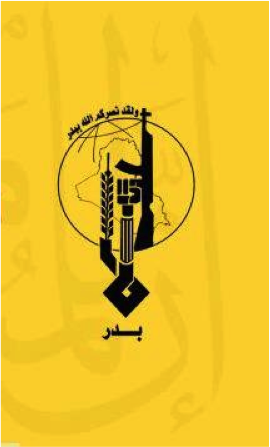
Figure 1: The Badr Organization Military Wing’s logo. Note its similarity to Lebanese Hizballah’s, Asa’ib Ahl al-Haq’s, Kata’ib Hizballah’s and the Iranian Revolutionary Guard Corps’ logos
In February, 2013, Hadi al-Amiri, leader of Iraq’s Badr Organization, said Turkey and Qatar were supplying Al Qa’ida and that this was a declaration of war against Iraq.[1] During a June 21, 2013 interview with Reuters, Amiri said the group was contemplating intervening in Syria and could not, “sit idle while the Shi’ites are being attacked”. [2] Regardless, after assessing posted material issued by the Badr Organization’s social media webpages, it is becoming clear the group may actually be involved in the fighting in Syria.
Beginning life as the Badr Brigade, the militia for the Supreme Council for the Islamic Revolution in Iraq (SCIRI), the Badr Organization split from SCIRI and became its own political group.[3] In 2006, the Council on Foreign Relations reported the Badr Organization had upwards of 10,000 militiamen.[4]
Before and after the split with SCIRI, the Badr Organization received heavy funding, training, and equipment from Iran.[5] The group is also unabashed about its close links with Iran, especially Iranian Supreme Leader Ayatollah Ali Khamenei, and Iranian proxy groups.
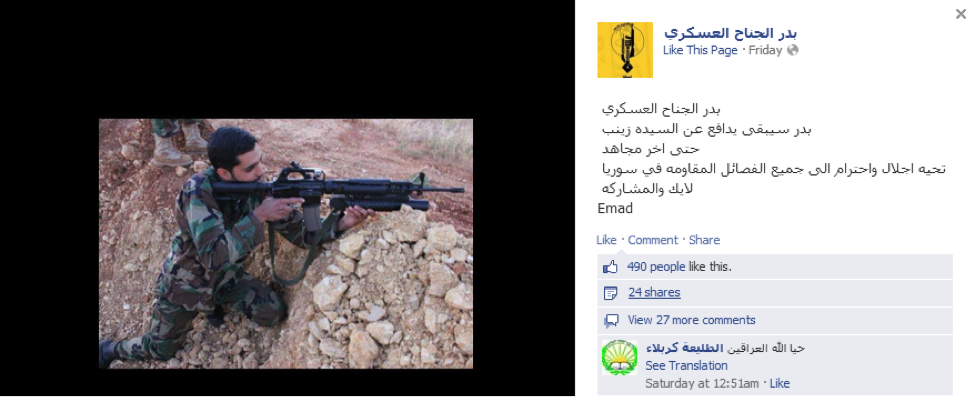
Despite material which affirms the group supports the actions of Lebanese Hizballah in Syria, the official Facebook page for the Badr Organization makes no mention that its militiamen may be also operating in Syria. Nevertheless, there are hints of involvement on the group’s page for the Badr Organization Military Wing, the Badr Organization’s militia. Throughout the Spring of 2013, the Badr Organization increased the level of supportive rhetoric for Lebanese Hizballah, Asa’ib Ahl al-Haq, Kata’ib Hizballah, and Iran’s efforts in Syria.  A June 21, 2013 photo’s caption said the, “Badr Military Wing will defend Zaynab to the last mujahid”.
Untitled250
Figure 2: Photo from the Badr Organization Military Wing’s Facebook saying the group will “Defend the Zaynab Shrine to the last holy warrior [mujahid]”.


Earlier, on April 22, 2013, The Badr Organization Military Wing produced and uploaded a song to YouTube. The song’s discription said it was, “A message from Badr to the unjust”and included the lyrics, “We will issue a death sentence against the Free Syrian Army (Jaysh al-Hurr) and no one will be able to defeat us.” The only images present during the music were those of a fighter armed with an RPG-7 in front of the Saydah Zaynab Shrine, the logo for the Badr Organization Military Wing, and the logo for the Badr Organization.
From May 5-9, 2013, a few photographs depicting Badr Organization fighters showing their “Soliderity” with members of Liwa’a Abu Fadl al-Abbas (LAFA) appeared on various pro-LAFA, Badr Organization, and pro-Lebanese Hizballah websites. LAFA has acted as the main front for pro-Iranian fighters inside Syria.
Nevertheless, Badr’s symbols are not a pervasive presence on LAFA or Liwa’a Zulfiqar’s social media websites. Since the group reportedly did not suffer any killed in Syria before June, coverage of the organization’s possible involvement with LAFA or Liwa’a Zulfiqar was muted. The group’s social media posts appeared to do little more than offer visible support for the actions of other pro-Iranian Iraqi groups operating in Syria.
Untitled251
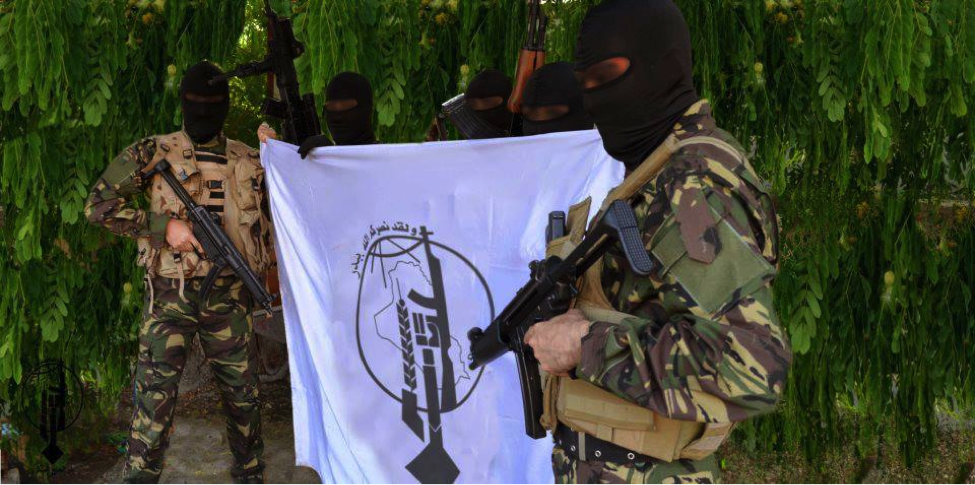
Figure 3: The photo was first posted on the Badr Organization Military Wing’s official and mirror Facebook pages. The photo shows Badr militiamen armed with Heckler and Koch MP5 submachine guns (though, it’s possible these are Iranian copies) and AK-47 style rifles.
Untitled252
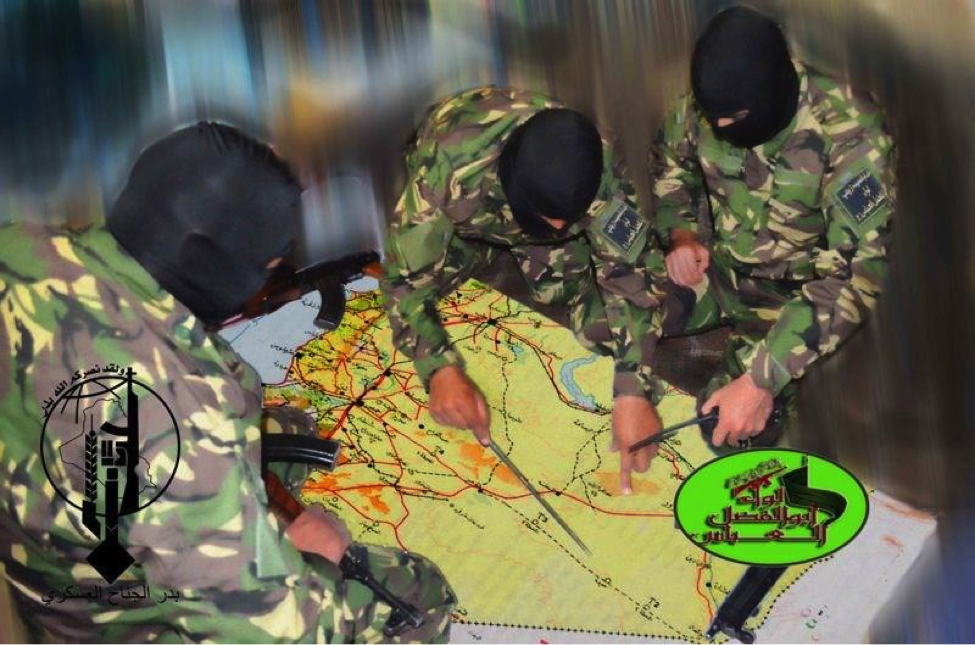
Figure 4: A photo first posted on Liwa’a Abu Fadl al-Abbas’s Facebook page claims to show Badr Organization militiamen studying a map of Syria. Most captions to go along with this photo claimed it was a photo to express solidarity with the defenders of the Zaynab Shrine.
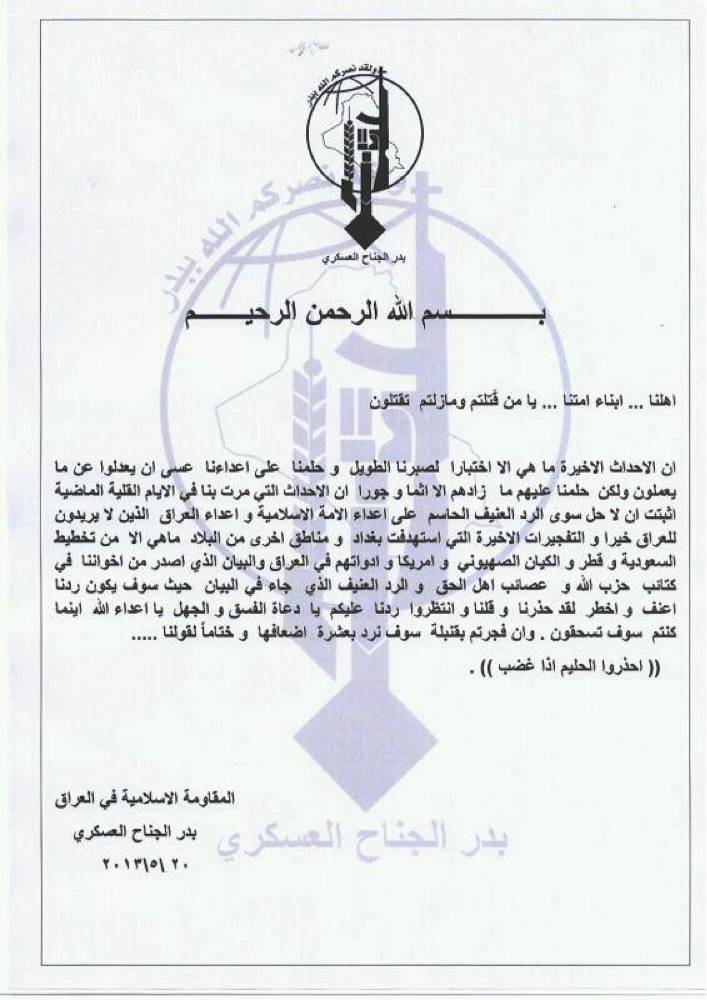
However, the Badr Organization’s public statements regarding Syria grew louder after May 20, 2013. Immediately following attacks on buses carrying Iranian pilgrims near the Iraqi city of Tikrit, the Badr Organization Military Wing announced they would adopt a more threatening posture. [6] The statement said the “Plotters” of the attacks were the United States, Saudi Arabia, Qatar, and “The Zionist Entity” (Israel), and that they would face a swift retaliation. It is important to note that the same compendium of enemies is blamed by Iran and its proxies operating in Syria for being behind forces opposing the regime of Bashar al-Assad. Interestingly, notwithstanding the other, often more horrific bombings Iraqi Shia suffered, and other attacks launched by Sunni Islamists against Shia in Iraq, the Badr Organization appeared to draw a redline with the attack on the Iranians. It is also possible the targeted bus was not carrying Iranian pilgrims as reported, but Iranian advisors or fighters, which would further inflame a pro-Iranian proxy group like Badr.[7]
Based on the fact that other smaller Iranian-backed Iraqi Shia groups have sent fighters into Syria, it is possible the Badr Organization has also sent members. This possibility gained added credence on June 17, 2013 when the Badr Organization Military Wing announced a member had been killed “Defending the Saydah Zaynab Shrine”. Despite this announcement, it is still unclear whether the Badr Organization has committed sizable amounts of fighting men to the war in Syria.
Untitled253
Figure 5: May 20, 2013 Badr statement threatening Saudi Arabia, Qatar, “The Zionist entity”, and the U.S.
The Badr Organization’s First Martyr In Syria?
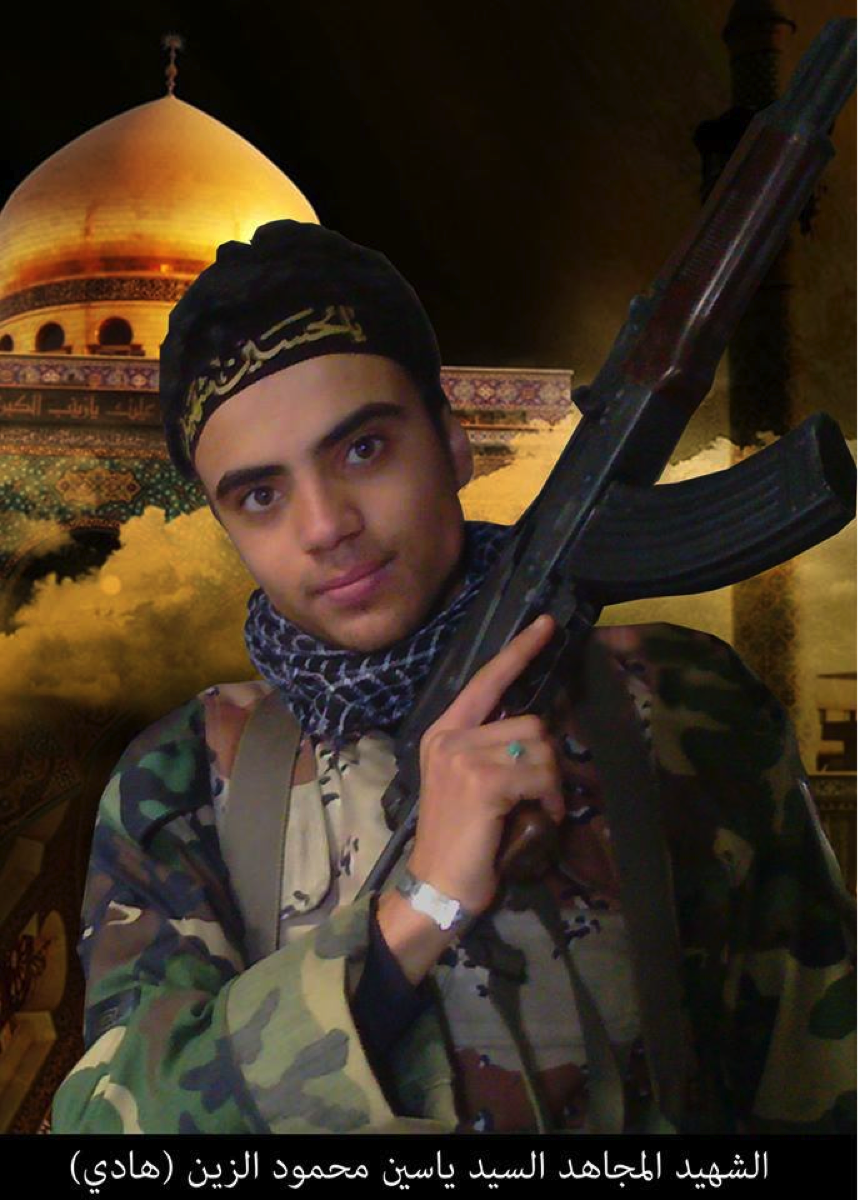
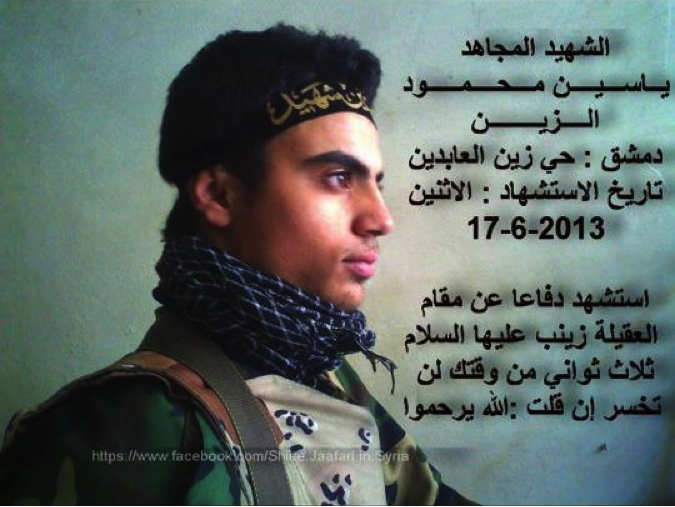
Name: Yasin Muhammed al-Zayn (A.K.A. Hadi)
Death Announced: June 17, 2013. (He was declared killed on June 17, 2013). The Badr Organization Military Wing’s Facebook declared his death on June 18, 2013.
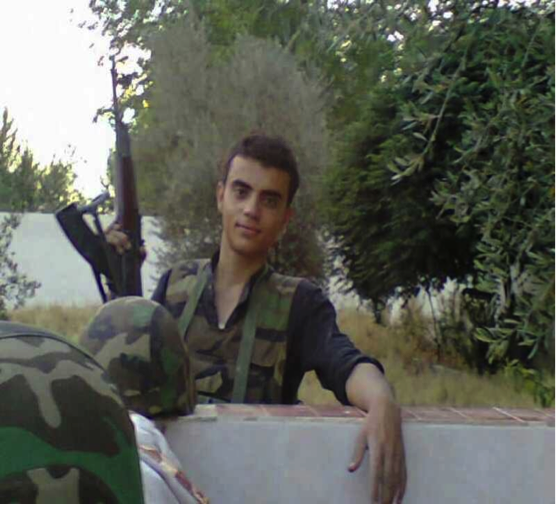
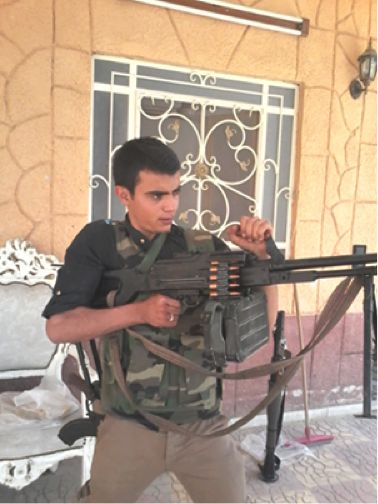
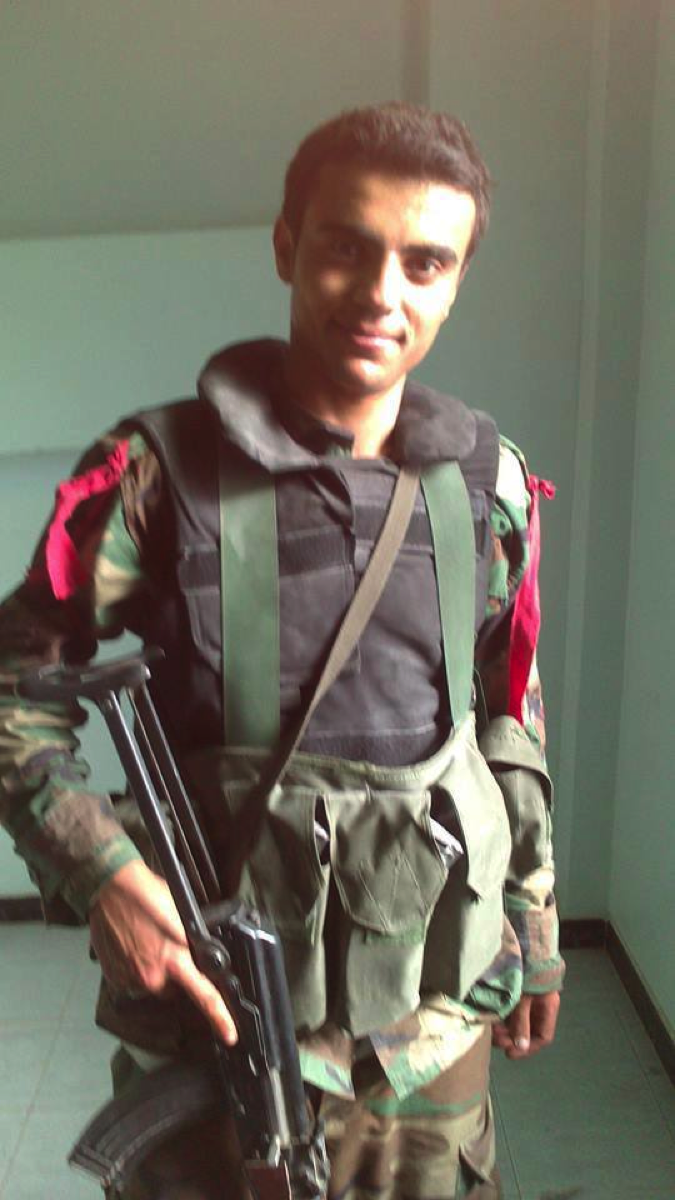
Notes: Only on the Badr Organization Military Wing’s official page was al-Zayn claimed as a member of the Badr Organization. On his martyrdom poster, it was claimed al-Zayn was killed in the Zayn al-‘Abideen neighborhood of Damascus while “Defending the Saydah Zaynab Shrine”. Other pro-Assad/pro-Iranian backed Shia organization Facebook pages did not mention his affiliation with the Badr Organization. Additionally, no footage of al-Zayn’s funeral could be located. A personal martyrdom page was also created (on June 18, 2013) for al-Zayn.[8] On the page, no mention of any Badr affiliations was made. Interestingly, his death was not claimed by Liwa’a Abu Fadl al-Abbas or Liwa’a Zulfiqar, the two groups Iraqi Shia have fought for in Syria.
Untitled254Untitled255
Figure 6: The Saydah Zanab Shrine’s golden dome features prominently in the background. No logos for the Badr Organization Military Wing were present on the martyrdom poster.
Untitled256Untitled257Untitled258
The Badr Organization’s Imagry For Syria
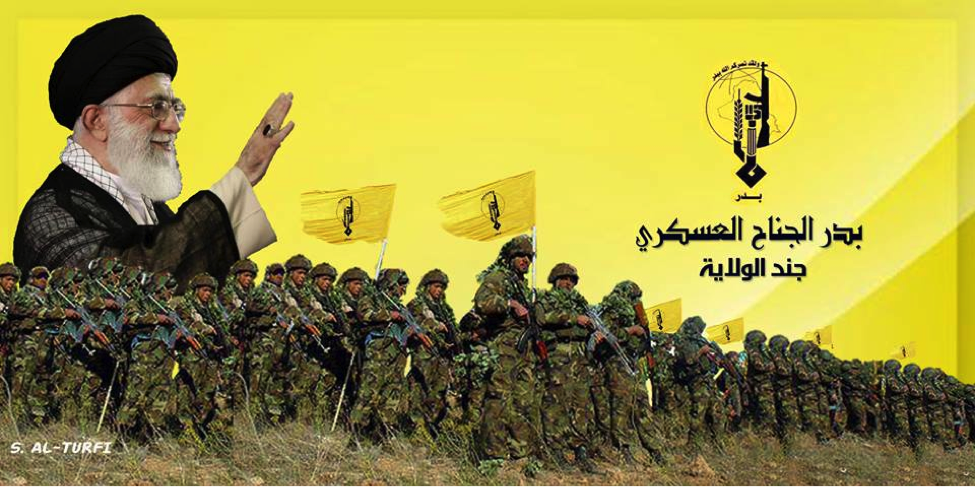
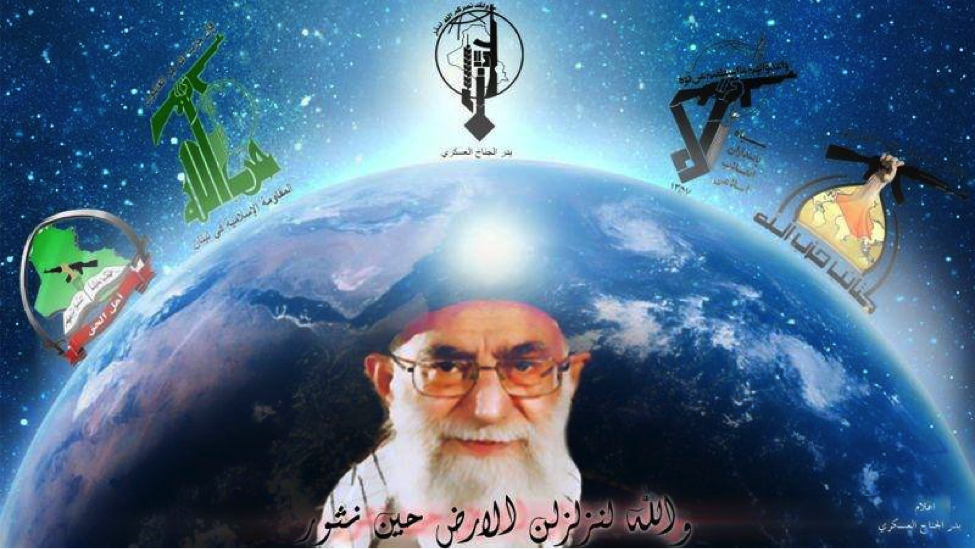
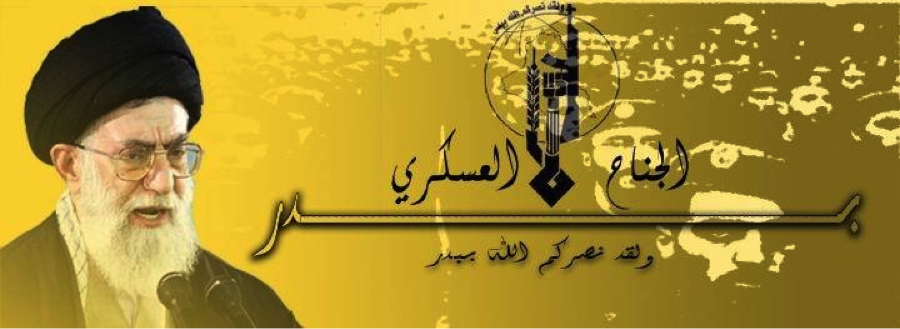
The Badr Organization Military Wing has created a number of provocative online photos dealing with events in Syria. When compared to other Iranian proxies, they have exhibited the most blatant links to Iran’s Supreme Leader. It is possible the group may be setting-up a religious pretext for their [future] involvement in Syria by continually showing pictures of Khamenei. Khamenei had already given religious sanction for Shia fighters to engage in battle in Syria.[9]
Untitled259
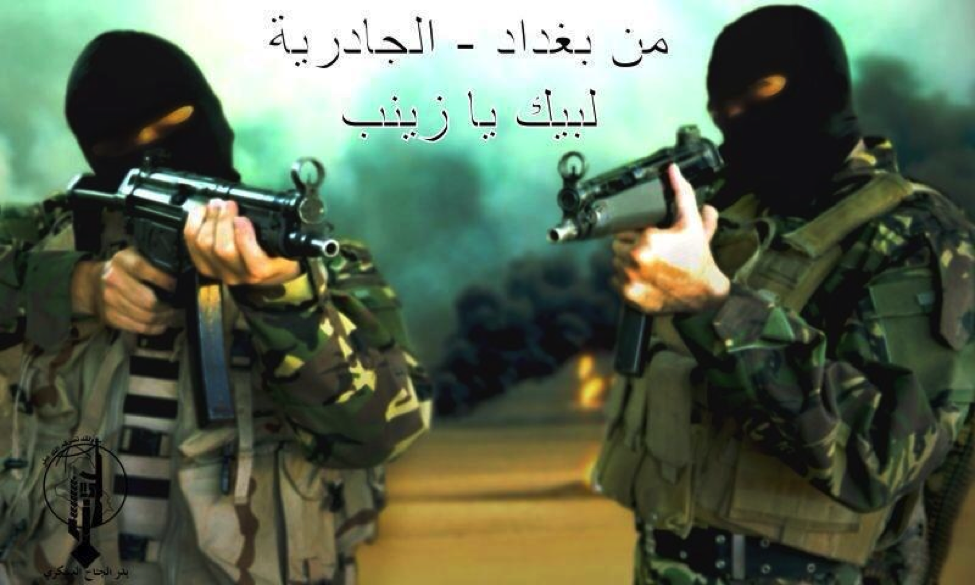
Figure 7: “Min Baghdad – al-Jadriat Labayk ya Zaynab” (“From Baghdad – al-Jadriya [a Baghdad neighborhood] We are here for you, O Zaynab”).
Untitled260
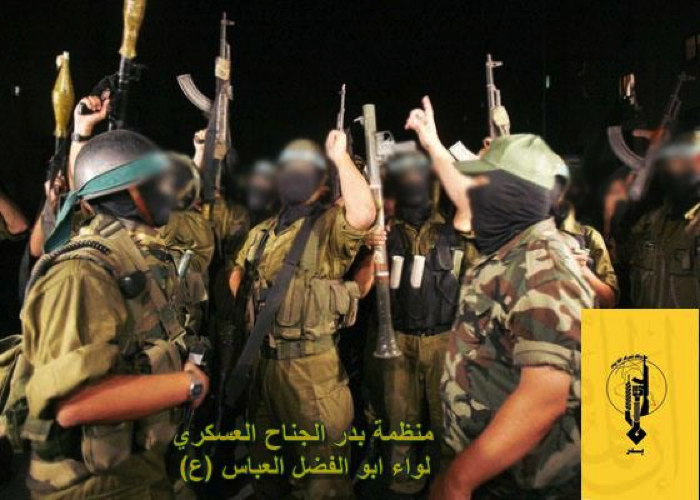
Figure 8: A photo published by the Badr Organization Military Wing showing members of Liwa’a Abu Fadl al-Abbas. The image is attempting to convey that the Badr Organization has members within LAFA.
Untitled261
Figure 9: Iran’s Supreme Leader waves and smiles as Badr Organization militiamen stand below him.
Untitled262
Figure 10: This photo appeared on two pro-Badr Organization Military Wing pages on Facebook. Intriguingly, the photo is extremely blatant about the connection (logos from left to right) Asaib Ahl al-Haq, Lebanese Hizballah, the Badr Organization, the Iranian Revolutionary Guard Corps, and Kata’ib Hizballah share. Iranian Supreme Leader Ayatollah Khamenei looks out from the globe.
Untitled263
Figure 11: Another online poster featuring the Badr Organization Military Wing and Iranian Supreme Leader Ayatollah Khamenei. The background is a photo of Lebanese Hizballah marching with an added golden hue.

[1] Michael Knights, “Syrian and Iraqi Conflicts Show Signs of Merging”, March 7, 2013, Policywatch 2042, Washington Institute For Near East Policy, https://www.washingtoninstitute.org/policy-analysis/view/syrian-and-iraqi-conflicts-show-signs-of-merging. [2] See: https://www.trust.org/item/20130621144421-omxch. [3] See: https://en.aswataliraq.info/(S(clhorg45ylfsgrrhg3vbwlmb))/Default1.aspx?page=article_page&id=147369&l=1. [4] See: https://www.cfr.org/iraq/iraqs-militia-groups/p11824#p6. [5] See: https://www.mcclatchydc.com/2005/12/12/v-print/13157/iran-gaining-influence-power-in.html. [6] See: https://now.mmedia.me/lb/en/mena/8-dead-in-iraq-bomb-attack-on-iran-pilgrims-officials-say. [7] Personal conversation with Michael Knights, June 24, 2013. [8] See: https://www.facebook.com/KlnaAlshhydAlmjahdYasynMhmwdAlzyn. [9] See: