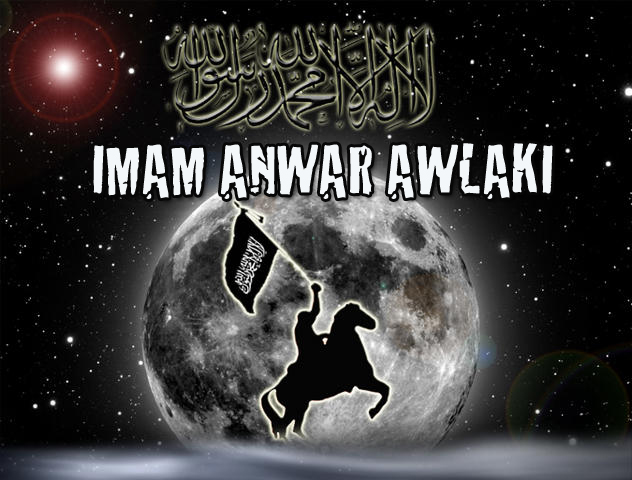
GUEST POST: Why Jihadi Ideology Matters

NOTE: As with all guest posts, the opinions expressed below are those of the guest author and they do not necessarily represent the views of this blogs administrator.
Jihadology.net aims to not only provide primary sources for researchers and occasional analysis of them, but also to allow other young and upcoming students as well as established academics or policy wonks to contribute original analysis on issues related to Global Jihadism. If you would like to contribute a piece, please email your idea/post to azelin [at] jihadology [dot] net. Pieces should be no longer than 2,000 words please.


By Daveed Gartenstein-Ross
On January 19, Joshua Foust posted a rather interesting article at Jihadology questioning Anwar al-Aulaqi’s importance as a jihadi ideologue, and in so doing, also called into question the assumed linkage between Islamist ideology and behavior. Though Foust’s post raises interesting and valid questions, and introduces bodies of research that are often ignored in debates over terrorist radicalization, I find his conclusion problematic for three reasons. First, Foust seems to be arguing against a strawman on the question of how ideology can have an impact on behavior. Second, the applicability of his general observations about the connection between ideas and behavior is questionable in the context of Islamist ideology. And third, erecting the very high evidentiary standard with which Foust concludes his article is not at all helpful when it comes to a problem set like terrorist radicalization, which it is necessary to address now.
Strawman Opponent?
It is somewhat unclear what Foust is objecting to within the current literature on radicalization—which, in fairness, is reflected in his post’s title, “Some Inchoate Thoughts on Ideology.” But to the extent his article refutes a definable set of ideas, it seems to argue against monocausal explanations of behavior. Specifically, Foust writes:

The assumption behind the ideology discussion appears to be that behavior is a gun, and ideology is a trigger. That is, you have a person, they accept ideology, and then the output is behavior (in this case, violence). But that just isn’t how people work, and using some basic logic and self-knowledge can reveal that. We are not mono-causal creatures, even in relatively simple matters like choosing where to eat lunch.

The last point is undoubtedly correct: we are not monocausal creatures. But which authors, specifically, share this set of assumptions? A careful reading of Alexander Meleagrou-Hitchens’s Foreign Policy article that is the hook for Foust’s piece reveals no such monocausal assumption, though Meleagrou-Hitchens clearly does conclude—contrary to Foust—that ideology is important. Nor does Foust point to other authors who write about ideology as though it is the sole cause of terrorist violence.
This framing of the discussion seems designed to bolster the importance of Foust’s refutation. But the contribution an author can make by refuting a clearly exaggerated interpretation of a subject is minimal when that exaggerated interpretation does not represent the conventional wisdom in a field. And in the academic discussion of terrorist ideology, it seems that the dominant opinion among prominent scholars—including Marc Sageman, Jessica Stern, Robert Pape, Jerrold Post, and now apparently Brian Michael Jenkins—is that religious ideology is relatively unimportant. (There are of course plenty of scholars on the other side of this debate, including Mary Habeck, Assaf Moghadam, and myself.)
So let’s define the debate in a more reasonable way. The question is not whether terrorists are automatons who read something on the Internet and then act in service of that idea. They aren’t, full stop. Rather, the question is whether religious/ideological factors seem to provide a robust explanation for both terrorist radicalization and also terrorist actions.
One Man’s Experiences
Before turning to the role of al-Aulaqi specifically, I’d like to address the role that Islamist ideology has on behavior. Foust writes: “The heart of my problem with discussing Islamist ideology is that I don’t understand how it affects behavior.” This is because behavior is complex, encompassing such causal factors as “constraints, signaling from peers, intent, and capability.” On the question of how Islamist ideology can impact behavior, I believe the answer is so obvious as to be virtually indisputable. Note that Foust frames the issue as Islamist and not jihadi ideology. I don’t know whether this framing was purposeful, but I’m glad that he put the question this way, because an examination of Islamist behavior is illuminating.
As I recently discussed on a Bloggingheads appearance with Matt Duss, and as a number of readers will know, before my entry into the counterterrorism field I worked for an Islamist charity, the Al Haramain Islamic Foundation, that has now been named a specially designed global terrorist entity by the U.S. Treasury Department. I had converted to Islam in college, and worked for Al Haramain in 1998-1999 between college and law school. I entered as a relative Islamic novice, with a very moderate conception of the faith; during my time at Al Haramain, my behavior changed substantially and I ultimately adopted an interpretation that I now consider extreme. Though I wrote a book about this period in my life, until now I have not really introduced my experiences into my own academic work on radicalization due to my awareness that people often universalize their own experiences improperly. However, their applicability should be clear in this response to Foust; and then I will introduce my empirical work on the subject.
At its heart, Islamism holds that human instincts and inclinations do not provide a reliable guide for determining morality. The reason Islamists believe that society should be governed by sharia is because man-made laws are contingent, and subject to shifting views of morality. Only God’s guidance, as best exemplified in the Qur’an and sunna, provides a reliable and unquestionable framework for determining how a society should be run. But if we can only trust God—and, related to that, Muhammad’s example—for the making of laws, isn’t it just as true that only the sunna can provide a guide to how we should live our own lives?
Thus, within Islamism, one’s behavior is clearly and unequivocally controlled by ideology. I encountered an intricately legalistic system within Al Haramain, wherein the restrictions were virtually all-encompassing. Growing a beard was required for men; likewise it was necessary to eat only with the right hand and roll one’s pants legs up above the ankles. Petting a dog, listening to music, and shaking hands with a member of the opposite sex all clearly transgressed the bounds of morality. Quite clearly ideology played a role in these behavioral outcomes. Absent the prevalent ideology (which could be described either as Islamism or Islamic conservatism), there is simply no explanation for why a relatively large number of people would decide to grow their beards out in a similar way, see dogs as unclean, stop making physical contact with members of the opposite sex, et cetera. While Foust writes that behavioral changes occur “in an unpredictable way,” in this case the behavioral changes all comported with the dominant ideology.
Moving beyond my own experiences, one of the remarkable aspects of Islamism—giving lie to Foust’s claim that behavioral changes in this area are unpredictable—is the consistency of behavioral changes across a broad array of cases. To be clear, not all Islamist interpretations of the faith are alike, and there are variegations among known Islamists, but in case after case the behavioral changes mirror those I experienced during my time at Al Haramain. One example is the Duka brothers—Shain, Eljvir, and Dritan—who were arrested with three others in May 2007 for plotting to attack the military base in Fort Dix, New Jersey. As the brothers turned to Islamism, they alienated family members with the announcement that “[t]he playing of music—a centuries-old tradition at Albanian weddings—had been banned” at Eljvir Duka’s wedding. Similarly, they spent an extended conversation captured via covert surveillance exploring the legalistic rules of how their beards should be kept:

Dritan Duka: That’s not really the way it [the beard] should be kept, it should be kept trimmed.
Unidentified male: It’s supposed to be neat, not, right trimmed but not over your lip.
Dritan Duka: Not shaved off completely.

Shain Duka then told a story about how a man in a Popeyes Chicken restaurant, after staring at them for a short time, asked why young men like them had such large beards. Shain recounted that “then we explained to him listen all the prophets wore beards and were Muslim so we wear the beards because all prophets wore beards.” Similarly, Daniel Joseph Maldonado’s behavioral changes included “wearing traditional Arab clothing, including the galabeyah, an ankle-length gown with long sleeves that covered the tattoos on his arms.” Tattoos are considered haram (prohibited by Islamic law) within the dominant conservative interpretations of Islam. Maldonado also tried to grow a beard; when he failed, “he blamed his Puerto Rican heritage and began chastising fellow Muslims who could grow a full beard and chose not to.”
Both Adam Gadahn and John Walker Lindh stopped listening to music. Gadahn had previously been seriously obsessed with death metal, but gave away virtually his entire music collection. Explaining this to the recipient, Gadahn said: “Well, I turned


My new article at The Atlantic: "Jihadists: The Wallflowers of the Tunisian Uprising"

AQIM Pic2.jpg
In the wake of Tunisia’s popular uprising this past week, some are debating whether Twitter,WikiLeaks, or even George W. Bush might have played a role in enabling the historic protest movement. But one thing seems clear: The jihadist movement, which has long defined itself as Arab governments’ staunchest and most authentic opposition, had nothing to do with it. Jihadists’ non-involvement in organizing, encouraging, or even participating in the Tunisian protests suggests that the jihadist current has been largely irrelevant to Tunisia’s popular uprising. For as long as jihadists have been in business, one of their main goals has been to overrun an “apostate” Arab leader such as Tunisian President Zine El Abidine Ben Ali. But with the possible exception of Egyptian President Anwar al-Sadat’s 1981 assassination, they never came close. That Tunisia’s protesters succeeded where the jihadists so often fail, and appear not at all driven by anything close to jihadist ideology or even general religious grievances, has left members of the online jihadist community unsure how to respond. The uprising, after all, fulfills a top jihadist goal, but it also rebukes their belief that only violent and pious struggle can bring down a man like Ben Ali.
Two days before Ben Ali’s ousting, the amir (leader) of al-Qaeda in the Islamic Maghreb (AQIM), Abu Mus’ab ‘Abd al-Wadud, released a statement titled “In Support of the Intifadah of our People in Tunisia.” He appealed to Tunisians, selling AQIM as an ally in their protests. “I found it a fit chance to inform you, on behalf of my Mujahideen brothers in the Islamic Maghreb, our partisanship and consolation with you. And our stand alongside you in your problem and uprising, with advice, inspiration and affirmation,” he wrote. “Your battle you fight today isn’t alienated from the general battle the Muslim Ummah is engaged in against its external and domestic enemies. … And I encourage our people in Tunisia to be ready and prepare preparations and send their sons to us to train on weapons and gain military expertise. … My Muslim brothers in Tunisia: your Mujahideen brothers are with you, and your problem is our problem and your happening is ours, and the bereaved isn’t like the adopting.”
Read the rest here.

New Fatwā from Shaykh Abū al-Mundhir al-Shanqīṭī of Minbar at-Tawḥīd wa'l-Jihād: "Question about the legality of the fighting in Kazakhstan?"

NOTE: About a year ago, Minbar at-Tawḥīd wa’l-Jihād also published a fatwā about the legitimacy of fighting the police in Kazakhstan. In addition, this past November, a jihadist group in Kazakhstan surfaced named Jamā’at Anṣār ad-Dīn.

Shaykh Abū al-Mundhir al-Shanqīṭī — Question about the legality of the fighting in Kazakhstan
[scribd id=47251428 key=key-5hrvxi6imwsx9ce916d mode=list]

New statement from Shaykh Abū Basīr al-Ṭarṭūsī: "Fall of the Idol Zayn, the Devil Named Zayn al ‘Ābidīn"

UPDATE 1/23 1:43 PM: Click here for a French translation of the below statement.

NOTE:  Abū Basīr al-Ṭarṭūsī is a Syrian Islamist who lives in London. al-Ṭarṭūsī is considered one of the most influential jihādī theorists. For instance, as highlighted by Vahid Brown on Jihadica, al-Ṭarṭūsī has 200 works in the jihādī text collection “A Mujāhid’s Bookbag.” Also, in the past al-Ṭarṭūsī has condemned Dr. Fadl for his revisions and Yūsuf al-Qaraḍāwī for a variety of what al-Ṭarṭūsī views as problematic rulings.


New statement from Shaykh Abū Basīr al-Ṭarṭūsī- “Fall of the Idol Zayn, the Devil Named Zayn al ‘Ābidīn”
[scribd id=47209550 key=key-1397y6ik2rkyry6ktnjz mode=list]

GUEST POST: Some Inchoate Thoughts on Ideology

NOTE: As with all guest posts, the opinions expressed below are those of the guest author and they do not necessarily represent the views of this blogs administrator.
Jihadology.net aims to not only provide primary sources for researchers and occasional analysis of them, but also to allow other young and upcoming students as well as established academics or policy wonks to contribute original analysis on issues related to Global Jihadism. If you would like to contribute a piece, please email your idea/post to azelin [at] jihadology [dot] net. Pieces should be no longer than 2,000 words please.


By Joshua Foust
Alexander Meleagrou-Hitchens wrote a provocative article for Foreign Policy, in which he argues that Anwar al-Aulaqi, the American-Yemeni preacher working for al Qaeda in the Arabian Peninsula, is “the most persuasive supporter of jihad for Muslims in the West.”
Under any circumstances, this would be a difficult argument to make: persuasion is notoriously difficult to quantify and measure. Even in discourse studies, measuring the influence or persuasion of individual figures is difficult: there is first-mover bias (in which one is important not because of any merit but merely because one said it first), and any number of other phenomenon that contribute to one’s influence in unpredictable ways. Politicians hire PR consultants, management consultants, and spend hundreds of thousands of dollars per month on “messaging,” and still cannot consistently predict reaction and electoral outcome.
Marketing firms try this as well: planting the desire for a product, or persuading consumers to purchase something they might not need but might definitely want. Marketing, too, is notoriously unpredictable—for reasons few people acknowledge or explain one quirky, off-beat commercial like the Old Spice Guy is a raging success, while a similarly quirky advertising campaign like Burger King’s is an expensive failure.
This is because, at the end of the day, it’s rare that people are “persuaded” to do anything. As humans, we tend to seek confirmation of our beliefs and wants and to ignore contrasting information—and there is a rich field of studies in cognitive psychology to back this up. In other words, most advertising—and most political messaging—is really about reinforcing beliefs and wants one already has, and providing a means to express justification for them.
In that light, describing Aulaqi as “the most persuasive” doesn’t make any sense. There is no way to prove such an argument. And indeed, in Meleagrou-Hitchens’ article, his evidence never rises above the circumstantial: some people read something on the Internet, and then they acted. They liked a speech, and then they acted. They read some manifesto, then they acted. This is correlation, to be sure. But is is not evidence of persuasion.
Meleagrou-Hitchens’ argument rests on the belief that Anwar al-Aulaqi possesses a unique capability to radicalize Westerners. Appealing to the publication of Inspire, the English-language magazine produced by AQAP, which has suggested Muslims carry out lone-wolf terror operations, Meleagrou-Hitchens argues that this is the crux of Aulaqi’s influence on radicalizing Westerners. His evidence amounts to interrogated statements by a few people who were arrested trying to commit murder: they enjoyed reading Aulaqi, he argues, so therefore Aulaqi persuaded them to commit violence.
Such an argument is logically backward. Why did these people decide to read Aulaqi in the first place? Roshonara Choudhry, one of the people Meleagrou-Hitchens cites as an Aulaqi inspiration, was not a radical in 2008. Yet, in 2009, she began to download Aulaqi’s sermons, eventually claiming to act upon them. What everyone who claims Aulaqi thus inspired her act ignore, including Meleagrou-Hitchens, is why she began to download Aulaqi’s sermons in the first place. I suspect it goes back to the conceit behind advertising, political messaging, and so on: people are not easily persuaded, but they are easily reinforced. I can’t answer what changed, but something happened where an otherwise adjusted young woman starts reaching out to an Internet preacher demanding violence. There is no evidence to support the assertion, however, that it was ideology, and specifically Aulaqi’s talents of persuasion, which directly inspired her to stab an MP.
The heart of my problem with discussing Islamist ideology is that I don’t understand how it affects behavior. Behavior is a complex process. It is the result of a number of causal factors, including constraints, signaling from peers, intent, and capability. All of those must come together in order for a behavior to occur. Ideology can be a contributing factor, as it is a form of signaling and constraint — making some behaviors appear to be acceptable, and some not. But this happens in an unpredictable way, and the fact we all acknowledge here (namely, that some people choose to act and most do not) should tell us that it is not a simple process to describe or predict.
The assumption behind the ideology discussion appears to be that behavior is a gun, and ideology is a trigger. That is, you have a person, they accept ideology, and then the output is behavior (in this case, violence). But that just isn’t how people work, and using some basic logic and self-knowledge can reveal that. We are not mono-causal creatures, even in relatively simple matters like choosing where to eat lunch. In particularly emotional issues, like religion and death, I would argue we are especially bad at explaining our beliefs and behavior (and there is actually a substantial body of cognitive science literature that argues people are reliably unreliable in accurately explaining their decisions).
We react to our environment, we respond to peer pressures, to community norms and signals, to physical and social constraints on behavior, and so on. Ideology can, potentially, be one of those contributing factors — as a means of signaling and of establishing justification for certain behaviors. But to say that ideology causes behavior is difficult if not impossible to prove — not only can we never get inside someone’s head to say, conclusively, why they did something, but we know, from neuroscience, that people cannot explain their own behavior consistently. And still, you’re left with the lingering question of why this specific person reacted against ideology while the thousands of others who were exposed to it did not.
At best, ideology is a woefully incomplete explanation for why terrorists chose to commit terror. But to argue that it is so important requires a standard of evidence that is, in practical terms, impossible to achieve.
Joshua Foust is a fellow at the American Security Project and the author of Afghanistan Journal: Selections from Registan.net.

al-Ma’sadat Media Foundation presents a new video message from Shaykh Abū Muḥammad al-Ṭaḥāwī: "Why Was I Imprisoned?"

NOTE:  Shaykh Abū Muḥammad al-Ṭaḥāwī [Abed Shihadeh al-Tahawi], is a global jihadist cleric from Jordan. He  is acquaintances with Abū Muḥammad al-Maqdisī. Humām al-Bilāwī [Abū Dujānah al-Khurāsānī] gave him a shout out in his interview with al-Qā’idah Central’s As-Saḥāb Media prior to his “martyrdom” and killing seven CIA officers in Khost, Afghanistan in December 2009:

Before anything else, I send my Salām to Shaykh Abū Muḥammad al-Maqdisī, I send my Salām to Shaykh Abū Muḥammad al-Ṭaḥāwī, and I send my Salām to all the Mujāhidīn in Jordan, and I tell them: be patient, for by Allah, we have seen Jordanian intelligence and its prisons, and we have seen how the intelligence officers would forbid brothers from reciting the Qur’ān in an audible voice. Even reading the Qur’ān is forbidden! So I tell them: be patient, but I also tell them: there is no solution to the situation in Jordan other than mobilizing to the land of Jihād to learn the arts of war and train in them, then return to Jordan and begin operations.


[wpvideo E7WMVZoj]

al-Qā’idah in the Arabian Peninsula’s al-Malāḥim Media releases Inspire Magazine Issue #4

UPDATE 2/8 11:03 AM: Here is an Arabic translation of issue four of AQAP’s English language magazine Inspire:

Click the following link: Inspire Magazine 4 (Ar)

UPDATE 2/7 11:54 AM: Here is a Russian translation of issue four of AQAP’s English language magazine Inspire:

Click here: Inspire Magazine 4 (Russian)

NOTE: Here is the firstsecond, and third issue of Inspire Magazine. Below is a brief summary of what is in this magazine. When I have more time I hope to read the content more in depth and be able to dig deeper into this.
The magazine begins with a letter from the editor, Samīr Khān, about the Shi’a in their midst, as well as a reprint of AQAP’s statement following the car bombing against the Ḥūthīs this past November  titled “Statement on the Operations of Defense for the People of the Sunnah.” Then after a series of pages of quotes from friends and foes Khān pens an article reiterating the importance of farḍ al ‘ayn (individual obligation) for jihād. After this, there is a reprint of part of Adam Gadahn’s recent video message from October titled “The Arabs And Muslims: between the Conferences of Desertion .. and the individual Duty of Jihād,” which I analyzed here. Following this there is an article from Abū Zūbayr ‘Adīl bīn ‘Abdullah al-Abāb, AQAP’s chief religious authority, where he answers questions about targeting non-Muslims and Yemeni soldiers. Muḥammad al-Ṣana’ānī follows this up with an article on Roshonara Choudhry who stabbed the UK MP Stephen Timms, and Taymūr ‘Abd al-Wahāb who was responsible for the recent attack in Stockholm.  After this Abū Khowla pens a piece titled “Which is Better: Martyrdom or Victory?” Then there is a roundup of the recent jihadist activities in Abyan by Abū Zakarīā al-Erītrī, which confirms that there are members of AQAP from Eritrea. After this, there is a long excerpt from Abū Muṣ’ab al-Sūrī’s magnum opus The Global Islamic Resistance Call. Then in the section titled Open Source Jihād it details how to burn down a building, training with an AK-47, and advice for those that want to help with AQAP’s media outlet al-Malāḥim Media, which includes:

  1. Archiving
  2. Hear the world
  3. Your articles
  4. News flash
  5. Graphics
  6. Translations

Following this they reprint sections of Shaykh Abū Muṣ’ab Moḥammed ‘Umayr al ‘Awlaqī’s essay titled “Why I chose al-Qā’idah” who was killed in late 2009. After this is the feature article in the entire magazine, which is highlighted on the cover of it from Anwar al ‘Awlaqī titled “The Ruling of Dispossessing the Disbelievers Wealth in Dār al-Ḥarb [the Abode of War].” This is a continuation of advice regarding the economic jihād, which AQAP boasted about in the third issue of Inspire magazine and written about by Daveed Gartenstein-Ross in Foreign Policy following the failed UPS parcel plot. I would be interested to hear his further thoughts about this in light of this new article from ‘Awlaqī. After ‘Awlaqī’s article, there is one from Hazīm Nūr titled “The Call of the Qur’ān” about the importance of the concept tawḥīd (oneness of God), which is one of the most fundamental concepts in Islām. Inspire magazine concludes by recapping recent releases from al-Malāḥim Media including: Issue #15 of AQAP’s Arabic language magazine Ṣadā al-Malāḥim, “Martyrs of the Arabian Peninsula #4 – Abū Hammām al-Qaḥṭānī (Nāyīf bin Muḥammad bin Sa’īd al-Kūdurī al-Qaḥṭānī),” Shaykh Ibrāhīm bin Sulaymān al-Rubaysh’s audio message: “Between Islamists and Liberals”, an audio message from Shaykh Abū Zūbayr ‘Adīl bīn ‘Abdullah al-Abāb: “We Responded to the Sharī’ah of God, not the Laws of ‘Alī Ṣāliḥ”a tribute to Zayyid al-Daghārī al-’Awlaqī by Shaykh Ibrāhīm bin Sulaymān al-Rubaysh, and a video titled “By the Lord of the Ka’abah, I Triumphed [Part 2]” among others. After this it tells the reader how to get in contact with Inspire magazine and like the previous issue it also lists Muslim prisoners.

Click here: Inspire Magazine 4

New statement from the Amīr of al-Qā’idah in the Islamic Maghreb Abū Muṣ’ab ‘Abd al-Wadūd [‘Abd al-Malik Drūkdīl]: "A Call to Our Revenging People in Algeria"

UPDATE 1/14 12:20 PM: Click here for an Arabic transcript of the below video.

NOTE: For more background on the protests in Algeria see here, here, and here from Kal at the Moor Next Door.