

Click the following link for a safe PDF copy: Ḥarakat al-Shabāb al-Mujāhidīn — Regarding the Recent Attack in Northeastern Kenya
_________________
Click the following link for a safe PDF copy: Ḥarakat al-Shabāb al-Mujāhidīn — Regarding the Recent Attack in Northeastern Kenya
_________________
For prior issues see: #77, #76, #75, #74, #73, #72, #71, #70, #69, #68, #67, #66, #65, #64, #63, #62, #61, #60, #59, #58, #57, #56, #55, #54, #53, #52, #51, #50, #49, #48, #47, #46, #45, #44, #43, #42, #41, #40, #39, #38, #37, #36, #35, #34, #33, #32, #31, #30, #29, #28, #27, #26, #25, #24, #23, #22, #21, #20, #19, #18, #17, #16, #15, #14, #13, #12, #11, #10, #9, #8, #7, #6, #5, #4, #3, #2, #1, and #0.
—
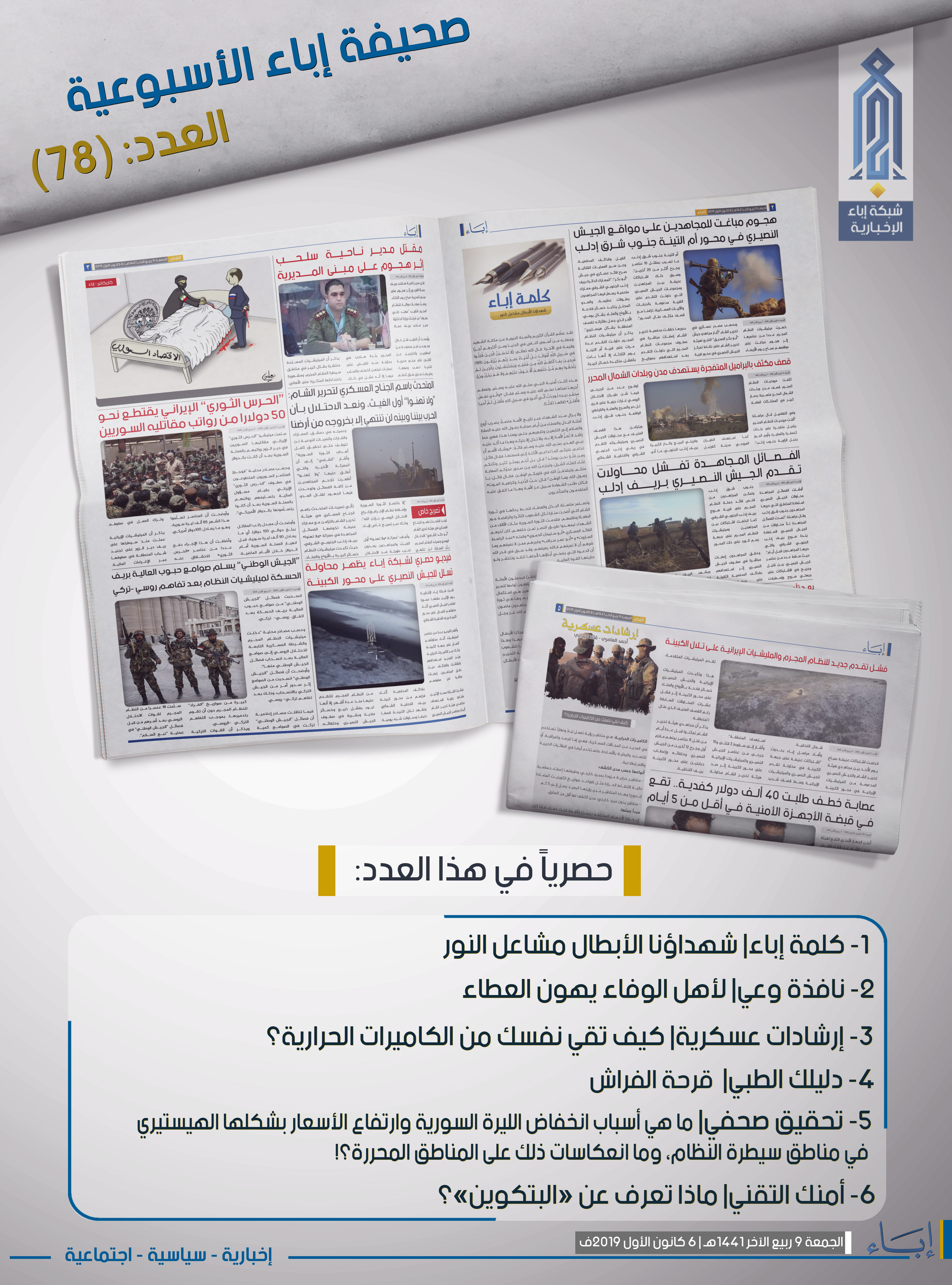
Click the following link for a safe PDF copy: Hay’at Taḥrīr al-Shām — Ibā’ Newsletter #78
_______________
To inquire about a translation for this newsletter issue for a fee email: [email protected]

On December 6, 2016, the Islamic State in Libya (ISL) lost its last vestige of territorial control when it surrendered the north-central city of Sirte. Three years later, the group is a shadow of its former self, despite the fact that around twenty-five ISL members pledged allegiance (baya) to the new leader of their transnational parent organization on November 15.
In the past, ISL sought to replicate Islamic State practices in Iraq and Syria, reaching similar levels of military and governance success. Today, however, ISL has not claimed responsibility for a single attack in six months, and has suffered substantial setbacks in recruitment, funding, and media capabilities. This is why it has consolidated its three Libyan “provinces” into one entity in order to streamline decisionmaking, similar to what the Islamic State did in Iraq and Syria. Yet ISL does not appear to have the same staying power as its brethren did in Iraq last decade or in Syria today—assuming the United States and other actors are willing to keep up the pressure.
Click here to read the rest.

Click the following link for a safe PDF copy: Jamā’at Nuṣrat al-Islām Wa-l-Muslimīn — About the the Operations of Toéni and Banh in Burkina Faso
_________________
Source: Telegram
To inquire about a translation for this statement for a fee email: [email protected]

______________
To inquire about a translation for this video message for a fee email: [email protected]
Saturday November 30:
The non-translation strategy in translating ISIS radical discourse – Samia Bazzi, Journal of Language Aggression and Conflict: bit.ly/2R73lzG
Sunday December 1:
Security sector corruption and military effectiveness: the influence of corruption on countermeasures against Boko Haram in Nigeria – Daniel Kofi Banini, Small Wars & Insurgencies: https://bit.ly/34YnNqe
Monday December 2:
This Is Your Brain on Terrorism: The Science Behind a Death Wish – Scott Atran, Foreign Affairs: https://fam.ag/2Piwu8h
Can Terrorism Abroad Influence Migration Attitudes at Home – Tobias Böhmelt, Vincenzo Bove, and Enzo Nussio, American Journal of Political Science: https://bit.ly/36cO2d4
Tuesday December 3:
Martyr or Mystery? Female Suicide Bombers and Information Availability – Michael J. Soules, Studies in Conflict & Terrorism: https://bit.ly/38corCK
Wednesday December 4:
Intersections of ISIS media leader loss and media campaign strategy: A visual framing analysis – Carol Winkler, Kareem El-Damanhoury, Zainab Saleh, John Hendry, and Nagham El-Karhili, Media, War & Conflict: https://bit.ly/2DPFNY4
Thursday December 5:
Telegram Deplatforming ISIS Has Given Them Something to Fight For – Amarnath Amarasingam, Vice: https://bit.ly/38g783x
They are from within us: CVE brokerage in South-central Somalia – Linnéa Gelot and Stig Jarle Hansen, Conflict, Security & Development: https://bit.ly/36wn2oP
Lethal Images: Analyzing Extremist Visual Propaganda from ISIS and Beyond – Stephane J Baele, Katharine A Boyd, and Travis G Coan, Journal of Global Security Studies: https://bit.ly/2Eb7NWm
Friday December 6:
The Islamic State in Libya Has Yet to Recover – Aaron Y. Zelin, Washington Institute for Near East Policy: https://bit.ly/2spp0se
“Yes, I can”: what is the role of perceived self-efficacy in violent online-radicalisation processes of “homegrown” terrorists? – Linda Schlegel, Dynamics of Asymmetric Conflict: https://bit.ly/2RZisvx
_______________
To inquire about a translation for this video message for a fee email: [email protected]

______________
Source: Telegram
To inquire about a translation for this video message for a fee email: [email protected]
For prior parts see: #210, #209, #208, #207, #206, #205, #204, #203, #202, #201, #200, #199, #198, #197, #196, #195, #194, #193, #192, #191, #190, #189, #188, #187, #186, #185, #184, #183, #182, #181, #180, #179, #178, #177, #176, #175, #174, #173, #172, #171, #170, #169, #168, #167, #166, #165, #164, #163, #162, #161, #160, #159, #158, #157, #156, #155, #154, #153, #152, #151, #150, #149, #148, #147, #146, #145, #144, #143, #142, #141, #140, #139, #138, #137, #136, #135, #134, #133, #132, #131, #130, #129, #128, #127, #126, #125, #124, #123, #122, #121, #120, #119, #118, #117, #116, #115, #114, #113, #112, #111, #110, #109, #108, #107, #106, #105, #104, #103, #102, #101, #100, #99, #98, #97, #96, #95, #94, #93, #92, #91, #90, #89, #88, #87, #86, #85, #84, #83, #82, #81, #80, #79, #78, #77, #76, #75, #74, #73, #72, #71, #70, #69, #68, #67, #66, #65, #64, #63, #62, #61, #60, #59, #58, #57, #56, #55, #54, #53, #52, #51, #50, #49, #48, #47, #46, #45, #44, #43, #42, #41, #40, #39, #38, #37, #36, #35, #34, #33, #32, #31, #30, #29, #28, #27, #26, #25, #24, #23, #22, #21, #20, #19, #18, #17, #16, #15, #14, #13, #12, #11, #10, #9, #8, #7, #6, #5, #4, #3, #2, and #1.
—
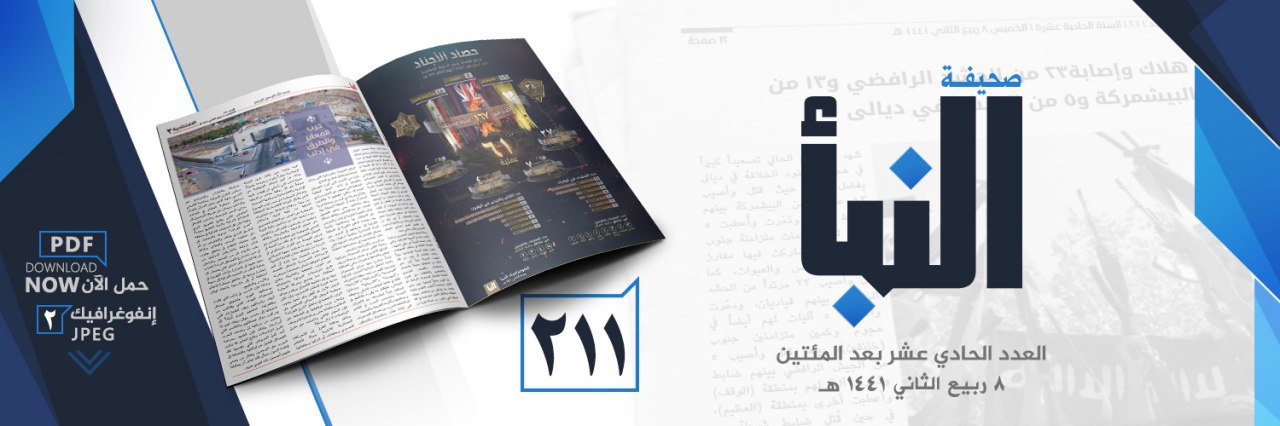
Click the following link for a safe PDF copy: The Islamic State — al-Nabā’ Newsletter #211
_________________
Source: Telegram
To inquire about a translation for this newsletter issue for a fee email: [email protected]
________________
To inquire about a translation for this video message for a fee email: [email protected]