GUEST POST: The North Caucasus Insurgency’s Syrian Balancing Act

NOTE: As with all guest posts, the opinions expressed below are those of the guest author and they do not necessarily represent the views of this blogs administrator and does not at all represent his employer at the Washington Institute for Near East Policy.
Jihadology.net aims to not only provide primary sources for researchers and occasional analysis of them, but also to allow other young and upcoming students as well as established academics or policy wonks to contribute original analysis on issues related to jihadism. If you would like to contribute a piece, please email your idea/post to azelin [at] jihadology [dot] net.
Click here to see an archive of all guest posts.

The North Caucasus Insurgency’s Syrian Balancing Act

By Mark Youngman

Since the involvement of fighters of North Caucasian origin in the Syrian conflict was first confirmed in August 2012, the official websites of the Caucasus Emirate (IK) have struggled to balance competing interests in their reporting on Syria. In line with the movement’s alignment of insurgents in Russia’s troubled southern region with the global jihadist movement, IK websites have reported extensively on events in Syria and on the activities of groups that ethnic North Caucasians are fighting with. However, statements by the IK’s leader, Dokka Umarov, and material published to IK websites suggest concerns that the Syrian conflict could have a detrimental effect on the North Caucasus insurgency. Multiple articles have insisted that North Caucasians are obliged to fight at home and may only travel to other jihadist “fronts” if unable to do so. Judging by regional variations in IK coverage, these concerns are most acute within the Ingushetian and, possibly, Chechen sectors of the insurgency.
Syria: The View From the Caucasus
The participation of fighters of North Caucasus origin in the Syrian conflict was first confirmed with the death of Rustam Gelayev in August 2012.[1]  Since then, the presence of ethnic North Caucasians fighting in Syria has become incontrovertible. They have been most prominent in the group currently known as Jaysh al-Muhajirin wal-Ansar, which is led by ethnic Chechen Umar al-Shishani and which – judging by the title slates of recent videos – is now part of the Islamic State of Iraq and the Levant. Although North Caucasians, and Chechens in particular, have long been rumoured to have been present in other conflicts, such as Afghanistan and Iraq, the Syrian conflict represents their clearest and most extensive foreign engagement.
IK websites, and its main media outlet, Kavkazcenter, in particular, have long reported on global Islamic extremist activity and Syria has unsurprisingly received high levels of coverage.  In 2012 and 2013, Kavkazcenter’s Twitter feed – which closely reflects the website’s content – mentioned Syria more than any other foreign country. Of approximately 7,200 articles posted to the website between 1 August 2012 and 24 August 2013, just over 400 referred to the Syrian conflict.  Material posted to IK websites has ranged from translations and summaries of mainstream media reports to content reproduced from other jihadist websites to material from Russian-speaking fighters on the ground to eulogies of those killed in the conflict.
The Caucasus Emirate’s Apparent Concern About Syria
However, while IK websites have applauded the fighting in Syria, the attention afforded – both by mainstream and extremist media — to the conflict, coupled with the presence of fighters of North Caucasus origin, also appears to have created particular difficulties for the IK. There are several overlapping categories of North Caucasians involved in Syria. Most fighters appear to come either from existing ethnic North Caucasian communities outside of Russia, or from the refugee communities created by the Chechen wars. Al-Shishani, for example, appears to have come from Georgia’s Chechen community in Pankisi.[2] Others, like Gelayev, travelled to the Middle East for a religious education prior to the start of the conflict. And some have travelled directly from the North Caucasus to participate in fighting. It is this last group that appears to have generated concern in the IK that Syria could have a detrimental effect on the North Caucasus insurgency.
In November 2012, IK leader Dokka Umarov issued a statement refuting claims supposedly being circulated by some North Caucasians in Syria that “Jihad in the Caucasus has ended, therefore they supposedly came to Syria.”[3]  At that point, Umarov’s statement appeared to have been intended to dissuade expatriate Chechens from choosing to travel to Syria rather than the North Caucasus. However, in August 2013, Umarov dispelled any lingering doubts that at least some had travelled directly from the North Caucasus to fight in Syria. He claimed that the insurgency was unable to accept all would-be recruits for logistical and security reasons and, “because we cannot accept them (or they cannot come home) they head to wage Jihad in different places. Most of all they go to Syria, many become martyrs there, God willing. They go to Afghanistan, Pakistan, and other places.”[4].
A Religious Duty To Stay Home and Fight
At first glance, Umarov’s August statement appears to suggest that the outflow of fighters is not particularly problematic: If the insurgency cannot accept them, then what does it matter if they go elsewhere to fight? However, Umarov is trying to make a virtue of rebel weakness, and elsewhere IK websites have argued that North Caucasians should not use their inability to link up with existing groups as an excuse, but should instead set up their own cells.  The clearest evidence of IK concern is the number of statements and articles insisting that domestic jihad is fard al-ayn, a religious duty incumbent on every Muslim, for North Caucasians. In October 2012, VDagestan.com, the IK website for insurgents in Dagestan, published an article describing jihad in the North Caucasus as fard al-ayn for North Caucasians and claiming it is inexcusable to wage jihad elsewhere simply because it is easier to do so.[5] Two months later, VDagestan.com published an article that claimed that “Jihad in Sham [the Levant] is initially the individual obligation of the people of Sham, and Jihad in the Caucasus is the individual obligation of the people of the Caucasus.  At heart, each people of a country should work to repulse the enemy that has attacked its land, and not leave the enemy on its land, and not go to repulse another enemy in another country.” The article went on to claim that jihad in Syria is for North Caucasians only fard al-kifaya, a collective duty that does not supplant an individual one. Hunafa, the IK website for Ingushetia, republished the article in July 2013.[6]  At the end of July 2013, Kavkazcenter, Hunafa, and VDagestan.com all published a video address by a rebel in Syria urging North Caucasians to wage jihad in the North Caucasus or elsewhere in Russia and not travel to Syria. [7]
In order to dissuade North Caucasians from travelling from the region to Syria, but also to avoid alienating those North Caucasians already fighting there, IK websites have stressed that jihad is acceptable only for those unable to reach the Caucasus. Thus a December 2012 article on Hunafa argued that “a Caucasian may travel to another front of the jihad only after making certain that he does not have any possibility whatsoever to participate in the jihad with Russia.  We know of many cases when brothers, declared wanted by the infidels, have died, been wounded, or been captured trying to enter the territory of the Caucasus.”[8] IK websites have also claimed that those already in Syria would return home if they were able to do so. A “Letter From Syria” published on Hunafa in November 2012 claimed that North Caucasians in Syria were unable to return home because “there is no road, no way to the brothers.” The letter urged those “brothers who have the opportunity to join the brothers at home” to do so.[9] Another “Letter From Syria,” published to the same website in February 2013, claimed of North Caucasians in Syria that  “their hearts are at home, they worry about the brothers of the Caucasus, they wait and look for a way there, to the Caucasus.”[10]
A Particularly Acute Concern For Some
Articles on IK websites urging North Caucasians to fight at home are not new: The October 2012 VDagestan.com article, for example, originated on Hunafa months previously and referenced Afghanistan and Iraq, not Syria. But the regularity with which such articles are being published suggests the IK views the outflow of fighters to Syria as being particularly problematic.  Regional differences among the IK websites suggest the concerns are greatest for rebels in Ingushetia. Islam Din, the website representing rebels in Kabardino-Balkaria and Karachayevo-Cherkesia, has completely ignored Syria since posting two videos by Karachay-speaking fighters there in October 2012. VDagestan.com has pushed the “wage jihad at home” message, but its material on Syria has accounted for only a small portion of its overall output. By contrast, of approximately 140 articles posted to the main page of Hunafa since 1 August 2012, at least 20 have related to Syria. The Chechen sector has no dedicated official website, making comparison impossible. However,
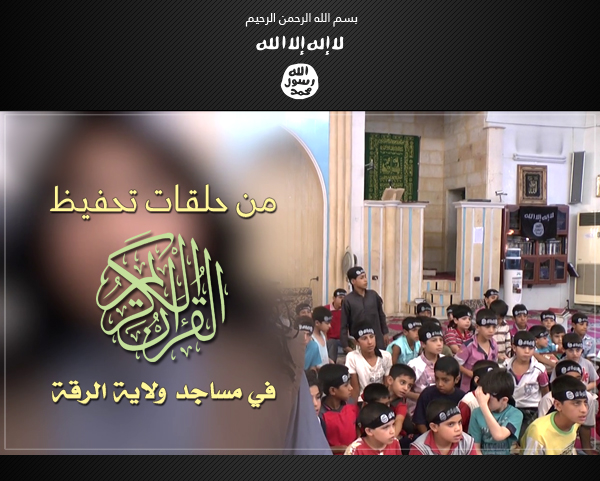
al-Furqān Media presents a new video message from the Islamic State of Iraq and al-Shām: “Messages from the Land of Epic Battles #5"

NOTE: For prior parts in this series see: #4#3#2, and #1.

ey0ni


_____________

To inquire about a translation for this video message for a fee email: [email protected]

Two new statements from Jabhat al-Nuṣrah

Shaykh Abū Basīr al-Ṭarṭūsī releases a new book: “The Book of the Revolution and Revolutionaries: Words Written for the Arab Revolutions, Especially the Syrian Revolution, Part #14"

NOTE: The previous twelve parts are included in the book as well.


Click the following link for a safe PDF copy: Shaykh Abū Basīr al-Ṭarṭūsī — “The Book of the Revolution and Revolutionaries- Words Written for the Arab Revolutions, Especially the Syrian Revolution, Part #14″
_______________

To inquire about a translation for this book for a fee email: [email protected]

GUEST POST: Belgian Jihadis in Syria

NOTE: As with all guest posts, the opinions expressed below are those of the guest author and they do not necessarily represent the views of this blogs administrator and does not at all represent his employer at the Washington Institute for Near East Policy.
Jihadology.net aims to not only provide primary sources for researchers and occasional analysis of them, but also to allow other young and upcoming students as well as established academics or policy wonks to contribute original analysis on issues related to jihadism. If you would like to contribute a piece, please email your idea/post to azelin [at] jihadology [dot] net.
Past Guest Posts:
North Caucasus Caucus, “Turkish Fighters in Syria, Online and Off,” August 20, 2013.
Mark Youngman, “Book Review of David Malet’s “Foreign Fighters: Transnational Identity in Civil Conflicts”,” June 20, 2013.
Hazim Fouad, “Salafi-Jihadists and non-jihadist Salafists in Egypt – A case study about politics and methodology (manhaj),” April 30, 2013.
Daveed Gartenstein-Ross and Tara Vassefi, “Perceptions of the “Arab Spring” Within the Salafi-Jihadi Movement,” November 19, 2012.
Jack Roche, “The Indonesian Jamā’ah Islāmiyyah’s Constitution (PUPJI),” November 14, 2012.
Kévin Jackson, “The Pledge of Allegiance and its Implications,” July 27, 2012.
Behnam Said, “A Brief Look at the History and Power of Anasheed in Jihadist Culture,” May 31, 2012.
Jonah Ondieki and Jake Zenn, “Gaidi Mtaani,” April 24, 2012.
Joshua Foust, “Jihadi Ideology Is Not As Important As We Think,” January 25, 2011.
Charles Cameron, “Hitting the Blind-Spot- A Review of Jean-Pierre Filiu’s “Apocalypse in Islam,” January 24, 2011.
Daveed Gartenstein-Ross, “Why Jihadi Ideology Matters,” January 21, 2011.
Joshua Foust, “Some Inchoate Thoughts on Ideology,” January 19, 2011.
Marissa Allison, “Militants Seize Mecca: Juhaymān al ‘Utaybī and the Siege of the Grand Mosque in Mecca,” June 9, 2010.

Belgian Jihadis in Syria
By Pieter Van Ostaeyen
Belgium always had a bit of a dual relationship with its numerous immigrants from the Maghreb and Turkey. In the 1960’s Belgium heavily encouraged migration from Morocco and Turkey. They were seen as  cheaper work forces for the steel and coal industry, which made Belgium a crucial part of the precursor to the European Union and the integration of European economies.
When the heavy industry faded though, these immigrant families remained in Belgium. Currently, some of the third and fourth generation of these immigrants are people who  live on the margins of society. The Belgium government over the last several decades never really succeeded integrating the Islamic communities. In the late 1980’s and 1990’s Moroccon youth were renowned for crimes like drug-dealing, theft, and many of them were jobless yet drove around in big cars like Mercedes and BMW.
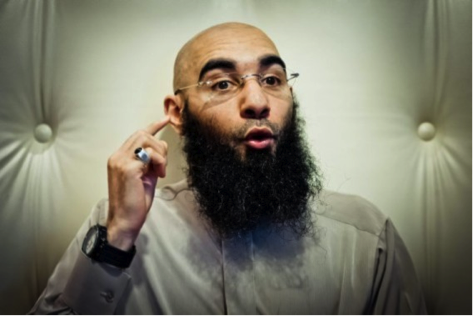
In one manifestations of the inability to integrate (or the lack of will to do so by some) during the last few decades, led to the creation of the Salafist movement Sharia4Belgium on March 3 2010. Their spokesman Fouad Belkacem (aka Abu Imran) was soon branded persona non grata on public fora. Under heavy public pressure and after several judicial actions against the group, Sharia4Belgium dissolved itself on October 7 2012.

Untitled

Photo 1: Fouad Belkacem, spokesman of Sharia4Belgium

Meanwhile the war in Syria had been raging for about a year and a half. Reports started appearing claiming European Muslims were fighting in Syria. It would only take a couple of months before the first Belgian and Dutch jihadis were identified. On February 16, 2013 another horrible video from Syria (first published by @hlk01) was posted. There was Dutch heard in the video. Later that week, the Dutch newspaper De Telegraaf, published an article claiming that Dutch security forces (AIVD) were already investigating the matter.
On March 7, Eurojust first confirmed that there were Belgians amongst the European jihadis in Syria. On March 15 and 16, 2013 Harald Doornbos and myself found three YouTube videos (originally posted by Halab News Network and since deleted by Google) in which I clearly heard some Flemish guys. Belgian media later picked up on this story. Later, the parents of Brian De Mulder and Jejoen Bontinck recognized their sons in the videos. The Belgian far right extremist party Vlaams Belang succeeded in luring in one of the families for their own propaganda and the father of Bontinck even went to Syria in search for his son. They all blamed Sharia4Belgium.
Since then reports about the Belgian jihadis appeared weekly. On April 10, 2013 the Belgian weekly magazine Knack published an article on the Belgian jihadis in Syria, claiming that already 12 of them were killed (these reports as of today remain unconfirmed). Here is an overview of those who died fighting in Syria or those who got arrested trying to get there.
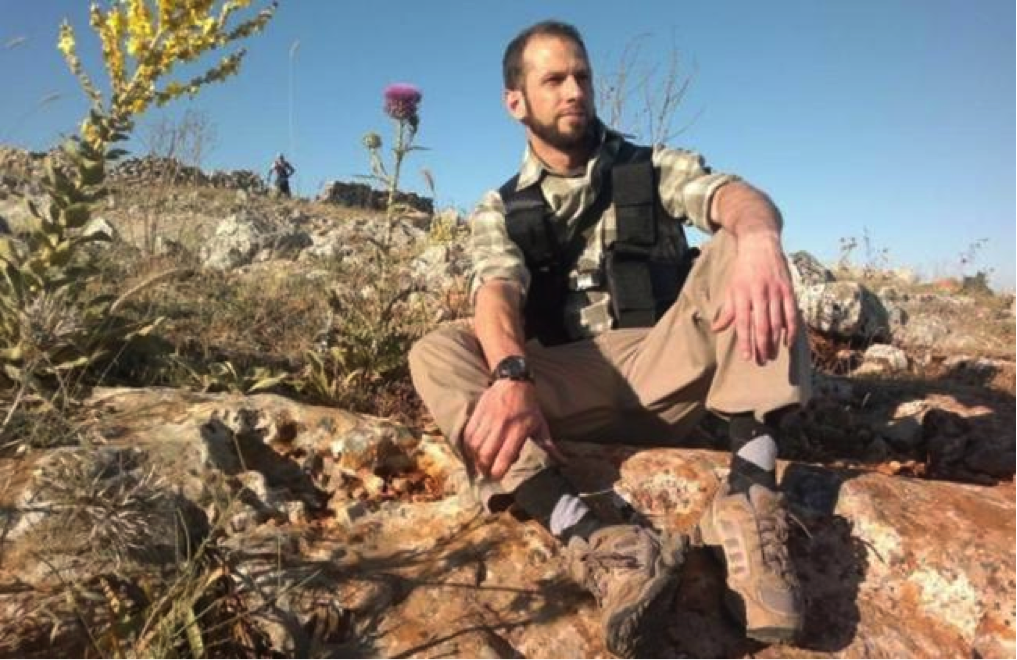
On the 22nd of June, Belgian newspapers De Standaard and De Morgen gave an extensive overview of the developments concerning Belgian jihadis in Syria. This is all because of the announcement of the death of ‘Abd ar-Rahmān Ayāshī, a French-Syrian who had left Belgium back in 2012 after he was sentenced to 8 years in jail. ‘Abd ar-Rahmān Ayāshī became a battalion-leader of Suqūr as-Shām, leading about 600 in battle.

Untitled2

Photo 2: ‘Abd ar-Rahmān Ayāshī

Ayāshī was the son of the Sheikh Bassām Ayāshī, a Syrian living in Molenbeek, Brussels. In the past the Ayāshī family was suspect to several investigations by the Belgian authorities (since September 2009).
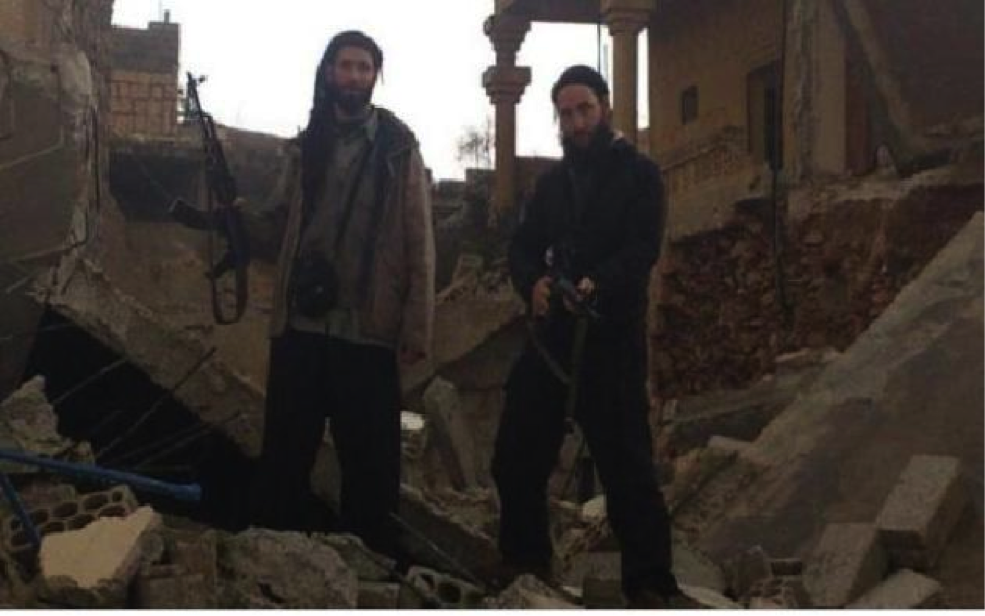
A few months ago, the friend of Ayāshī, the French Raphael Gendron (at the right on this pic) was killed in Syria. Perhaps he was one of the first “Belgian” jihadis that got killed in Syria.

Untitled3

Photo 3: ‘Abd ar-Rahmān Ayāshī and Raphael Gendron in Syria

In this video Sheikh Ayāshī reacts to the death of his “two” sons in Syria.
Here is a very recent interview with the killed battalion leader published on YouTube on June 23: 
[youtube https://www.youtube.com/watch?v=-lu9WFBEsrg&sns;feature=youtu.be]
There is no doubt that the deaths of Gendron and Ayāshī are the biggest losses among Belgian fighters in Syria.
Others proven killed are:

  • Sean Pidgeon (Brussels)
  • Tāriq Taqlitūn (Vilvoorde). He was killed in his apartment in Syria. His Belgian wife says he was allowed to pray one last time and then got executed.
  • According to Hans Bonte, mayor of Vilvoorde, at least two other (unidentified) youngsters from his city got killed recently
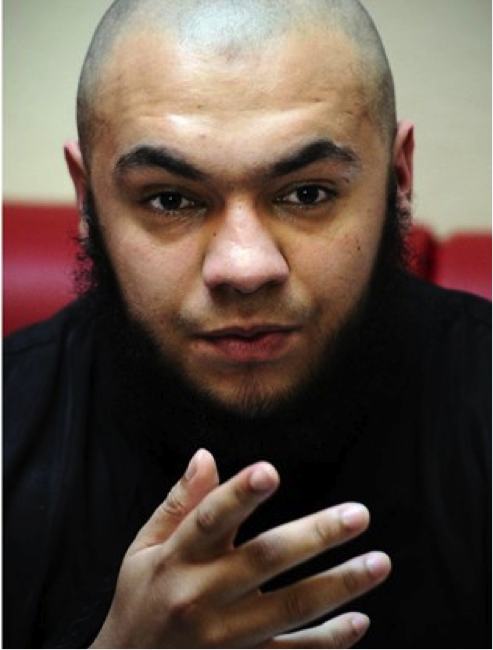
  • Another death in the ranks of Sharia4Belgium in Syria is Nur ad-Din Abouallal aka Abu Mujahid, allegedly killed in Syria around the 25th of July. His death was reported by his Belgian wife.

Untitled4

Photo 4: Nur ad-Din Abouallal aka Abu Mujahid, Sharia4Belgium’s second man

  • August 21: Isma’il Amgroud, 22, Maaseik, Belgium. He left Maaseik early April and died in Syria in late June. He was the youngest of three who left Maaseik to fight in Syria. All of them were officially deleted from civil registrations.
  • August 22: Three inhabitants of Genk are arrested at the Greek-Turkish border. One of the arrested was a 26 year old Italian, who converted to Islam. One of the other men arrested was most likely his father. They returned to Genk and are under supervision of the authorities.
  • August 28: Hans Bonte, Mayor of Vilvoorde, in an interview in Belgian newspapers, claims that at least 25 youngsters from his city left or will leave for Syria.

Others still fighting in Syria:

  • About 33 members of the group Sharia4Belgium. Best known: Jejoen Bontinck, Brian De Mulder (both from Antwerp), and Hussayn Elouassaki aka Abu Fallujah (supposed leader of the Ansār Brigade of Majlis Shūra al-Mujahidīn near Aleppo – accused of a gruesome beheading)
  • About 150 to 200 Belgian fighters

As most research during the last half year pointed out it is believed that some Belgians joined Jabhat an-Nusra although most of them first aligned with Majlis as-Shura al-Mujahidin (currently a sub-group of ISIS) or Katībat al-Muhājirīn (led by the Chechen Jihadi Abū ‘Umar as-Shīshāni and recently merged with two other groups into Jaysh al-Muhājirīn wa-l-Ansār). Most Belgian jihadis appear to be fighting in or near Aleppo and Idlib. According to recent Belgian reports most of them were based in the village of Daret Izza in the Northern Aleppo province.
It is highly likely that as the Syrian conflict continues to go on there will be more fighters that will join up with the rebels. The Belgian government is worried for their return due to the possibility these newly trained fighters could then plot attacks on the homeland.
Pieter Van Ostaeyen
Master Medieval History 1999
Master Arabic & Islamic Studies 2003

Check out a new report I co-authored with Jeffrey White and Andrew J. Tabler for the Washington Institute for Near East Policy: "Syria's Military Opposition: How Effective, United, or Extremist?"

NOTE: The chapter I wrote I completed in late April so it’s slightly dated, but still useful information on Jabhat al-Nusra and Ahrar al-Sham. I will soon have a two part article on assessing the first few months of the Islamic State of Iraq and al-Sham’s activities, which will complement the work in this particular report.


Many options for direct military action in Syria have been on the table, ranging from token strikes with small numbers of weapons to much broader operations such as attacks on leadership targets or the imposition of no-fly and no-drive zones. In addition, the United States could respond indirectly by providing truly significant military assistance to the rebels. The recent chemical warfare attack, however, has rendered urgency to a considered U.S. response. Despite the Obama administration’s aversion to using military power in Syria and the difficulty of forging allied consensus on goals and methods, the Assad regime must be held accountable.
Nevertheless, the risk-benefit calculus for any decision depends, at the very least, on a thorough understanding of the disparate ideologies that drive the Syrian opposition, their military inadequacies, and their ability to create a unified political structure. To clarify these issues, Jeffrey White, Andrew J. Tabler, and Aaron Y. Zelin, all respected experts on Syria, present their findings in this Washington Institute Policy Focus, which has been updated to accommodate the most recent developments in this ongoing humanitarian crisis.
Click here to read the full report (48 pages).

New video message from Ibn Taymīyyah Center for Media: "Media Coverage: The March of Solidarity With the Peoples of Syria and Egypt"

New statement from Jabhat al-Nuṣrah: "In the Series of Raids ‘An Eye for An Eye’ #10: Killing the Colonel Ḥasan Khashīr, Commander of the National Defense Forces in Aleppo, Following the Bombing of His Car Upon (The Road Khanāṣir – al-Ḥamām) in Rural Eastern Aleppo"

al-I’tiṣām Media presents new video message from the Islamic State of Iraq and al-Shām: “A Window Upon the Land of Epic Battles #6"

NOTE: For prior parts in this series see: #5#4#3#2, and #1.

____________

To inquire about a translation for this video message for a fee email: [email protected]