
Pashto:
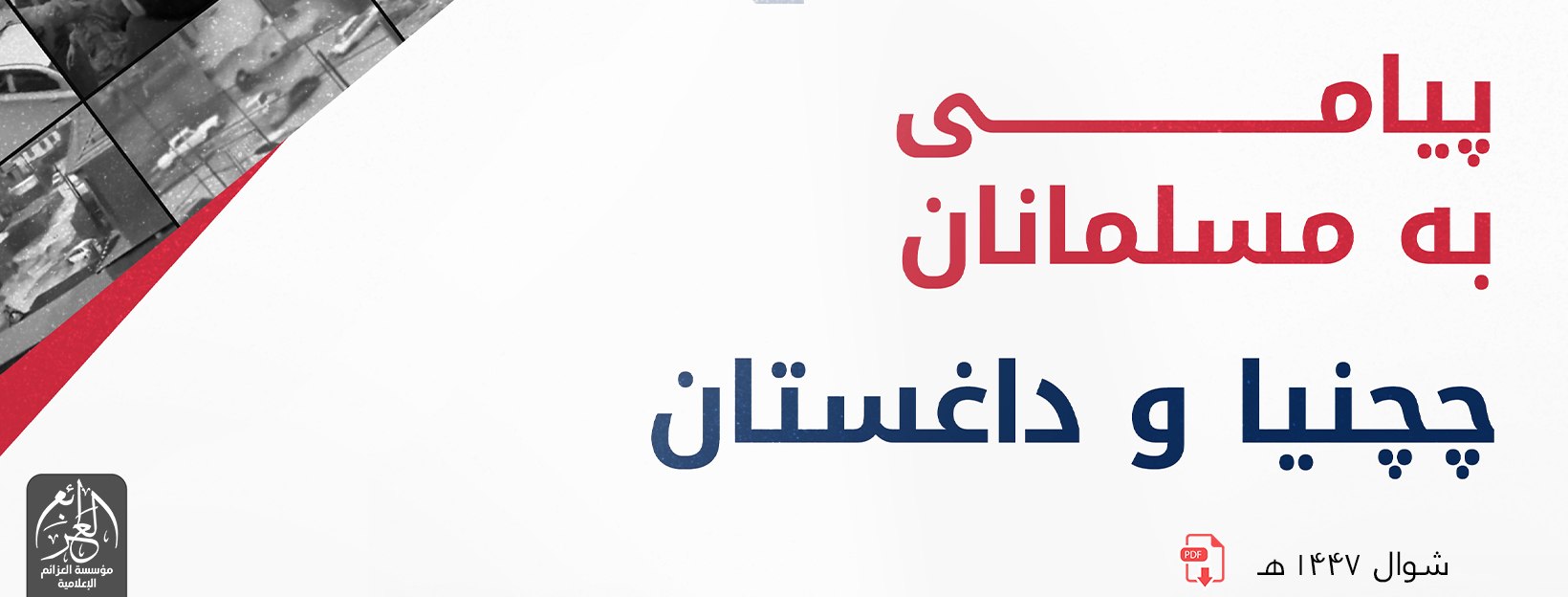
The Islamic State’s Wilāyat Khurāsān — A Message To the Muslims of Chechnya and Dagestan
English:
The Islamic State’s Wilāyat Khurāsān — A Message To the Muslims of Chechnya and Dagestan (En)
________________
Source: RocketChat
Pashto:
The Islamic State’s Wilāyat Khurāsān — A Message To the Muslims of Chechnya and Dagestan
English:
The Islamic State’s Wilāyat Khurāsān — A Message To the Muslims of Chechnya and Dagestan (En)
________________
Source: RocketChat
In the Name of Allah, the Most Gracious, the Most Merciful
The Islamic Emirate of Afghanistan extends its heartfelt congratulations to the noble Muslim people of Afghanistan and to the Mujahideen on the occasion of the anniversary of the defeat and withdrawal of the Red Army of the former Soviet Union from Afghanistan. This historic day stands as a moment of pride and gratitude, and as a shining chapter in the contemporary history of our homeland.
By the infinite mercy and assistance of Allah Almighty, the Afghan Mujahideen—through steadfast jihad, immense sacrifices, migration, and enduring hardships—were granted the honor of overcoming a great power and compelling its forces to withdraw from our sacred land. This victory remains a testament to the unyielding faith, resilience, and determination of the Afghan Muslim nation.
The liberation of Afghanistan from occupation for the third time within the past century, by the will and help of Allah Almighty, clearly demonstrates the firm resolve of our Muslim people to safeguard their religion, protect their independence, and defend their territorial integrity. Throughout successive invasions over the last hundred years, history has shown that aggression against Afghanistan is met with steadfast resistance and ultimate failure.
Those who harbor ill intentions toward our freedom and sovereignty should take heed from the lessons of the past and refrain from any actions that threaten the independence and Islamic values of our country.
The Islamic Emirate calls upon its brave and faithful countrymen to remain vigilant against all forms of conspiracy and subversion. By preserving unity, strengthening Islamic brotherhood, and adhering firmly to the path of their righteous predecessors, they shall continue to safeguard their religion, beliefs, and independence.
May peace and the mercy of Allah be upon the Afghan nation.
Islamic Emirate of Afghanistan
27/8/1447 AH
26/11/1404 AH – 15/2/2026
________________

Click the following link for a safe PDF copy: Jamā’at Nuṣrat al-Islām Wa-l-Muslimīn — The Governments of the Sahel Countries and the Russian Legion- A New Episode In a Series of Crimes and Violations Against Innocent People
________________
Source: RocketChat
To inquire about a translation for this statement for a fee email: [email protected]
_________________
Source: RocketChat
_________________
Source: RocketChat
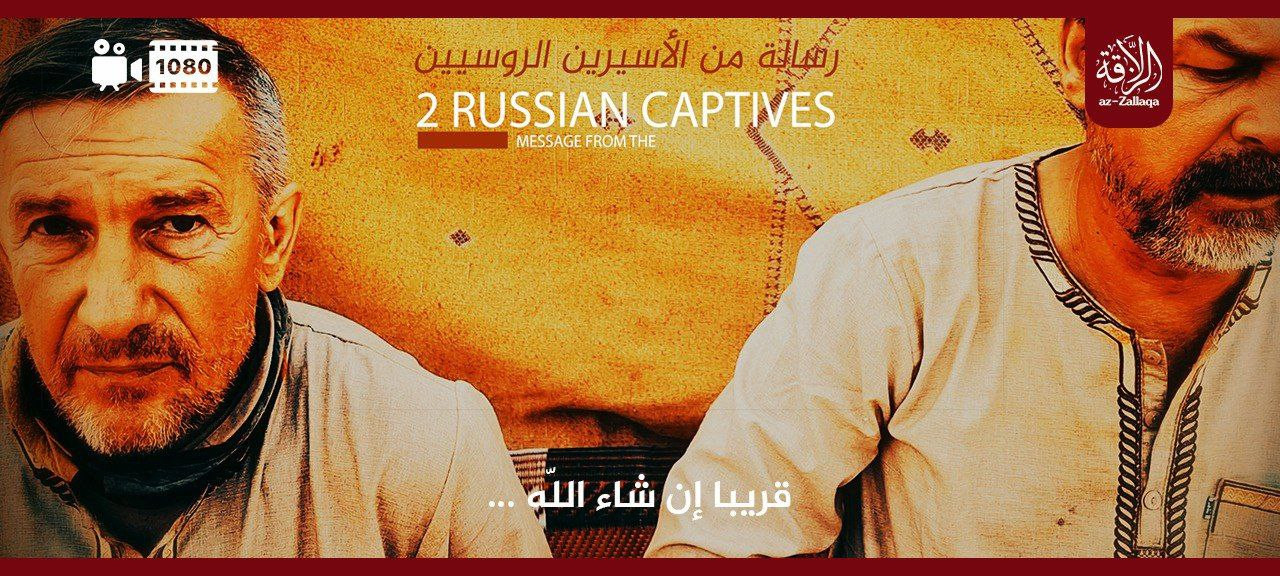
To inquire about a translation for this video message for a fee email: [email protected]

Since the beginning of the year, counterterrorism and law enforcement efforts have zeroed in on the Islamic State’s Khorasan “province” (ISKP). This is unsurprising given that governments have connected ISKP to recent large-scale attacks and plots in Iran, Turkey, Russia, and Europe. Yet other provinces in the IS global network have also been involved in external operations planning—albeit unsuccessfully until the July 15 mass shooting against Shia worshippers in Oman, the first jihadist attack in that country’s history. For this reason, it is more important than ever to understand that IS today has a multipronged strategy to target its enemies, and this strategy is coordinated via its General Directorate of Provinces—individual “provinces” do not have independent strategies.
In the first half of 2024, there have been eight IS external plots and attacks unrelated to ISKP and seventeen related to ISKP. Regarding the successful attacks in Iran, Turkey, and Russia, governments disclosed the ISKP connection, but IS itself did not claim any of them for ISKP. The Turkish incident was designated as a Turkey “province” attack. Of the plots not related to ISKP, three have been connected to the IS province in Iraq (two in Germany, one in Kuwait), two were connected to the Syria province (in Israel and France), and the others were connected to the Somalia and Pakistan provinces (in Sweden and India, respectively). Given the frequency of such plots since January, more can be expected by year’s end.
With the Oman attack, it is still too early to know how it unfolded or what planning was behind it. Most likely, however, it was connected to IS-Yemen. From 2017 to 2019, IS leaders in Iraq and Syria asked the Yemen province to plan attacks in Oman targeting the embassies of countries that participated in the global coalition fighting the organization in Iraq and Syria. Hopefully, the Omani government will be transparent in its investigation and enable a better understanding of the network behind the incident, with Washington providing any necessary assistance based on its strong signals intelligence capabilities. Either way, the foiled plots not related to ISKP can help shed light on the Islamic State’s global plans.
Click here to read the rest.

The Islamic State today looks different than it did five years ago and is far more integrated now as an organization amongst its global network than al-Qaeda ever was. It has been 10 years since the Islamic State announced itself as a caliphate and more than five years since it lost its last vestige of territory in Syria. However, with the Islamic State back in the news due to an increasing external operations capacity (with attacks in Iran, Turkey, and Russia this year as well as numerous broken up plots in Europe), there is a fundamental misunderstanding of how the group operates today. In many ways, it is either incorrectly viewed through the lens of how al-Qaeda operates (a decentralized branch network), since it had previously been a part of al-Qaeda’s global network, or based on how the Islamic State operated when it was at its prior zenith when it controlled territory in Iraq and Syria. It is also likely why some within the U.S. government may have misinterpreted signals intelligence by pushing the idea that the Islamic State leader targeted in Somalia at the end of May, Abd al Qadir Mumin, became the group’s caliph. These changes in the past five years are crucial for policymakers to understand because the way the threat presents itself today will look different from how policymakers dealt with the issue last decade when much of the focus was on the Islamic State’s territorial control in Iraq and Syria.
The most important body for understanding the Islamic State today is its General Directorate of Provinces, which has previously been based in Syria, but new information suggests that at least at the highest levels of it might now have centrality in Somalia. When one understands that structure, the Islamic State’s actions globally make more sense. It is also why we see far more interaction and connection between its various wilayat (provinces) today than in the past. In many ways, the key aspects that animate the Islamic State as an organization (governance, foreign fighter mobilization, and external operations) remain, they have just moved from primarily being based out of or controlled by its location of origin in Iraq and Syria to being spread across its global provincial network. Its aims remain the same, even if the organization has adapted to a changed environment. It is also why the challenge from the Islamic State today is different from the past and why it is in some ways also more resilient now to pressure than before.
This makes the challenge of the Islamic State more difficult from a security perspective than in the past when there was the ability to primarily zero-in on its efforts in Iraq and Syria. Today, only focusing on Iraq and Syria or any other province independent of understanding its connections to other parts of the group’s global network will lead to missing crucial details due to expediency. This is why, although it is understandable that the United States has shifted a lot of its manpower and budgeting to more existential and larger problem-sets such as China and Russia, it would be a mistake to neglect the Islamic State as a continuing, but evolving security challenge. Therefore, it is still useful to continue to have and add more funded government positions across different agencies and departments to focus on tracking this threat to better get ahead of the next surprise. Otherwise, mistakes of misinterpretation will be made as in the past.
Click here to read the rest.

___________________
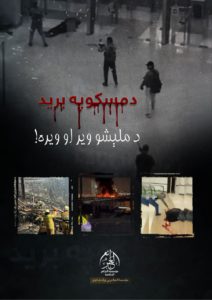
Click the following link for a safe PDF copy: The Islamic State’s Wilāyat Khurāsān — The Fear and Terror of the Attack In Moscow
_________________
Source: RocketChat